help me to see, in carousels
Help me to see. it’s a strange prayer… unless we don’t always see clearly.
These are the carousels we’ve shared from Help Me To See: Scripture read slowly, a slide at a time. Tap a cover, then swipe through.
five months of Friend to me: help me to see
read the slides as text
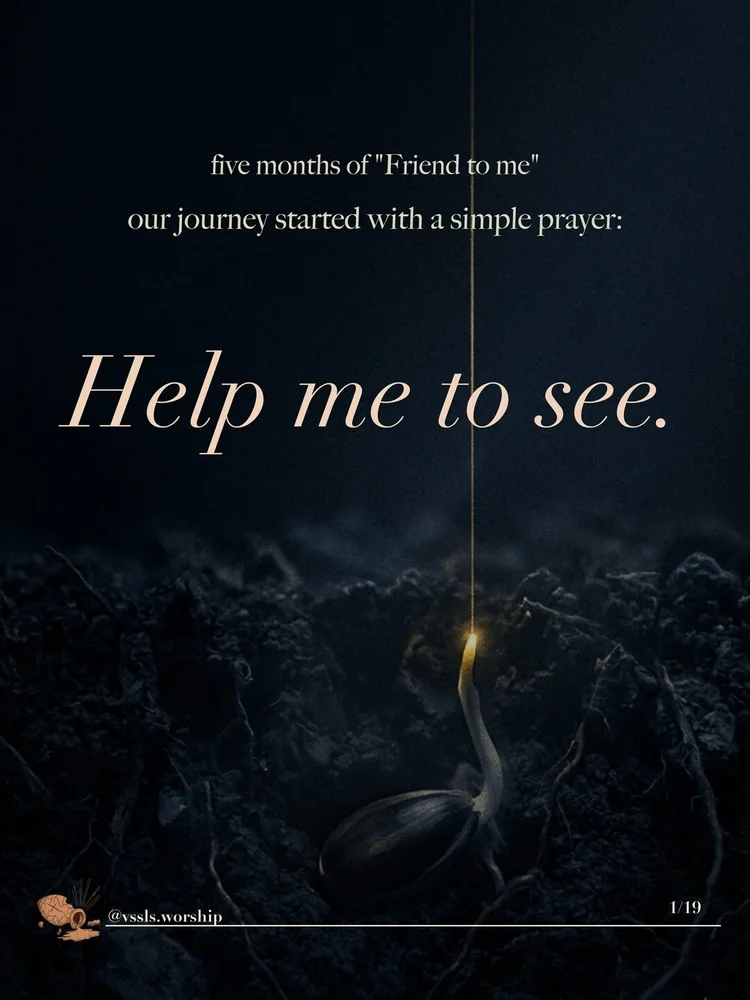
five months of "Friend to me"
our journey started with a simple prayer:
Help me to see.
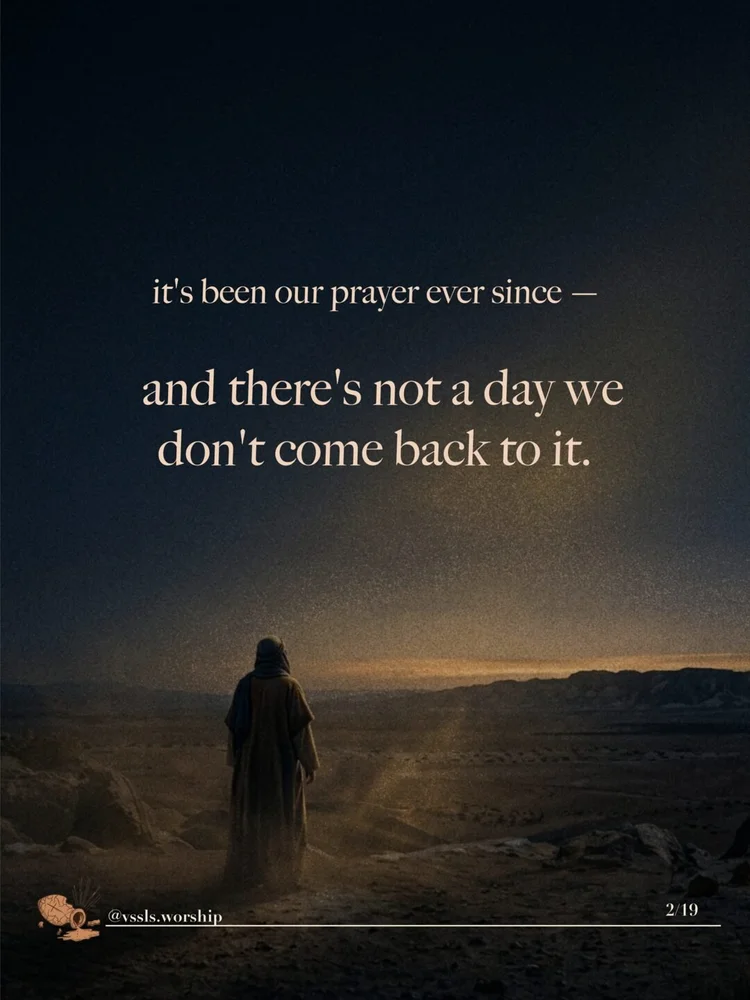
it's been our prayer ever since —
and there's not a day we don't come back to it.
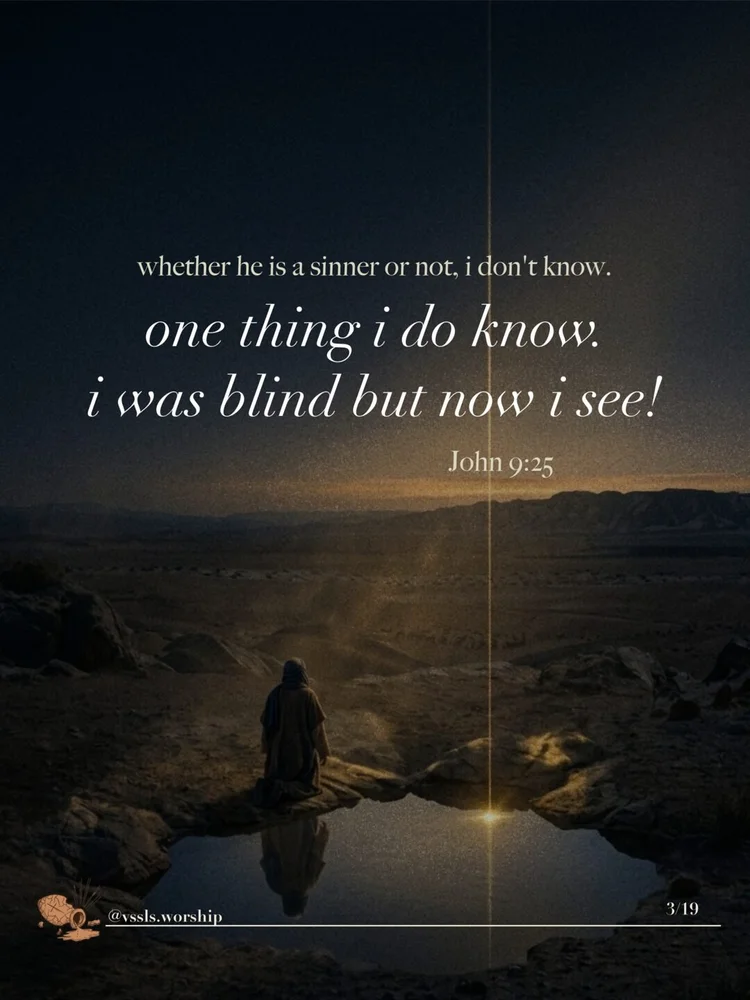
whether he is a sinner or not, i don't know.
one thing i do know. i was blind but now i see!
— John 9:25
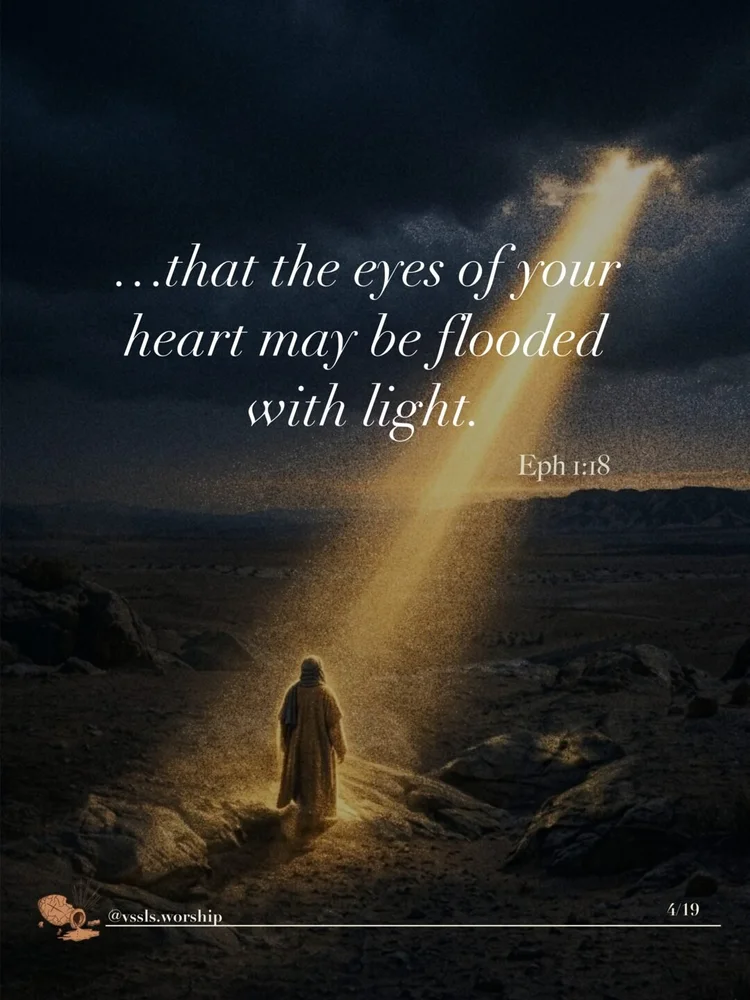
…that the eyes of your heart may be flooded with light.
— Ephesians 1:18
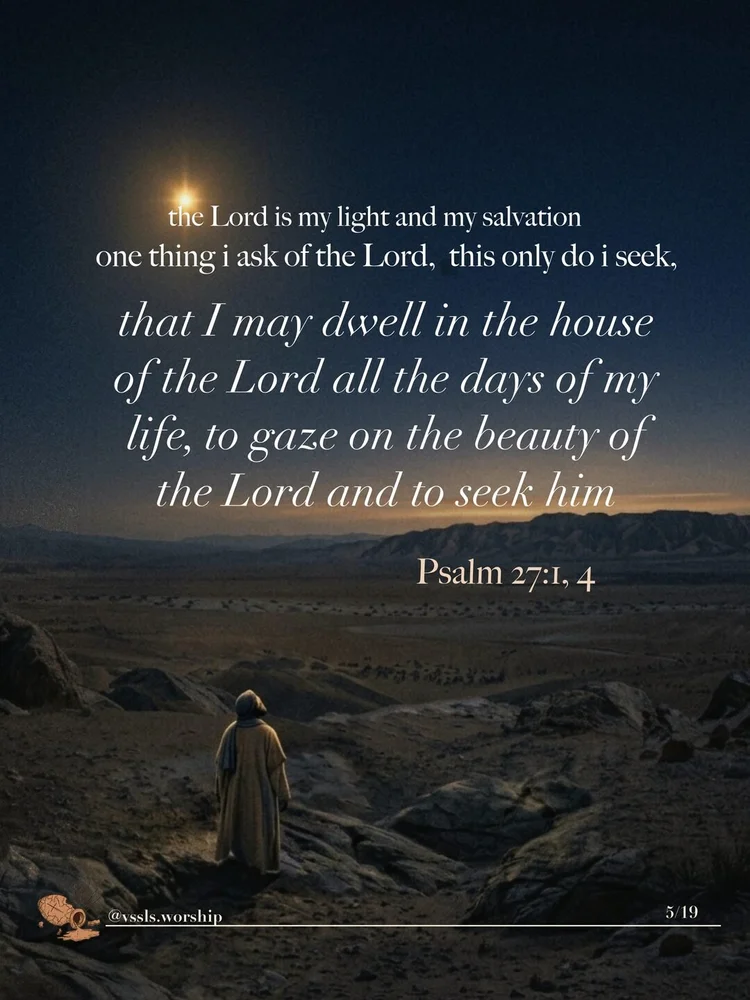
the Lord is my light and my salvation
one thing i ask of the Lord, this only do i seek,
that I may dwell in the house of the Lord all the days of my life, to gaze on the beauty of the Lord and to seek him
— Psalm 27:1, 4
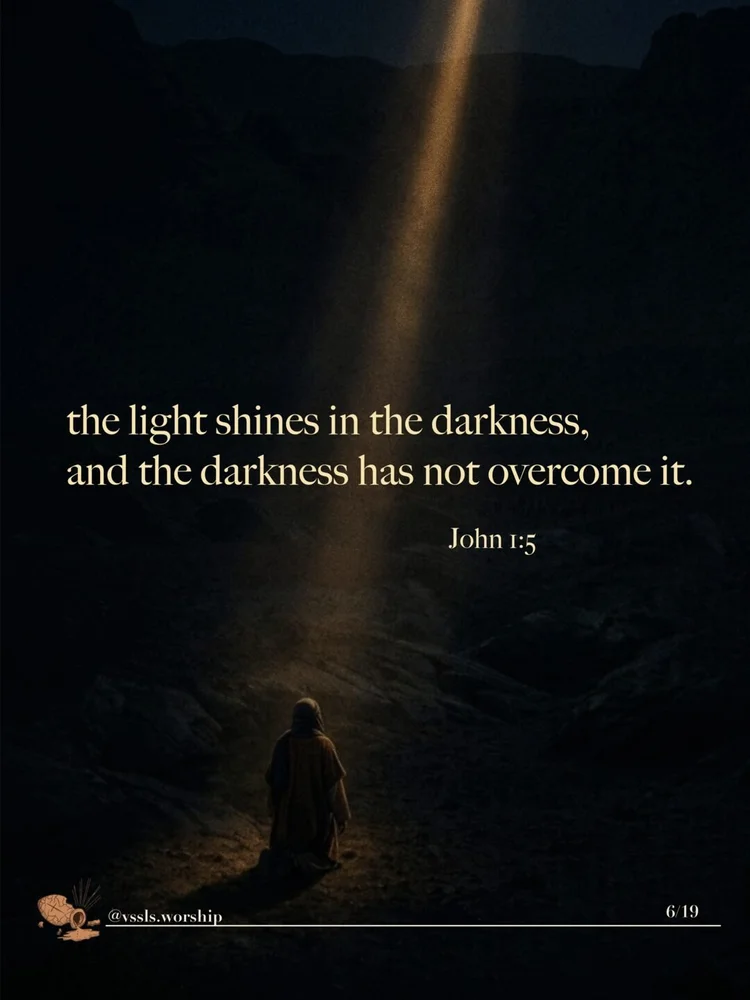
the light shines in the darkness, and the darkness has not overcome it.
— John 1:5
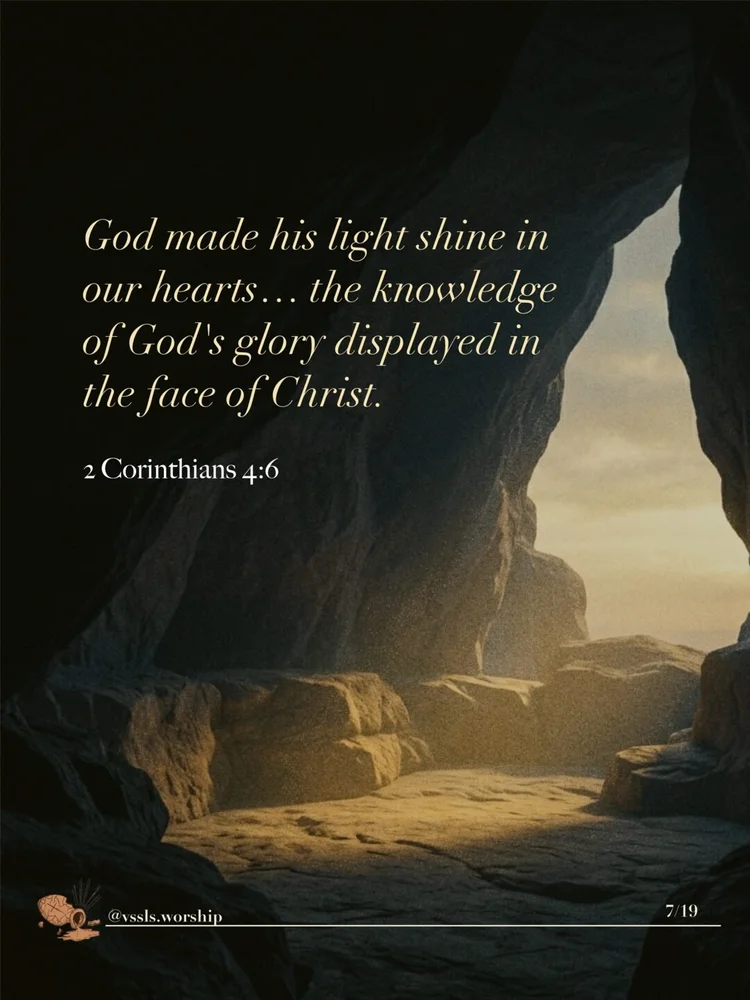
God made his light shine in our hearts… the knowledge of God's glory displayed in the face of Christ.
— 2 Corinthians 4:6
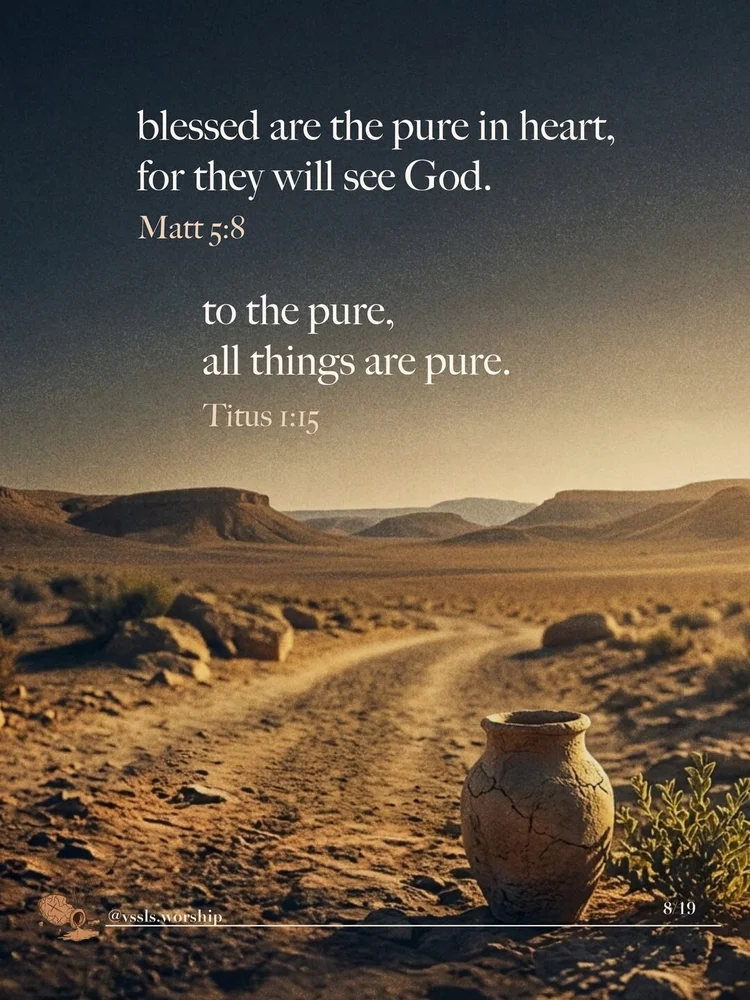
blessed are the pure in heart, for they will see God.
— Matthew 5:8
to the pure, all things are pure.
— Titus 1:15
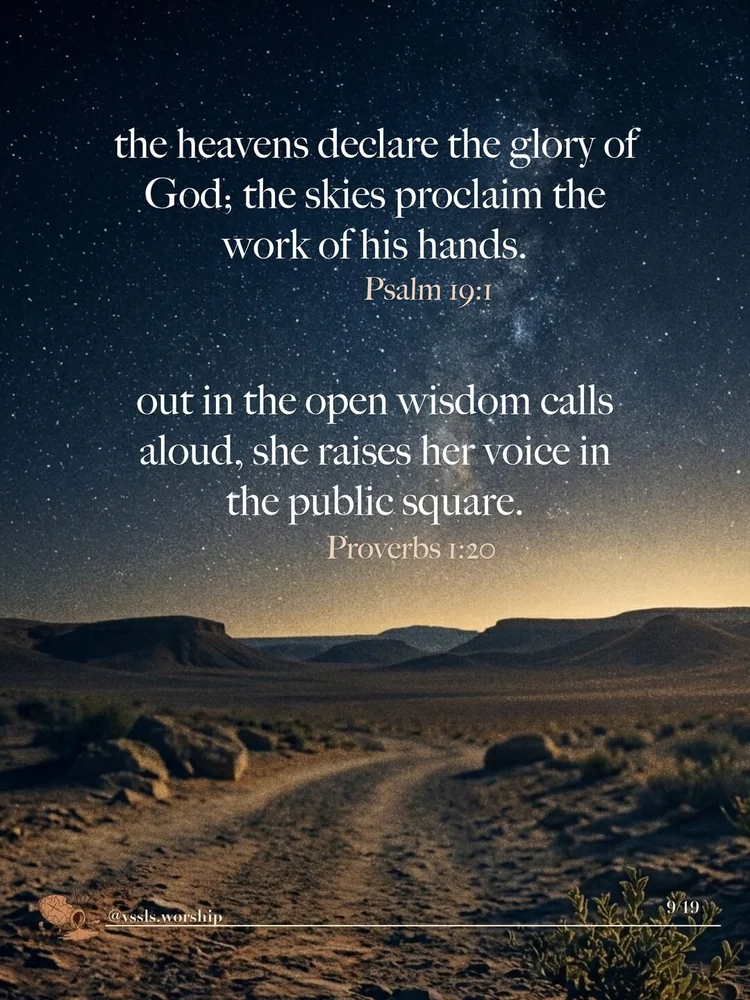
the heavens declare the glory of God; the skies proclaim the work of his hands.
— Psalm 19:1
out in the open wisdom calls aloud, she raises her voice in the public square.
— Proverbs 1:20
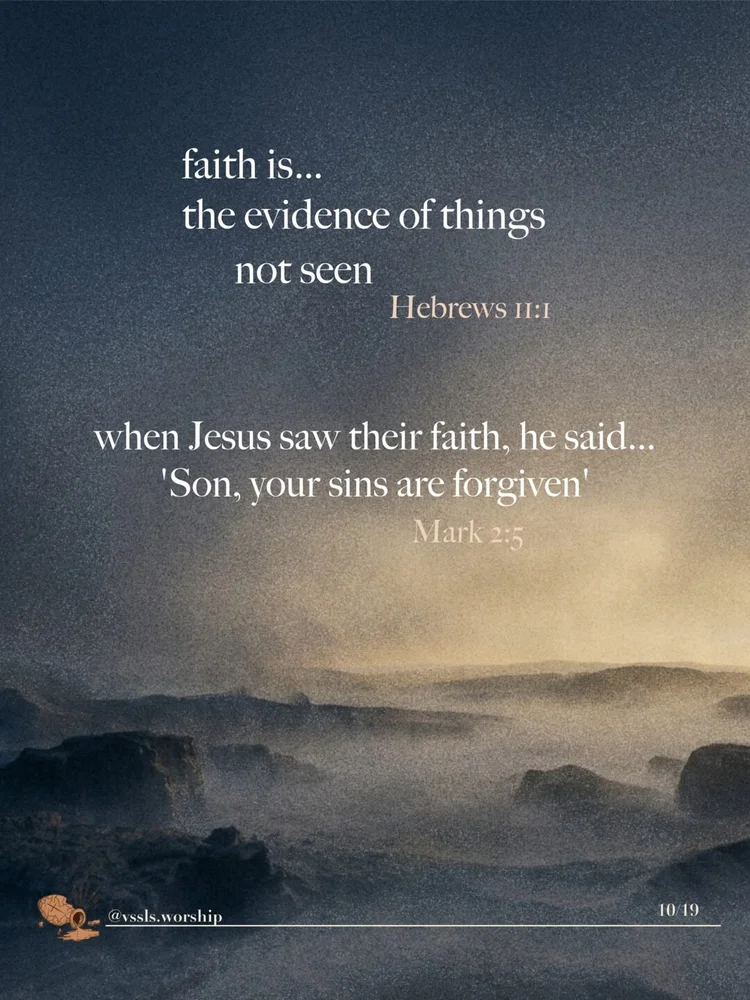
faith is… the evidence of things not seen
— Hebrews 11:1
when Jesus saw their faith, he said… 'Son, your sins are forgiven'
— Mark 2:5
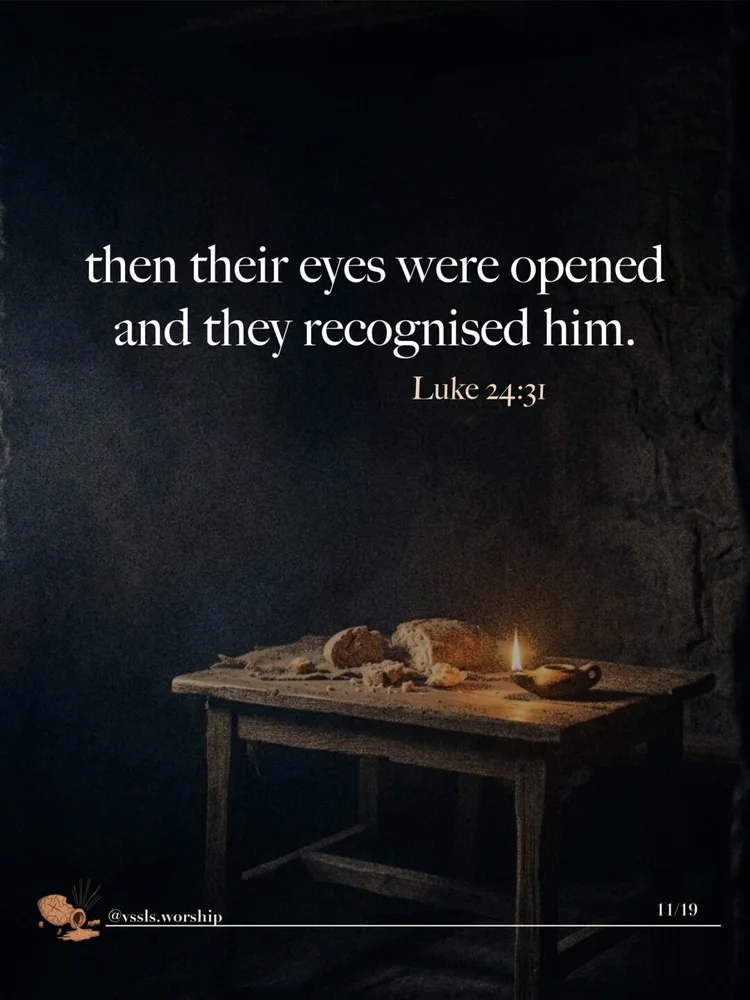
then their eyes were opened and they recognised him.
— Luke 24:31
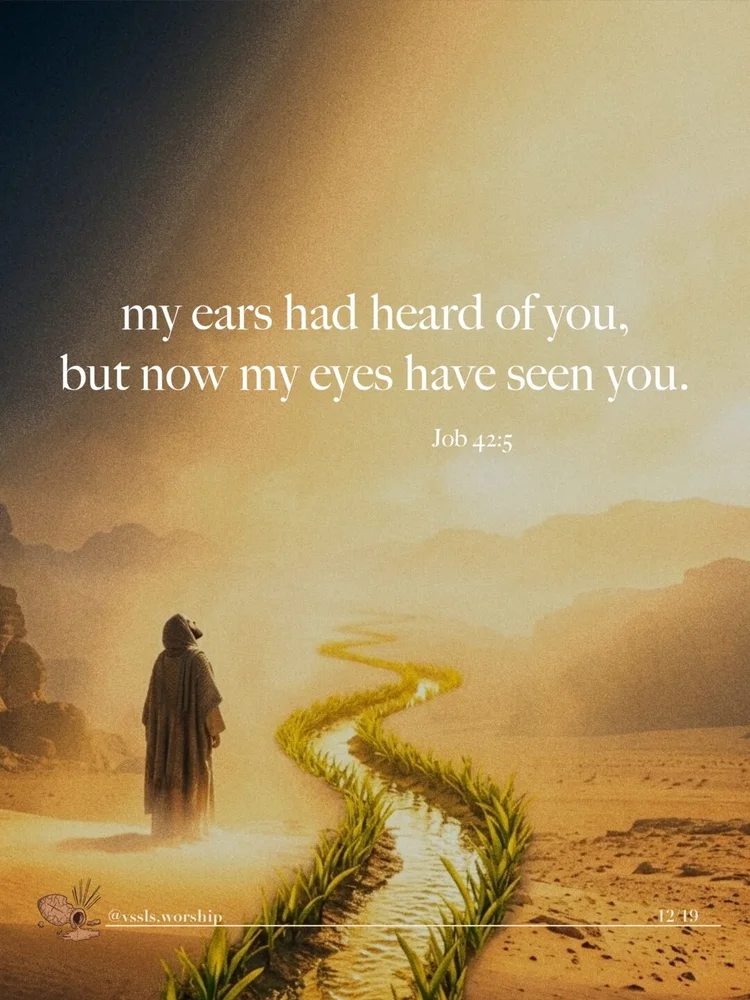
my ears had heard of you, but now my eyes have seen you.
— Job 42:5
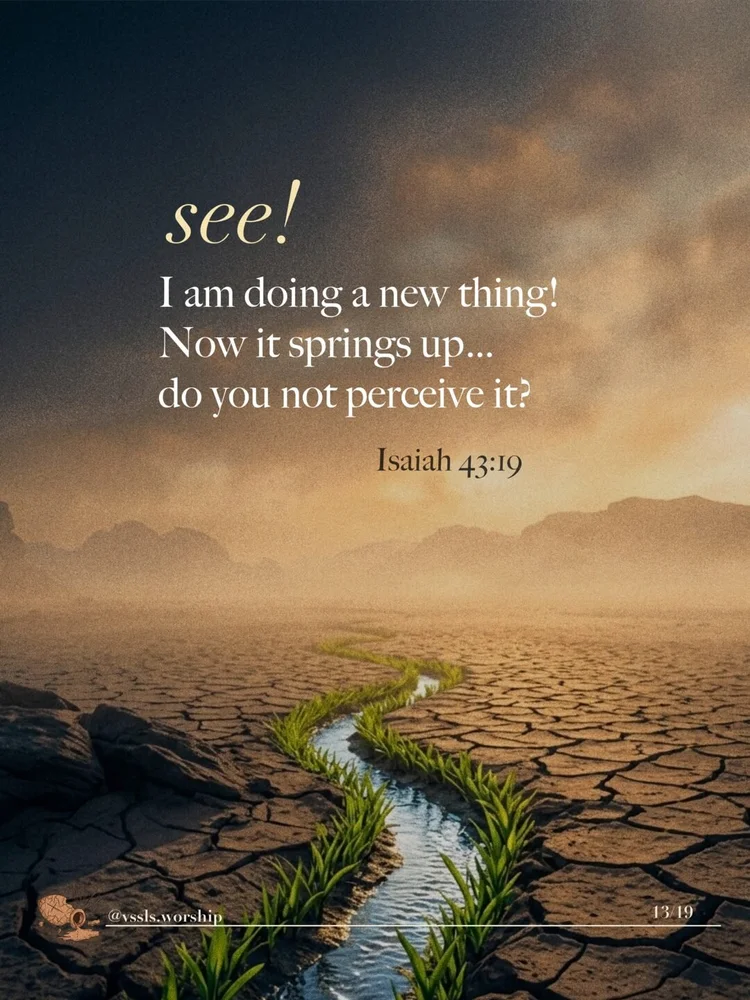
see! I am doing a new thing! Now it springs up… do you not perceive it?
— Isaiah 43:19
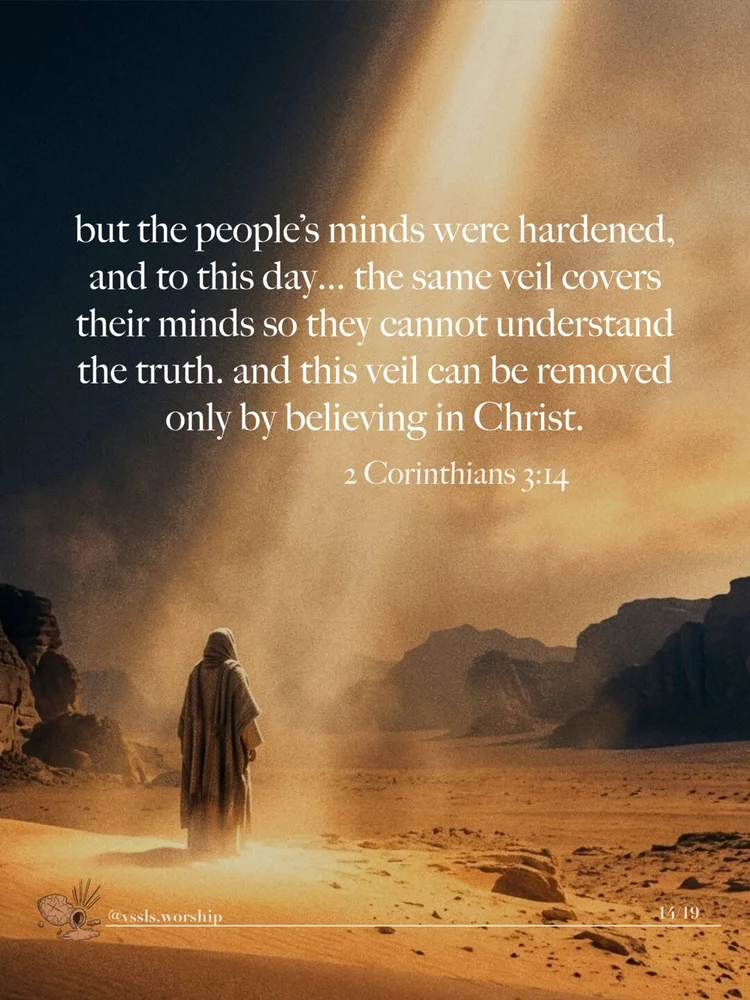
but the people's minds were hardened, and to this day… the same veil covers their minds so they cannot understand the truth. and this veil can be removed only by believing in Christ.
— 2 Corinthians 3:14
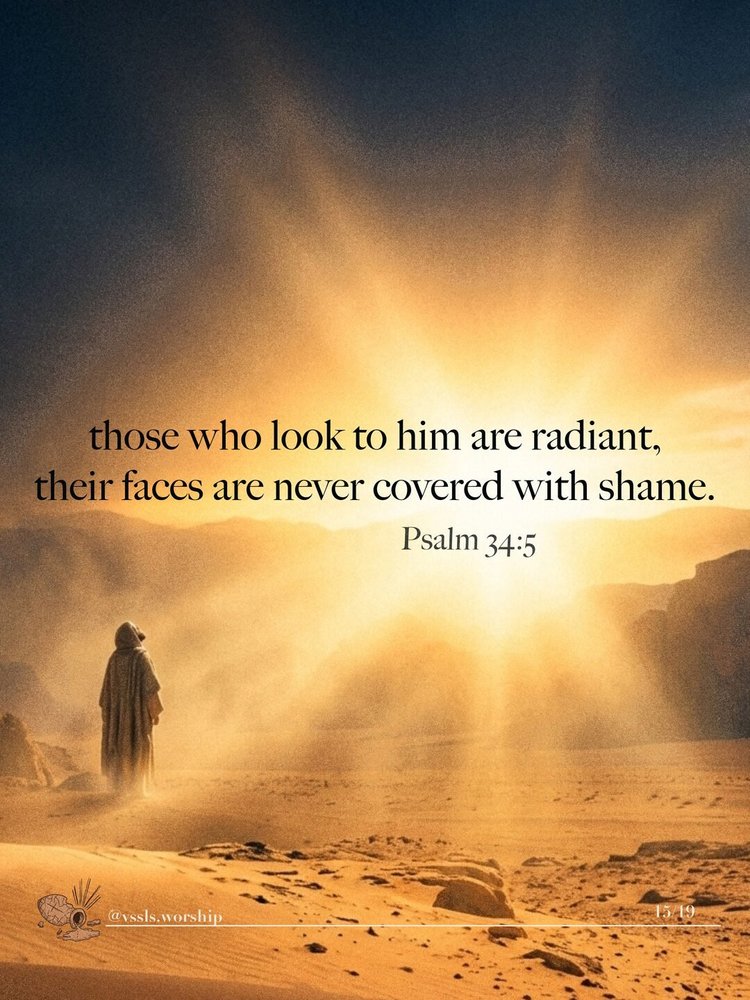
those who look to him are radiant, their faces are never covered with shame.
— Psalm 34:5
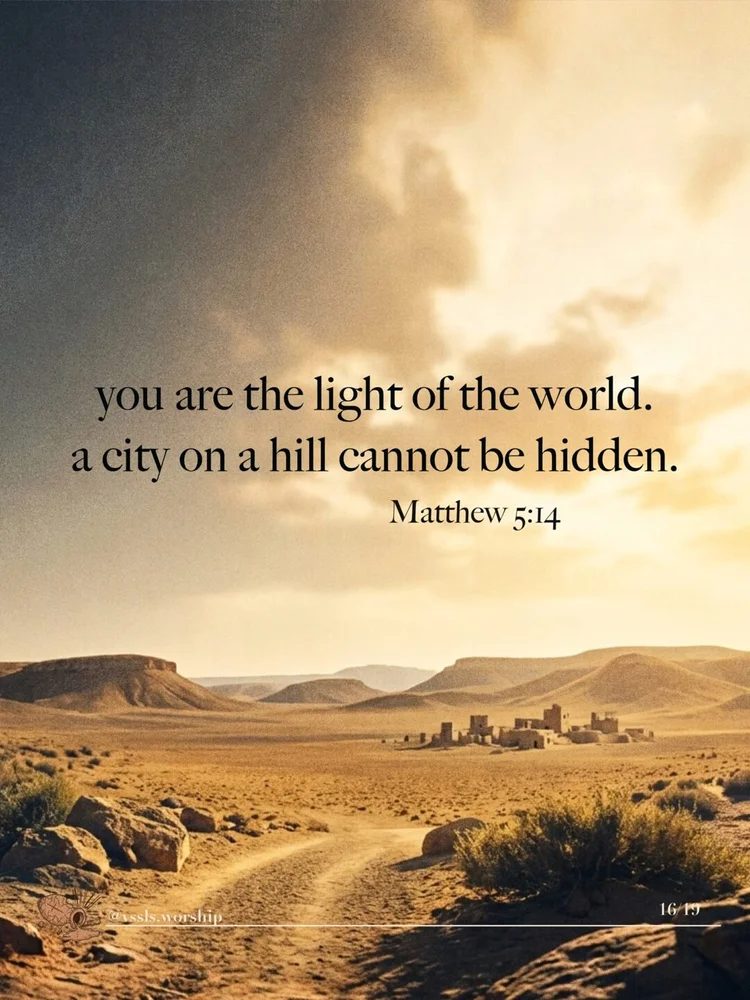
you are the light of the world. a city on a hill cannot be hidden.
— Matthew 5:14
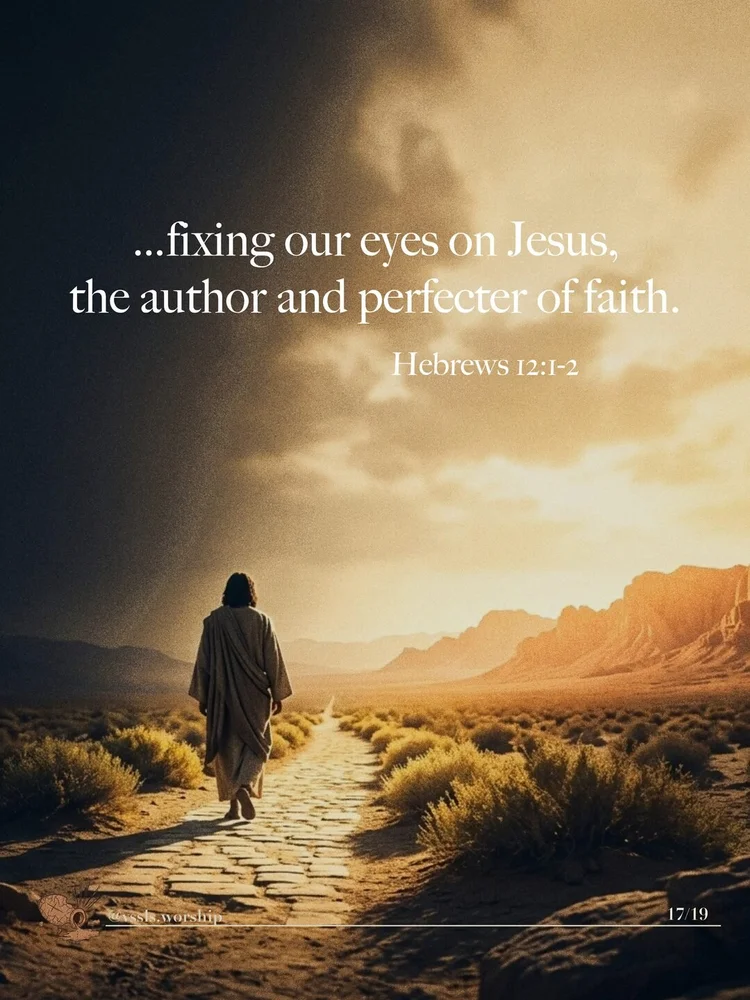
…fixing our eyes on Jesus, the author and perfecter of faith.
— Hebrews 12:1–2
Help me to see in the simple things,
be quick to respond when I hear you speak.
make it your prayer:
Help me to see
walk the journey from "Help Me To See" to "Eyes Fixed On You"
Eli: a priest saw everything
read the slides as text
Help me to see.
it's a strange prayer… unless we don't always see clearly…
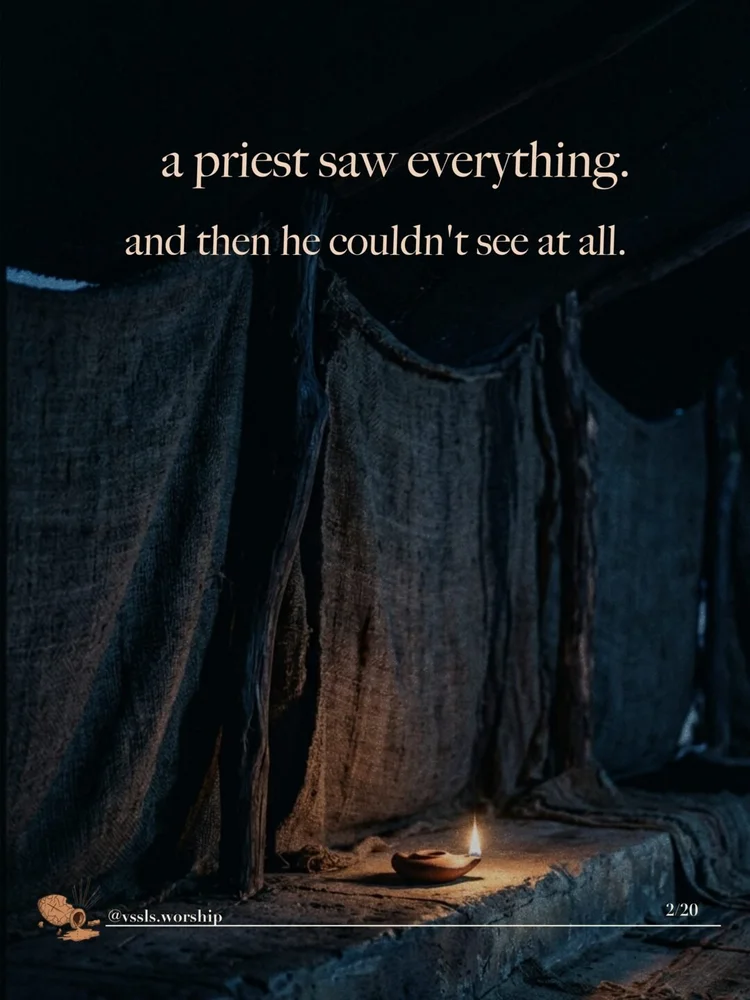
a priest saw everything.
and then he couldn't see at all.
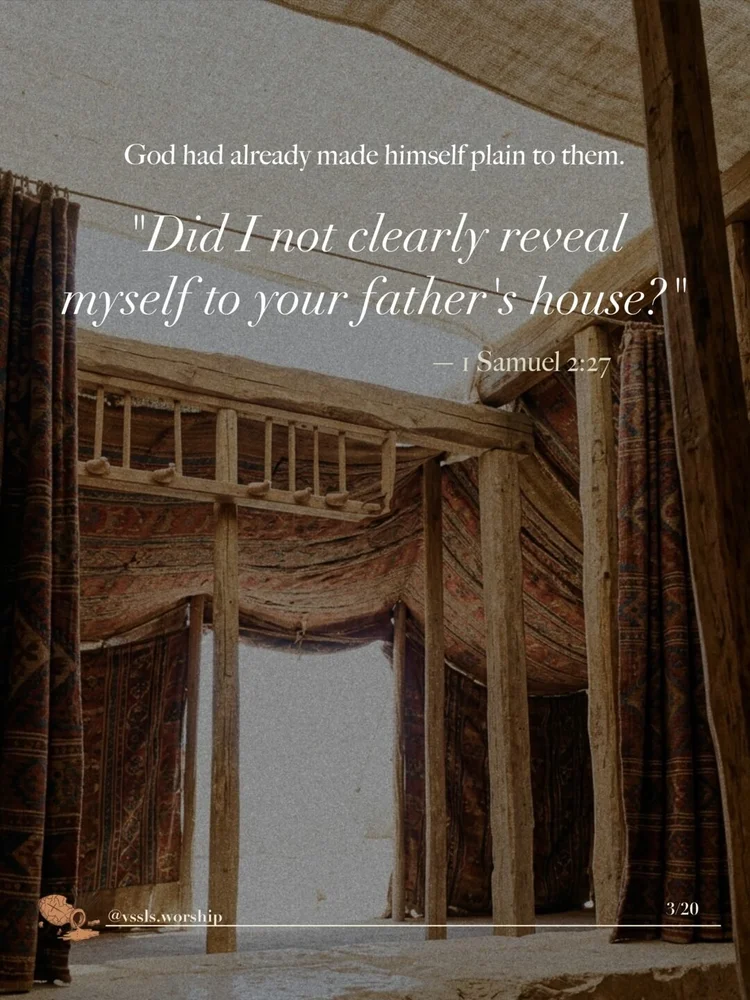
God had already made himself plain to them.
"Did I not clearly reveal myself to your father's house?"
— 1 Samuel 2:27
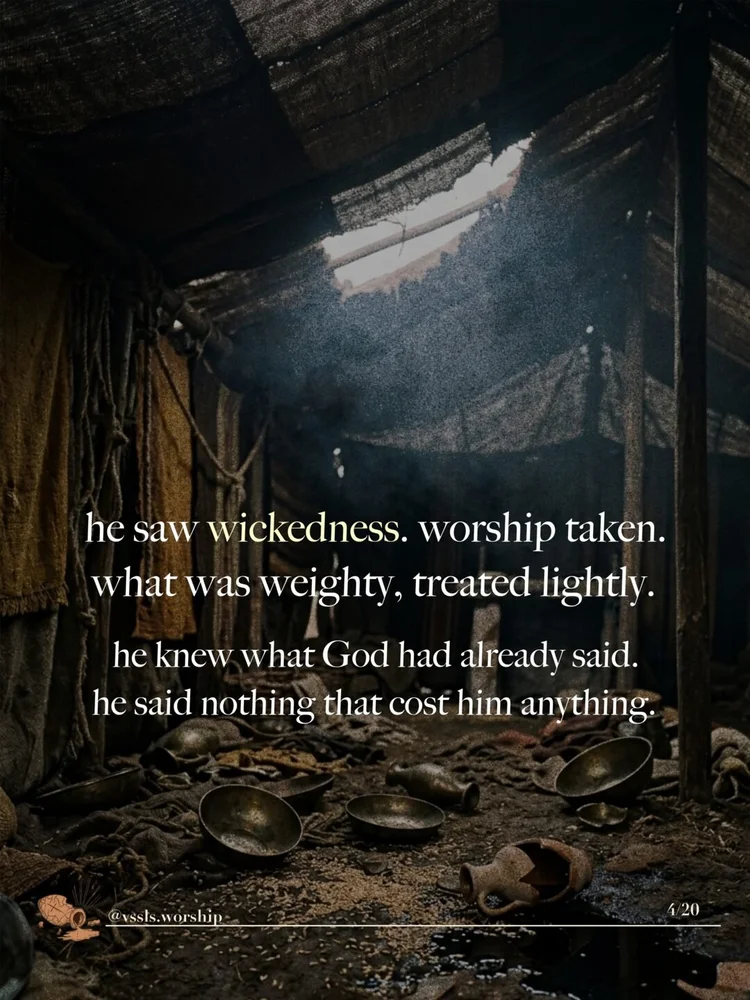
then, he saw wickedness. worship taken. what was weighty, treated lightly.
he knew what God had already said. he said nothing that cost him anything.
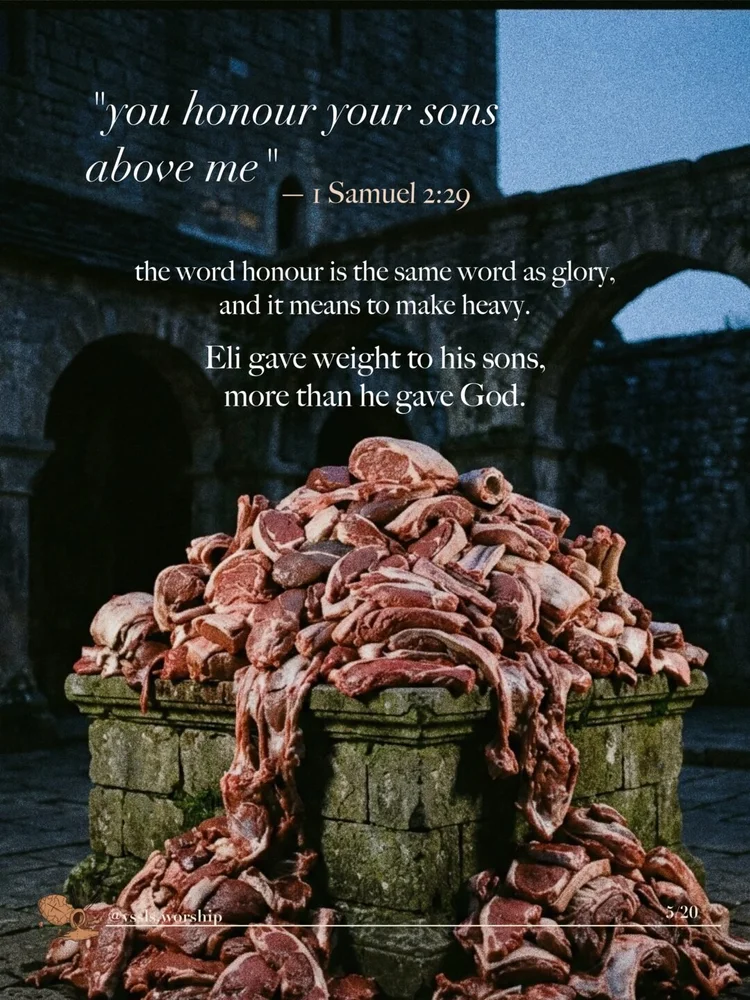
"you honour your sons above me"
— 1 Samuel 2:29
the word honour is the same word as glory, and it means to make heavy.
Eli made his sons heavy.
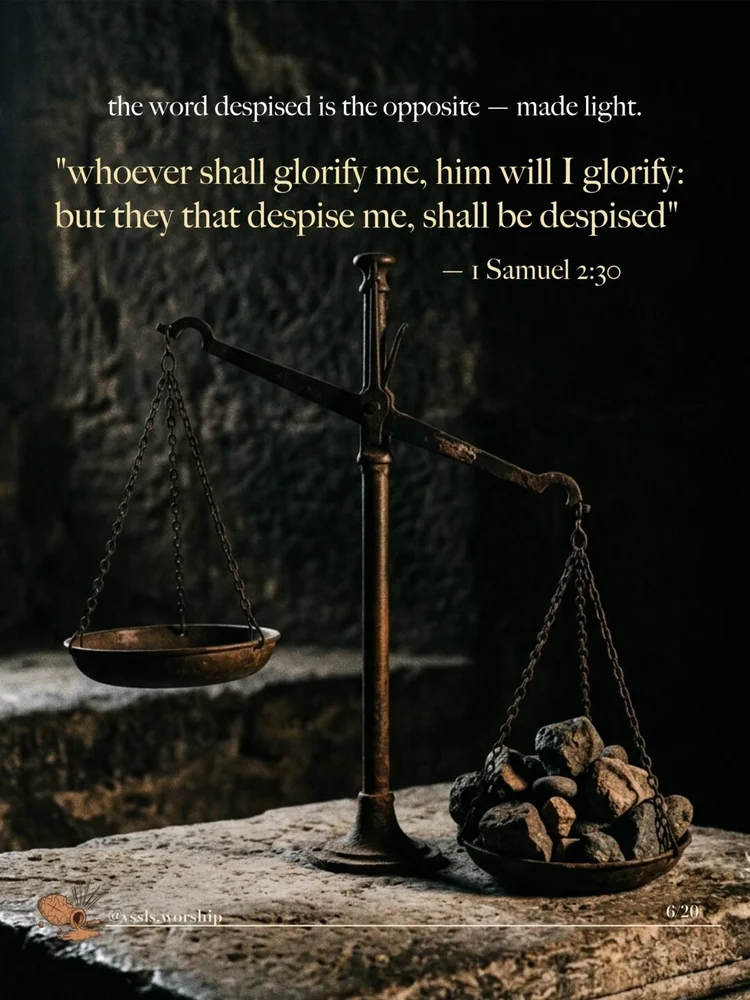
the word despised is the opposite — made light.
"whoever shall glorify me, him will I glorify: but they that despise me, shall be despised"
— 1 Samuel 2:30
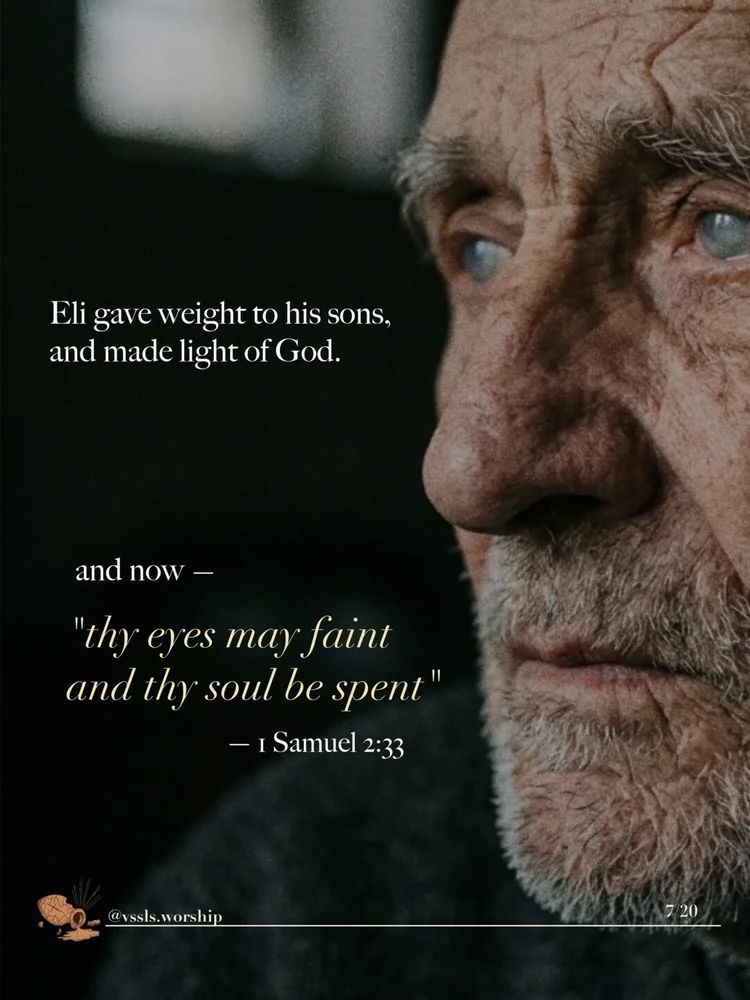
Eli gave weight to his sons and made light of God.
but now —
"that thy eyes may faint and thy soul be spent"
— 1 Samuel 2:33
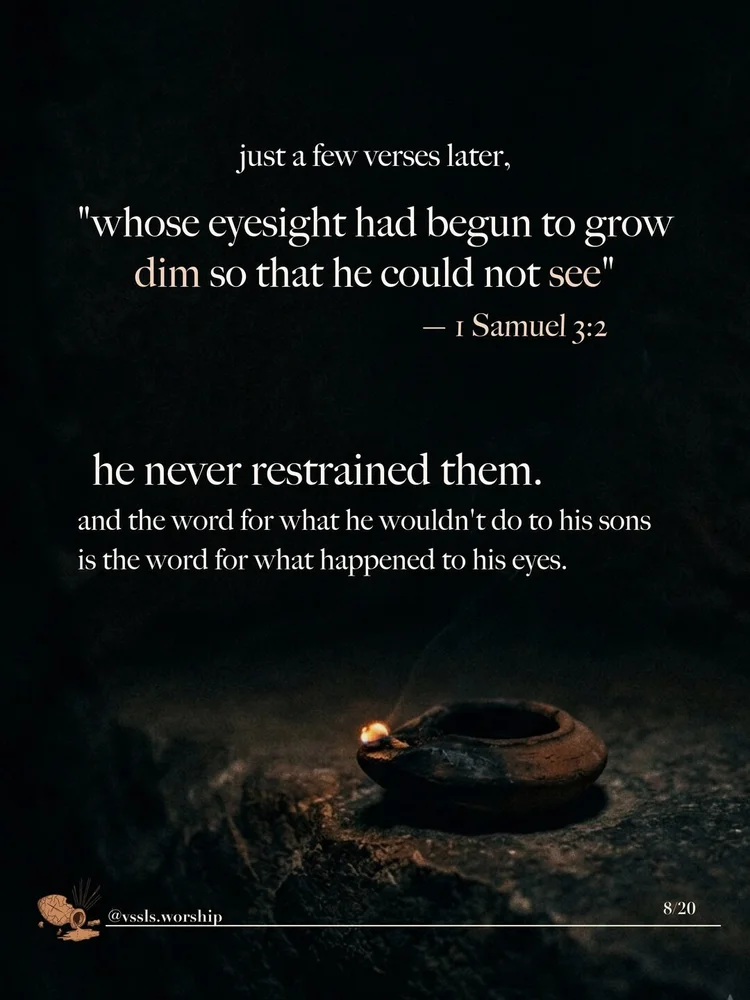
just a few verses later,
"whose eyesight had begun to grow dim so that he could not see"
— 1 Samuel 3:2
he never restrained them.
and the word for what he wouldn't do to his sons
is the word for what happened to his eyes.
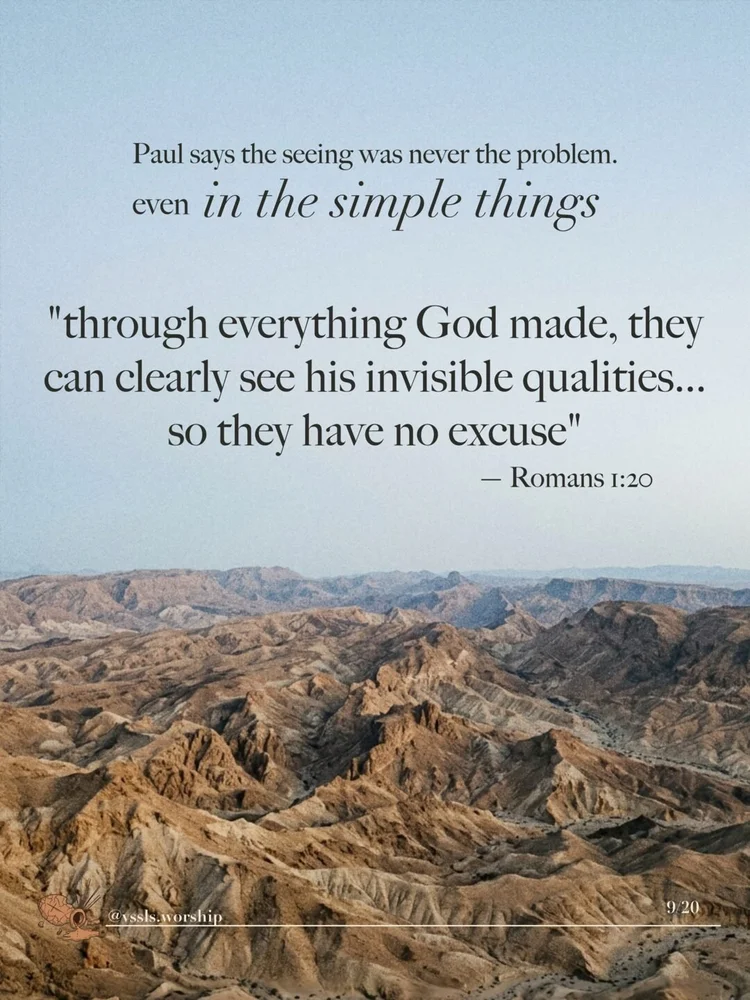
Paul says the seeing was never the problem.
everyone sees. even in the simple things.
"through everything God made, they can clearly see his invisible qualities... so they have no excuse"
— Romans 1:20
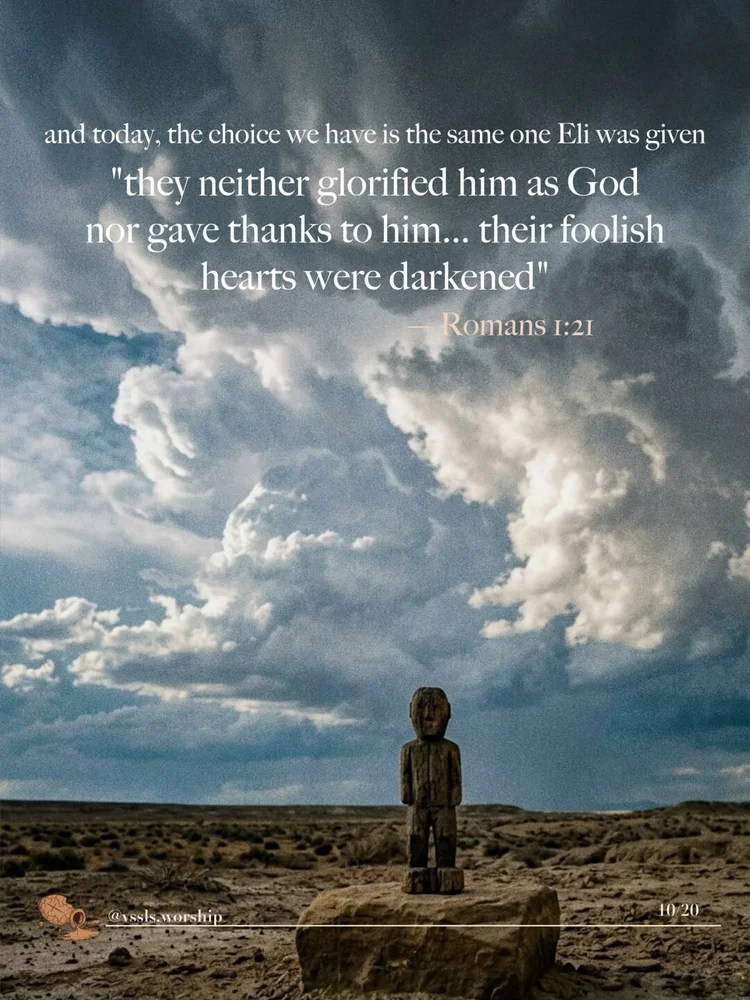
and today, the choice we have is the same one Eli was given
"they neither glorified him as God nor gave thanks to him... their foolish hearts were darkened"
— Romans 1:21
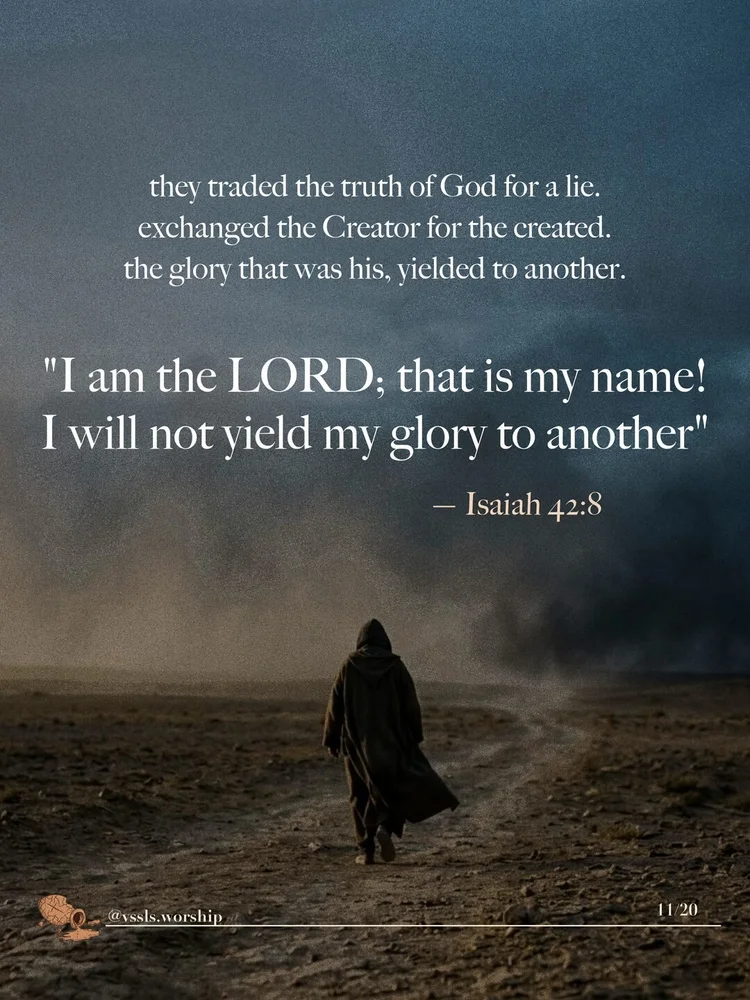
they traded the truth of God for a lie.
exchanged the Creator for the created.
the glory that was his, yielded to another.
"I am the LORD; that is my name! I will not yield my glory to another"
— Isaiah 42:8
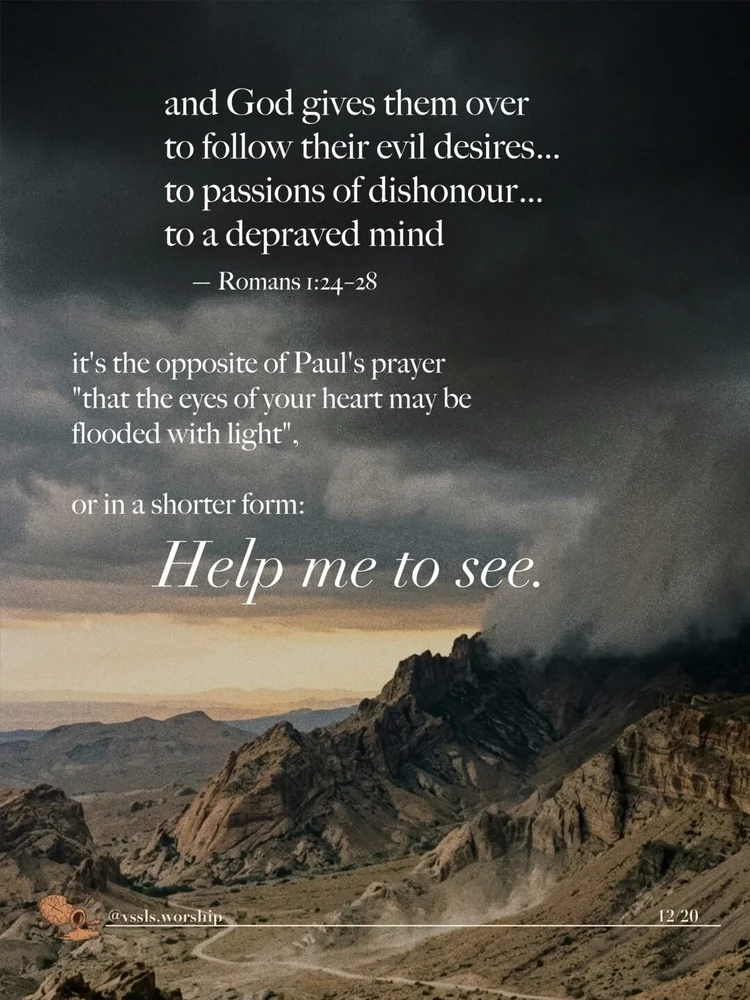
and God gives them over to follow their evil desires… to passions of dishonour… to a depraved mind
— Romans 1:24–28
it's the opposite of Paul's prayer "that the eyes of your heart may be flooded with light", or in a shorter prayer, "Help me to see."
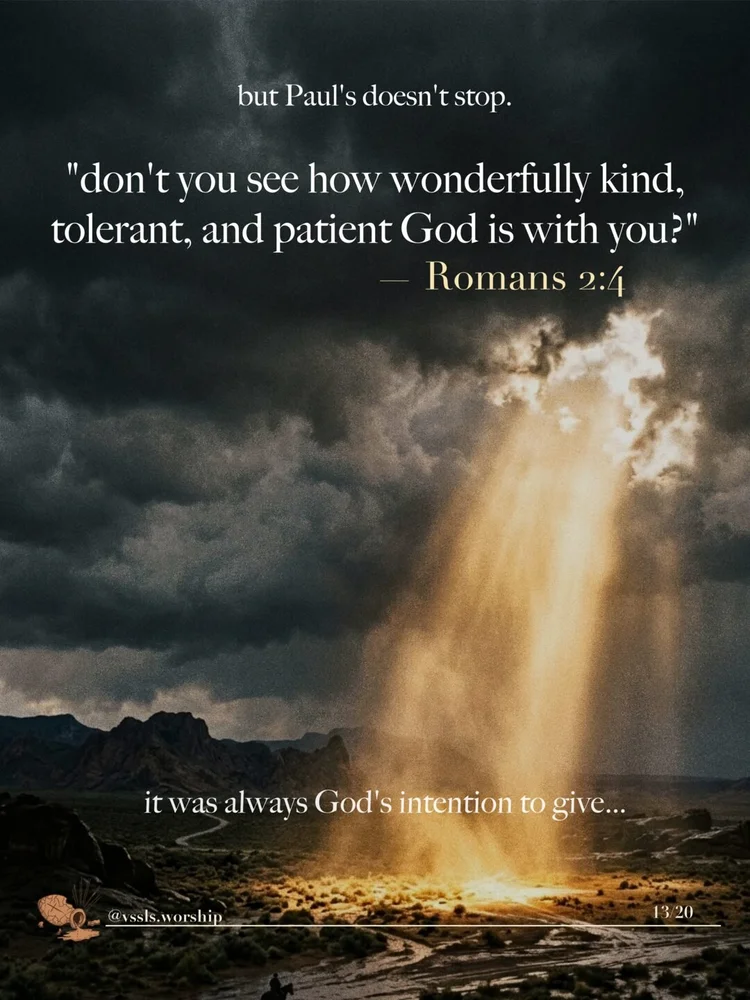
but Paul doesn't stop.
"don't you see how wonderfully kind, tolerant, and patient God is with you?"
— Romans 2:4
it was always God's intention to give…
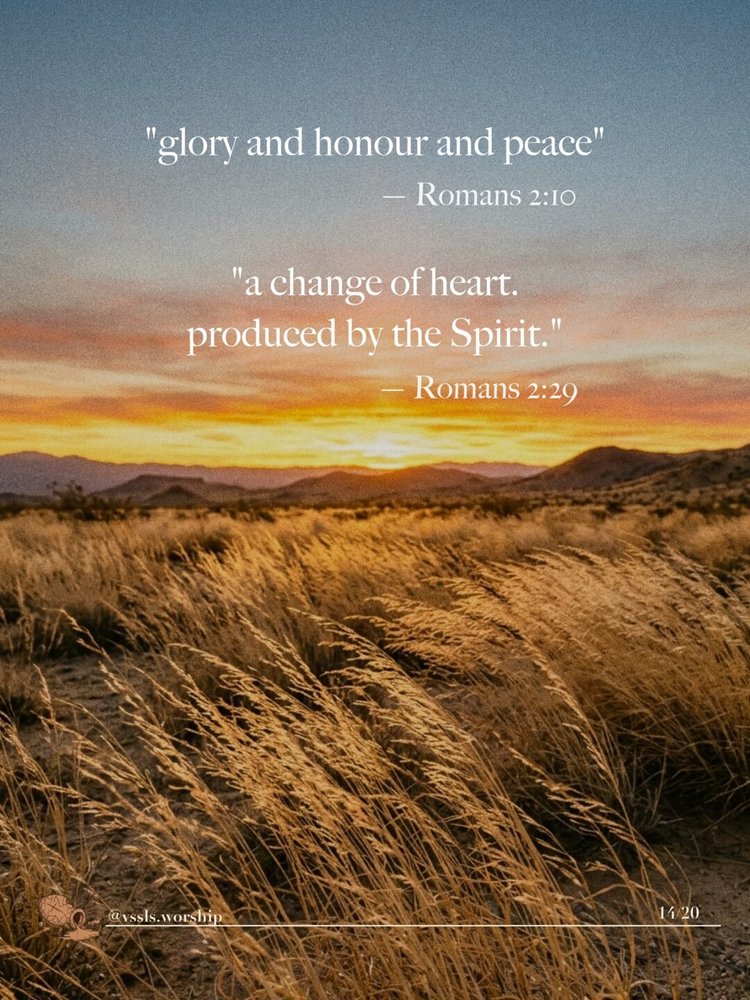
"glory and honour and peace"
— Romans 2:10
"a change of heart. produced by the Spirit."
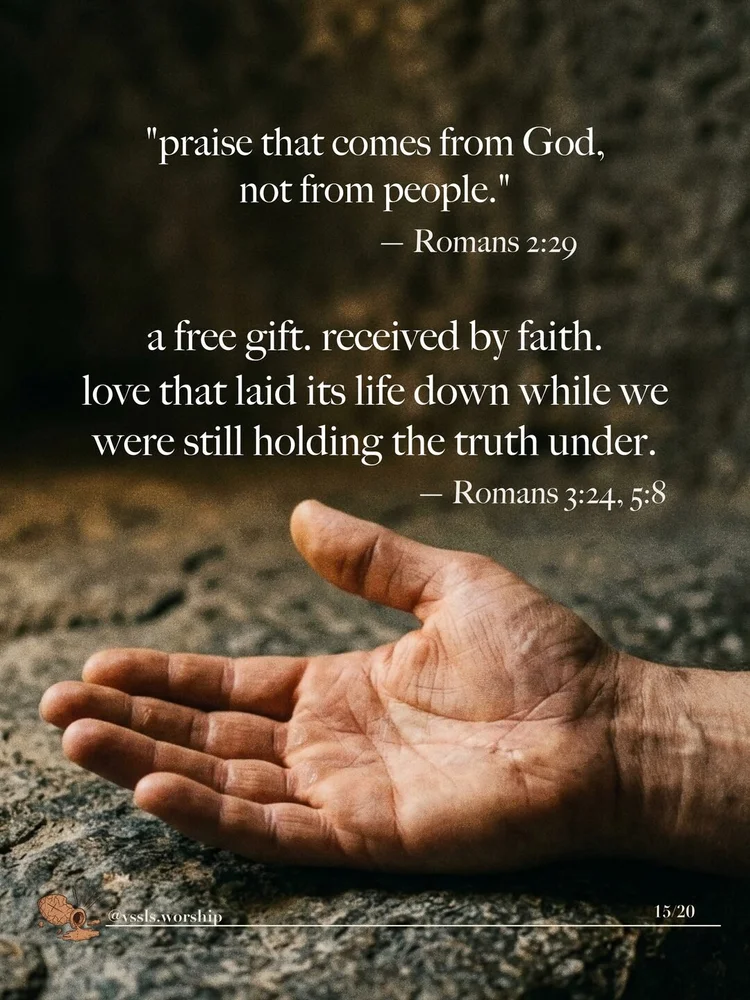
— Romans 2:29
"praise that comes from God, not from people."
a free gift. received by faith.
love that laid its life down while we were still holding the truth under.
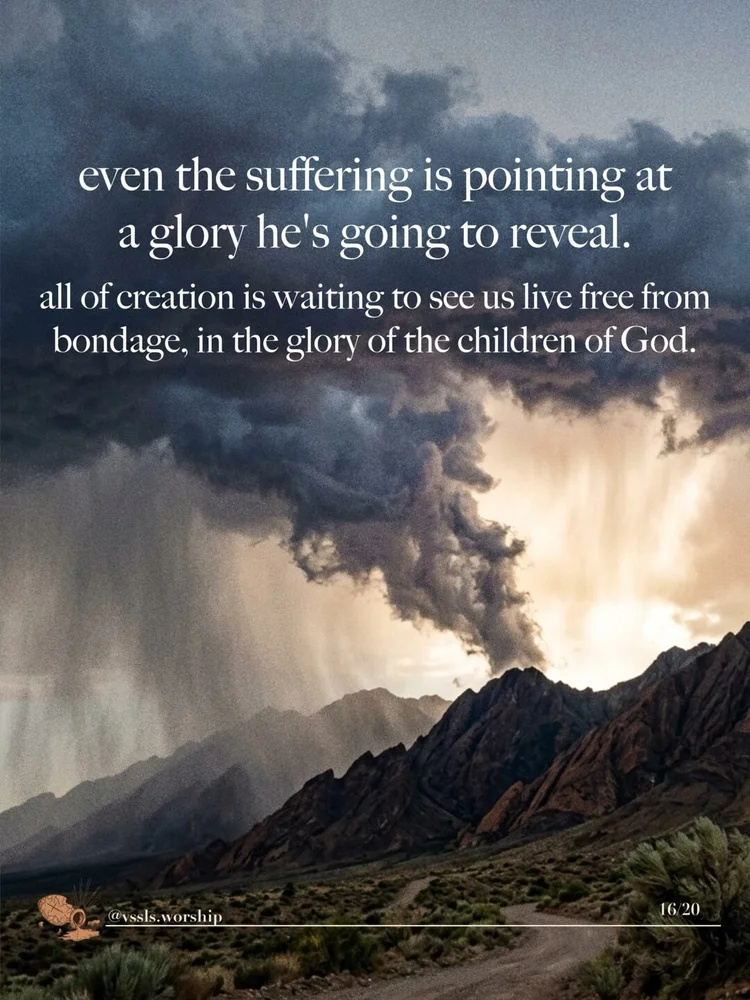
even the suffering is pointing at a glory he's going to reveal. all of creation is waiting to see us live free from bondage, in the glory of the children of God.
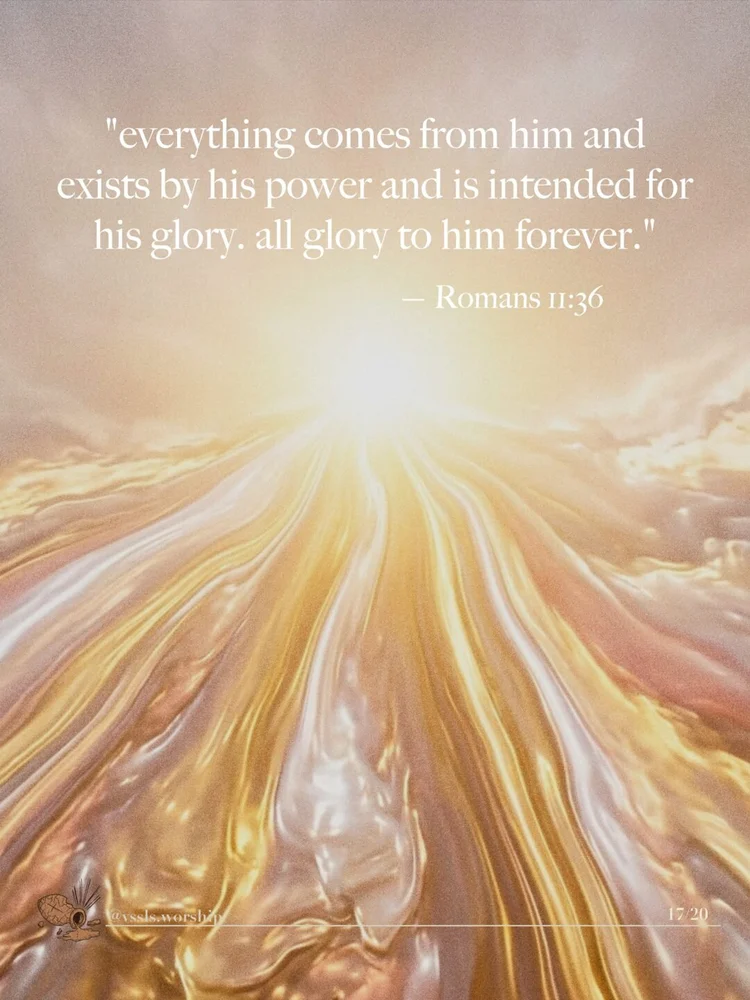
"everything comes from him and exists by his power and is intended for his glory. all glory to him forever."
— Romans 11:36
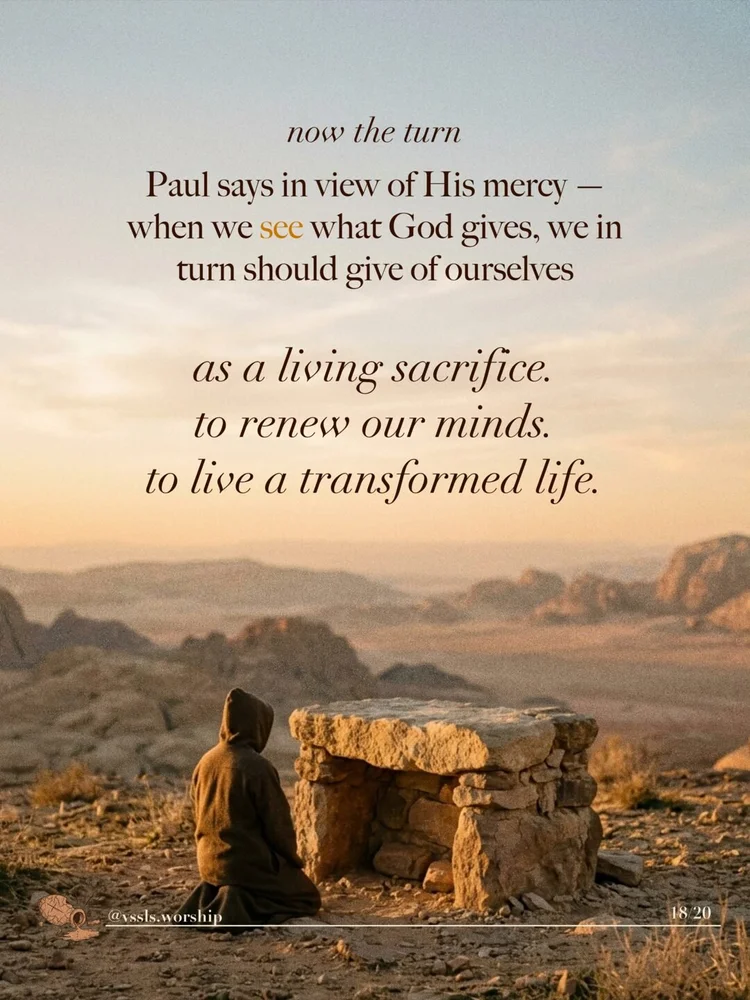
now the turn
Paul says in view of His mercy — when we see what God gives, we in turn should give of ourselves as
a living sacrifice.
to renew our minds.
to live a transformed life.
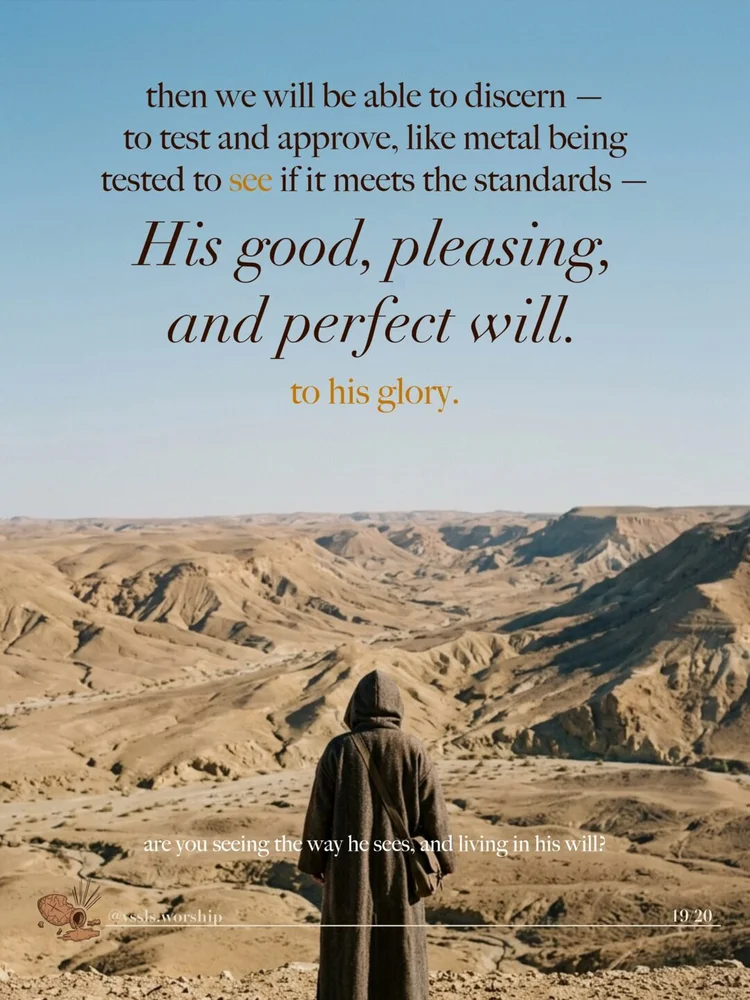
then we will be able to discern — to test and approve, like metal being tested to see if it meets the standards —
his good, pleasing, and perfect will. to his glory.
are you seeing the way he sees, and living in his will?
make it your prayer:
Help me to see
walk the journey from "Help Me To See" to "Eyes Fixed On You"
Samuel: confide in me
read the slides as text
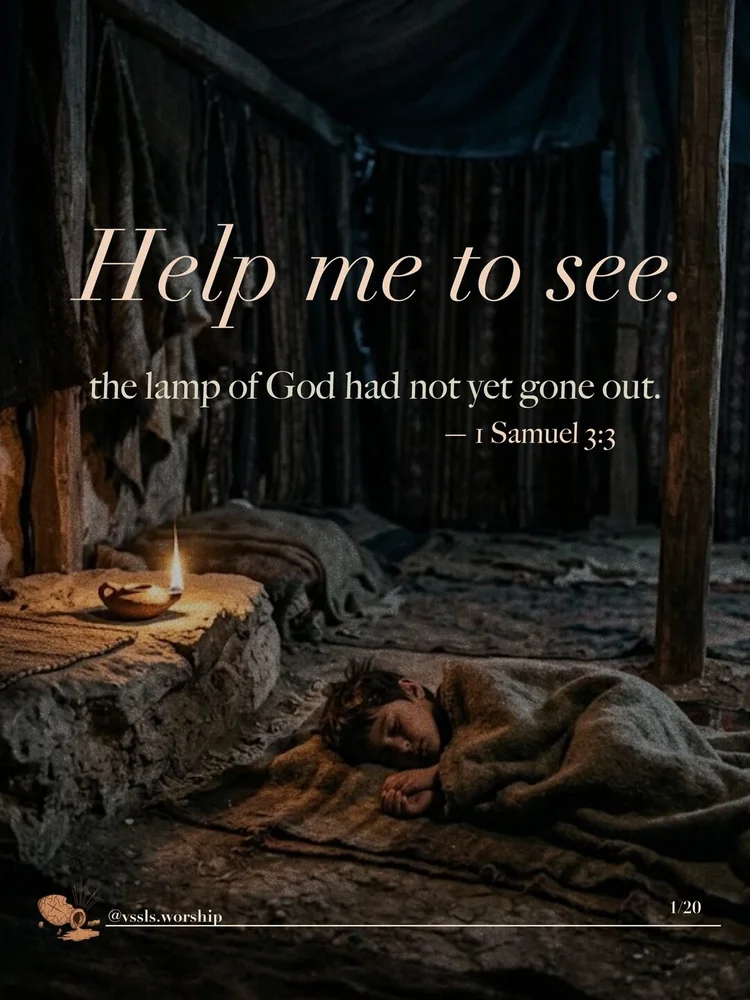
Help me to see.
the lamp of God had not yet gone out.
— 1 Samuel 3:3
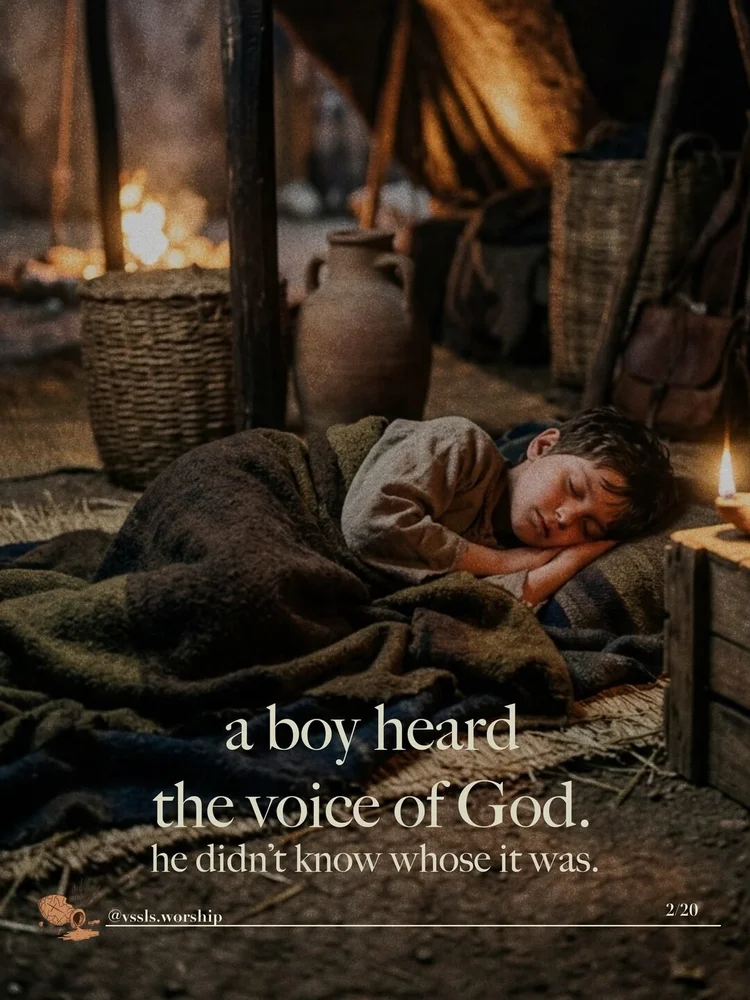
a boy heard the voice of God.
he didn't know whose it was.
"Samuel did not yet know the LORD: the word of the LORD had not yet been revealed to him"
— 1 Samuel 3:7
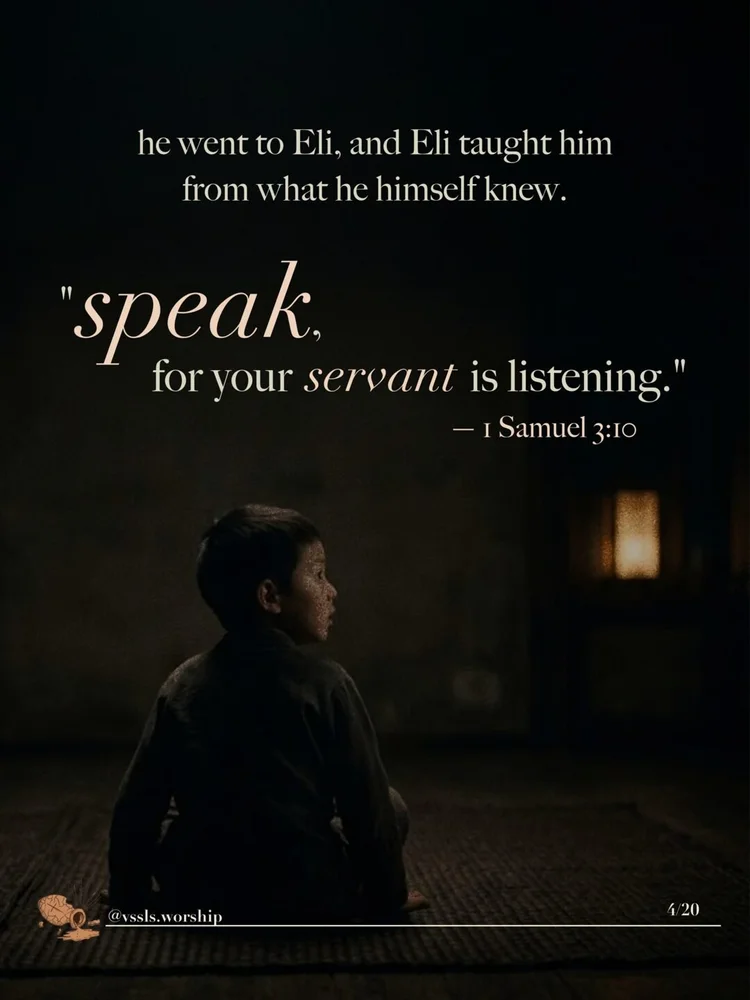
He went to Eli, and Eli taught him from what he himself knew.
"Speak, for your servant is listening."
— 1 Samuel 3:10
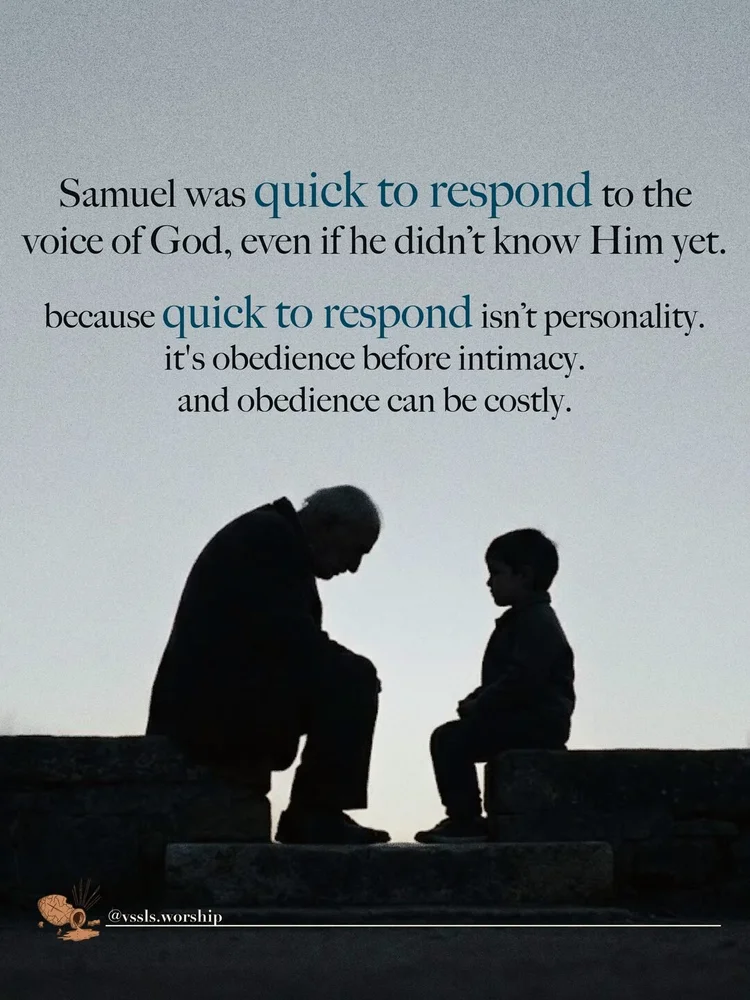
Samuel was quick to respond to the voice of God, even if he didn't know Him yet.
because quick to respond isn't a personality.
it's obedience before intimacy.
and obedience can be costly.
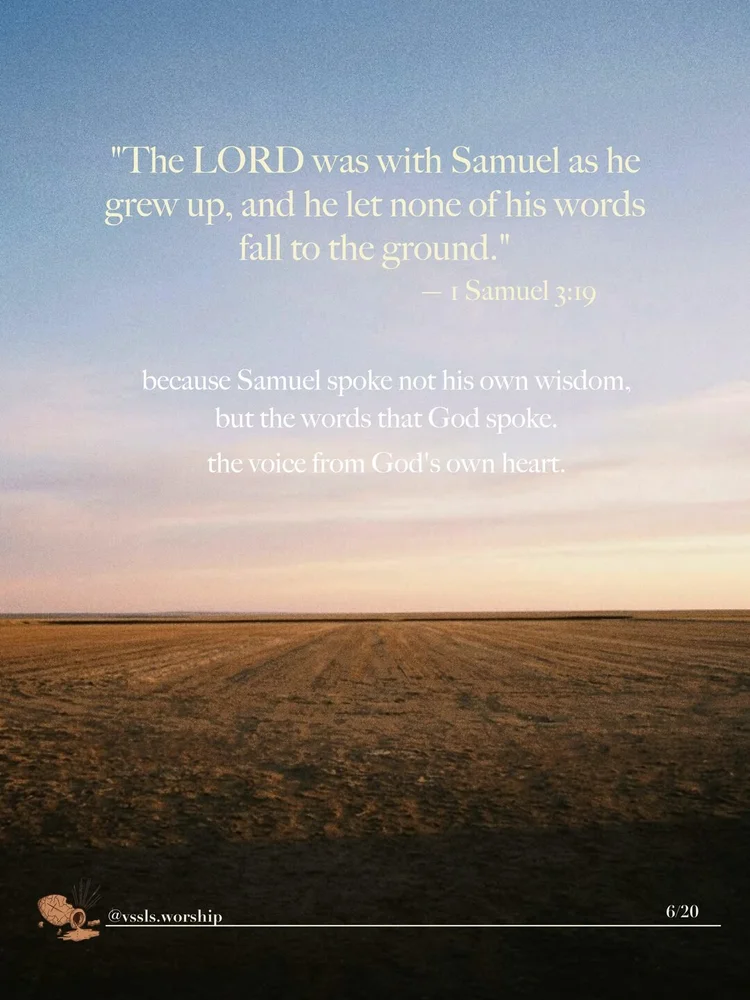
"The LORD was with Samuel as he grew up, and he let none of his words fall to the ground."
— 1 Samuel 3:19
because Samuel spoke not his own wisdom, but the words that God spoke
the voice from God's own heart
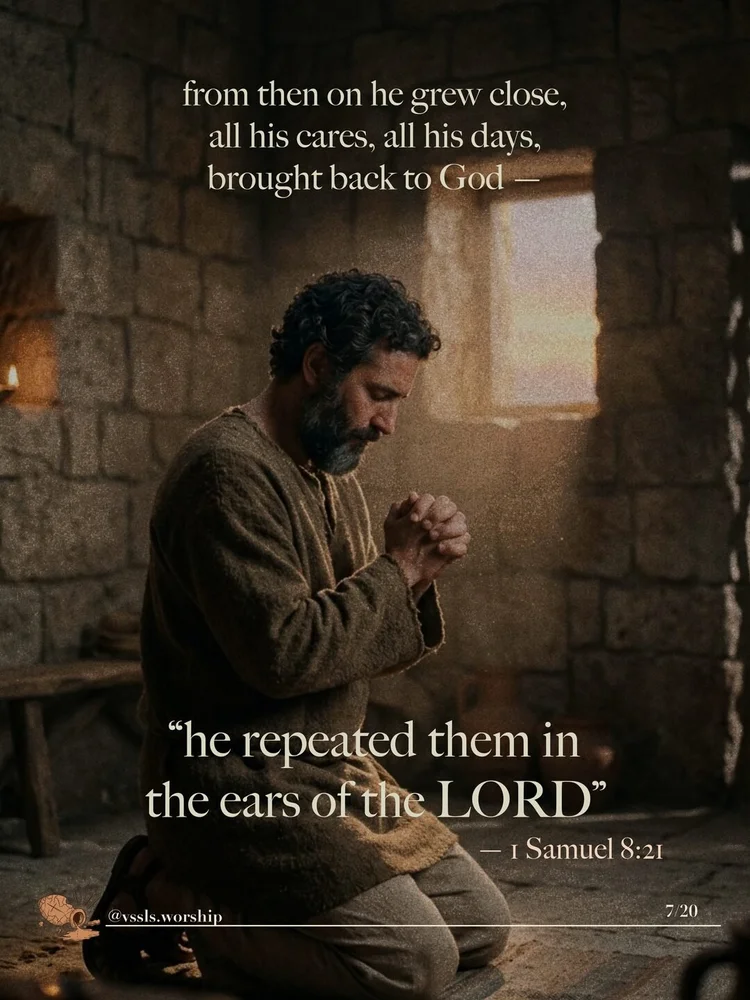
from then on he grew close, all his cares, all his days, brought back to God —
"he repeated them in the ears of the LORD"
— 1 Samuel 8:21
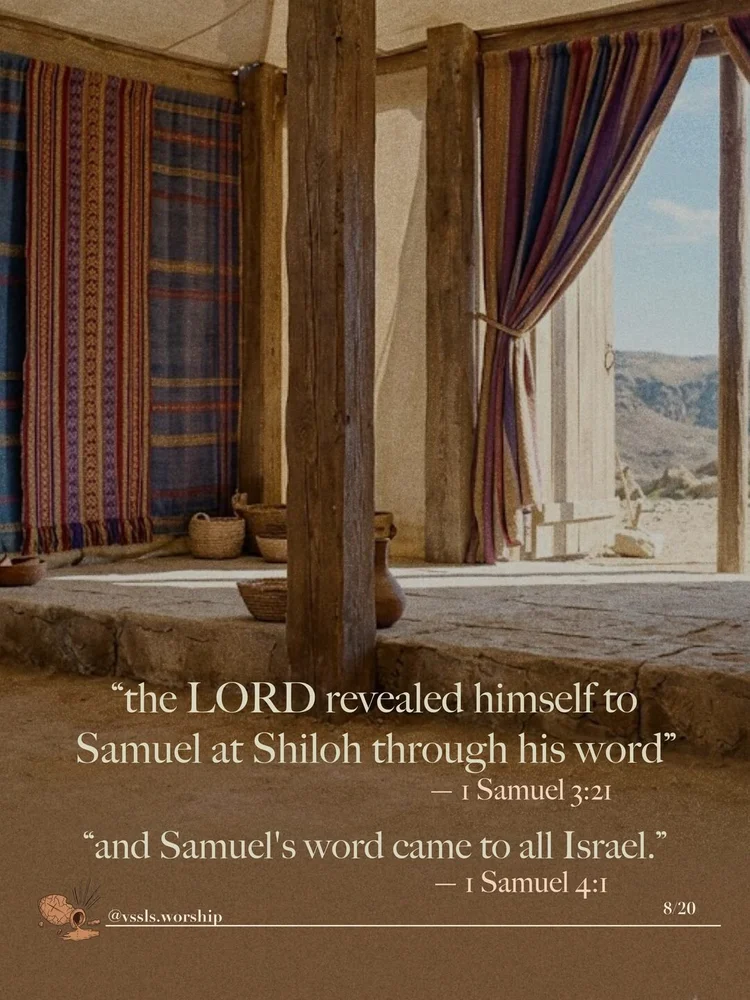
"the LORD revealed himself to Samuel at Shiloh through his word"
— 1 Samuel 3:21
"And Samuel's word came to all Israel."
— 1 Samuel 4:1
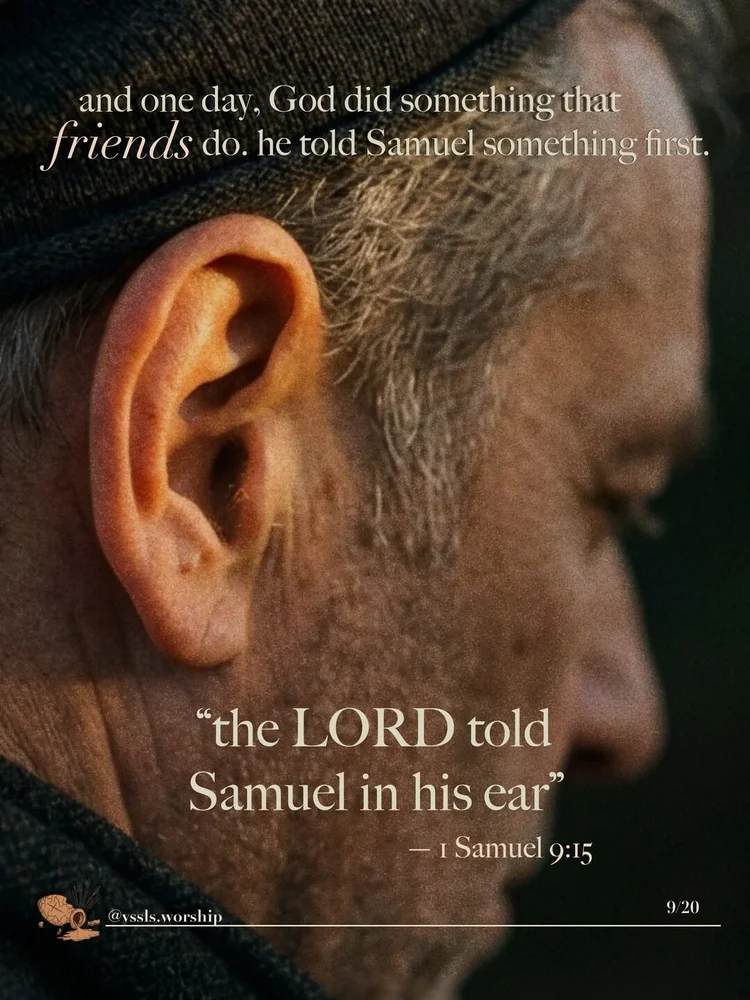
and one day, God did something that friends do. he told him something first.
"the LORD had told Samuel in his ear"
— 1 Samuel 9:15
that's the prayer: "Like a friend, would you speak to me?"
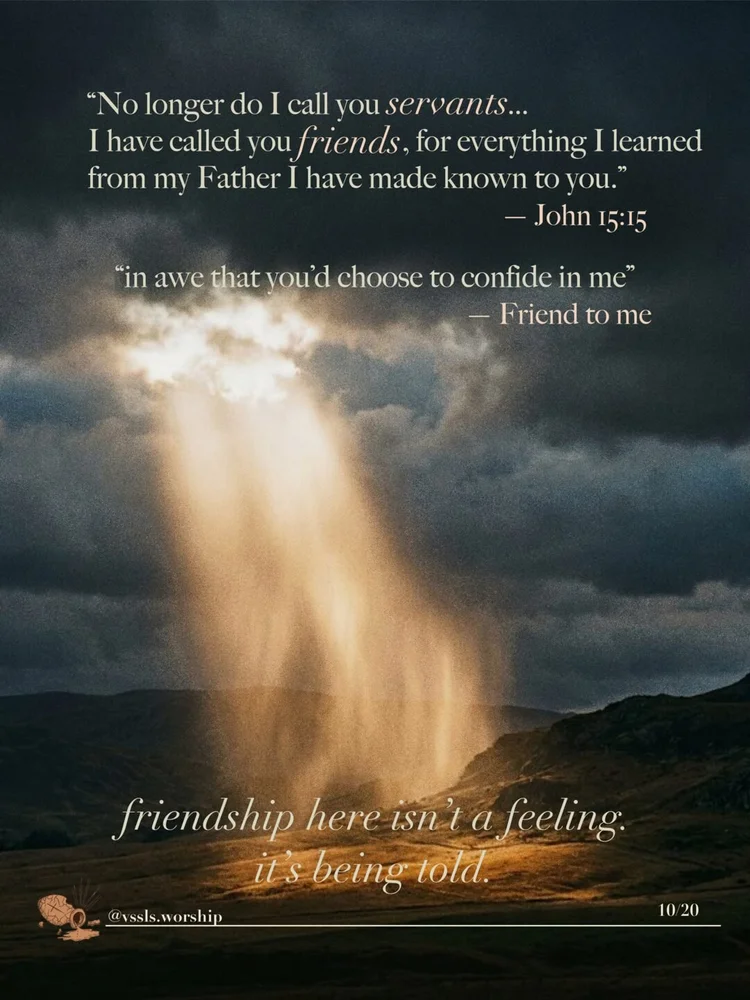
"No longer do I call you servants… I have called you friends, for everything I learned from my Father I have made known to you."
— John 15:15
"in awe that you'd choose to confide in me"
— Friend to Me
friendship here isn't a feeling. it's being told.
and being his friend never made the asks smaller.
he kept moving the moment God spoke. it kept costing him something.
but every yes makes the next yes easier.
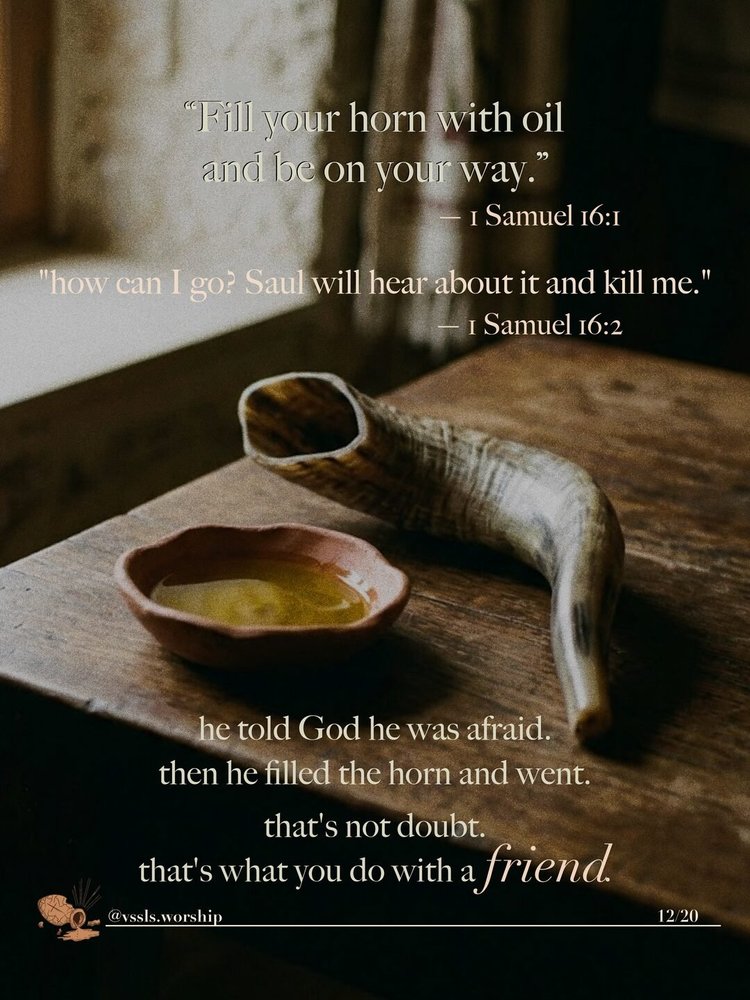
"Fill your horn with oil and be on your way."
— 1 Samuel 16:1
"how can I go? Saul will hear about it and kill me."
he told God he was afraid. then he filled the horn and went.
that's not doubt. that's what you do with a friend.
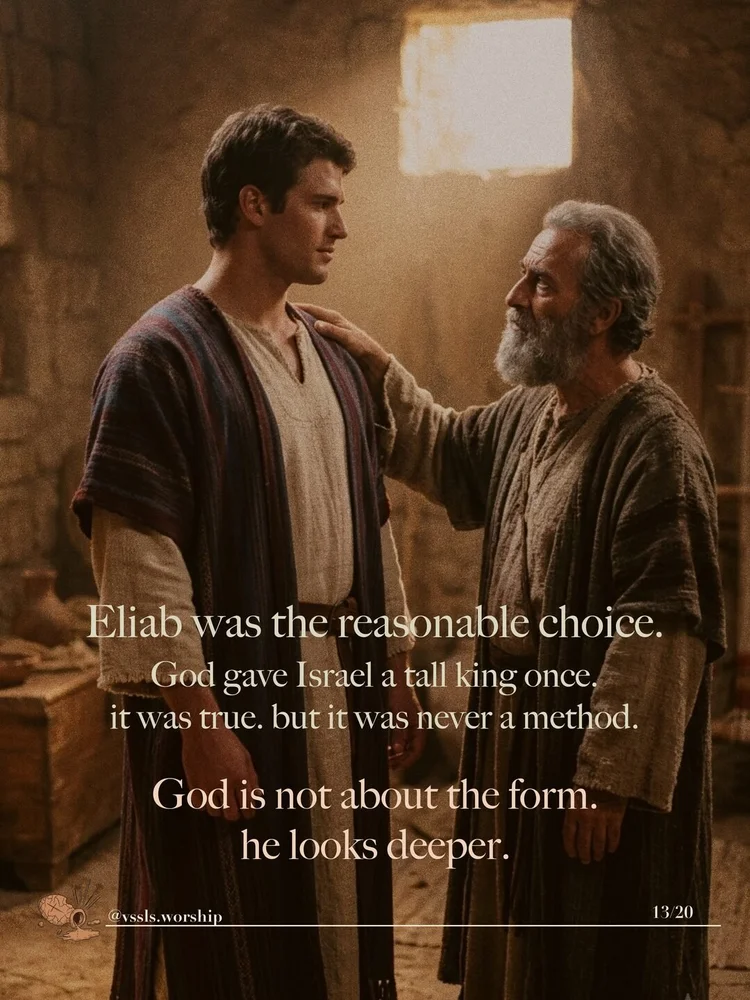
Eliab was the reasonable choice.
God gave Israel a tall king once. it was true. it was never a method.
God is not about the form. he looks deeper.
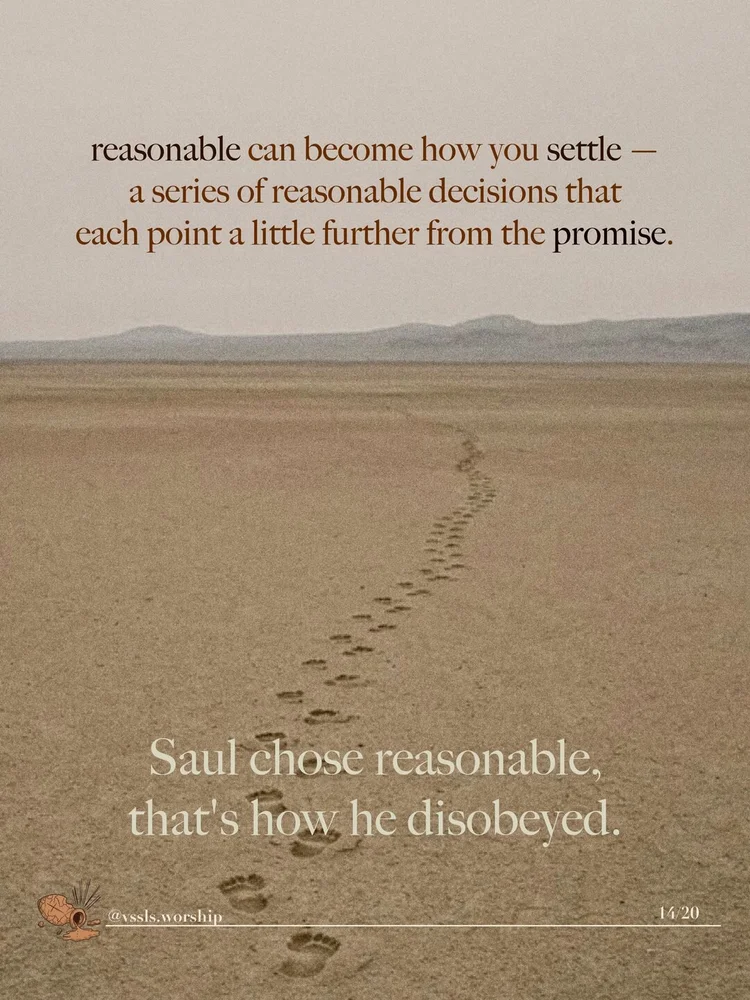
reasonable can become how you settle. a series of reasonable decisions that each point a little further from the promise.
Saul chose reasonable, that's how he disobeyed.
— adapted from Your Word My Compass, Day 4
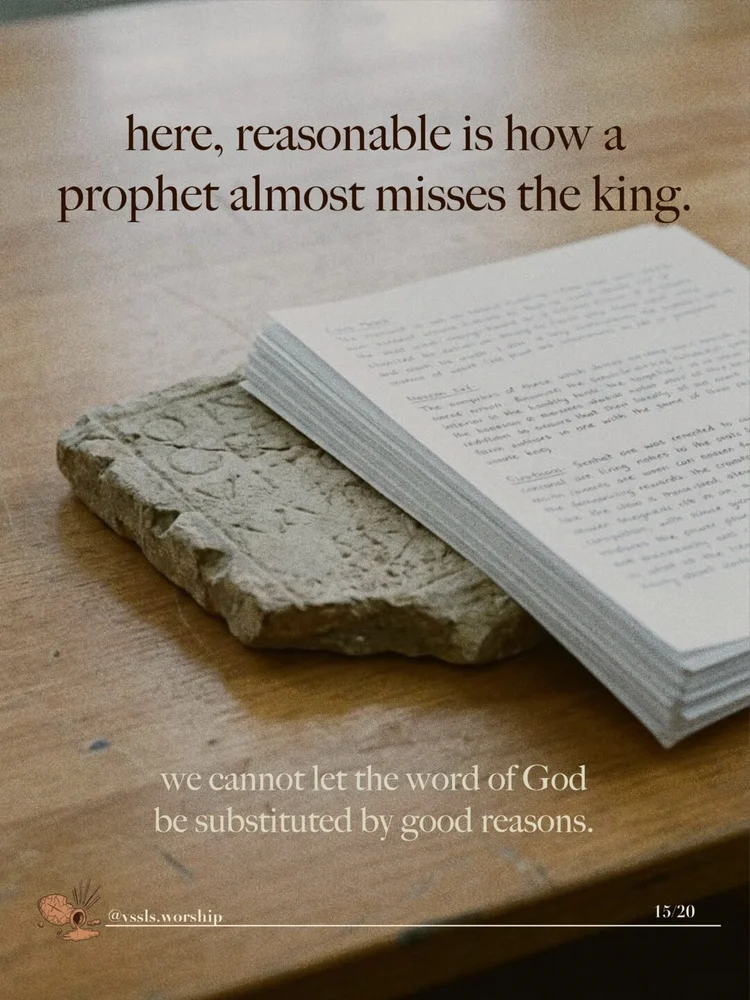
here, reasonable is how a prophet almost misses the king.
we cannot let the word of God be substituted by good reasons.
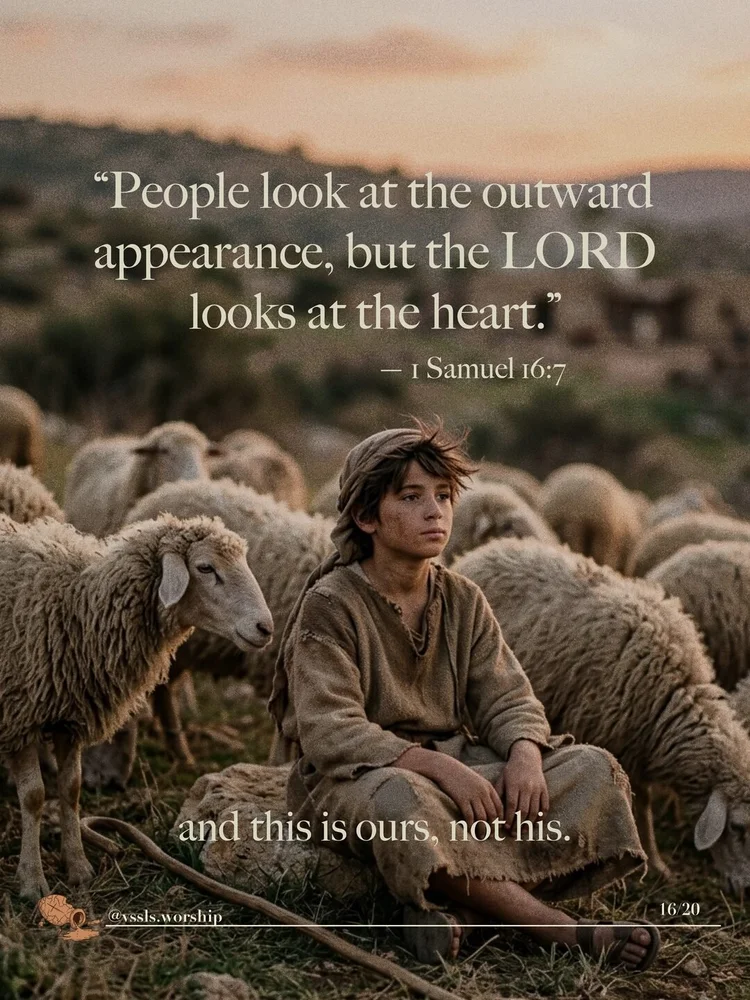
"People look at the outward appearance, but the LORD looks at the heart."
— 1 Samuel 16:7
and this is our problem, not his.
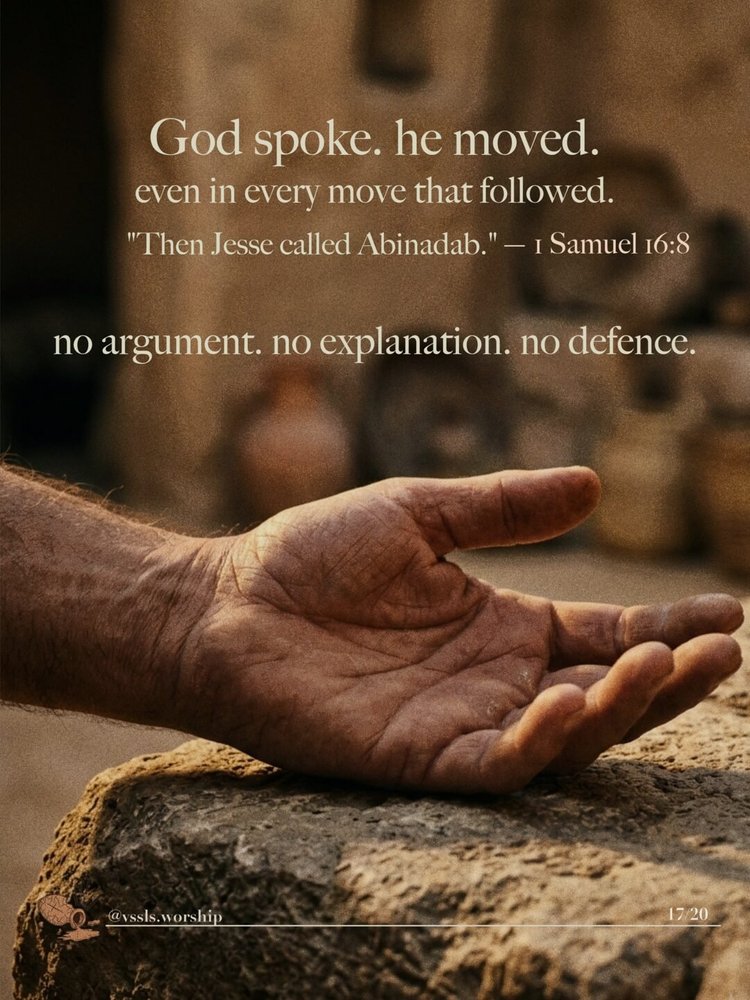
God spoke. and he moved.
"Then Jesse called Abinadab."
— 1 Samuel 16:8
no argument. no explanation. no defence.
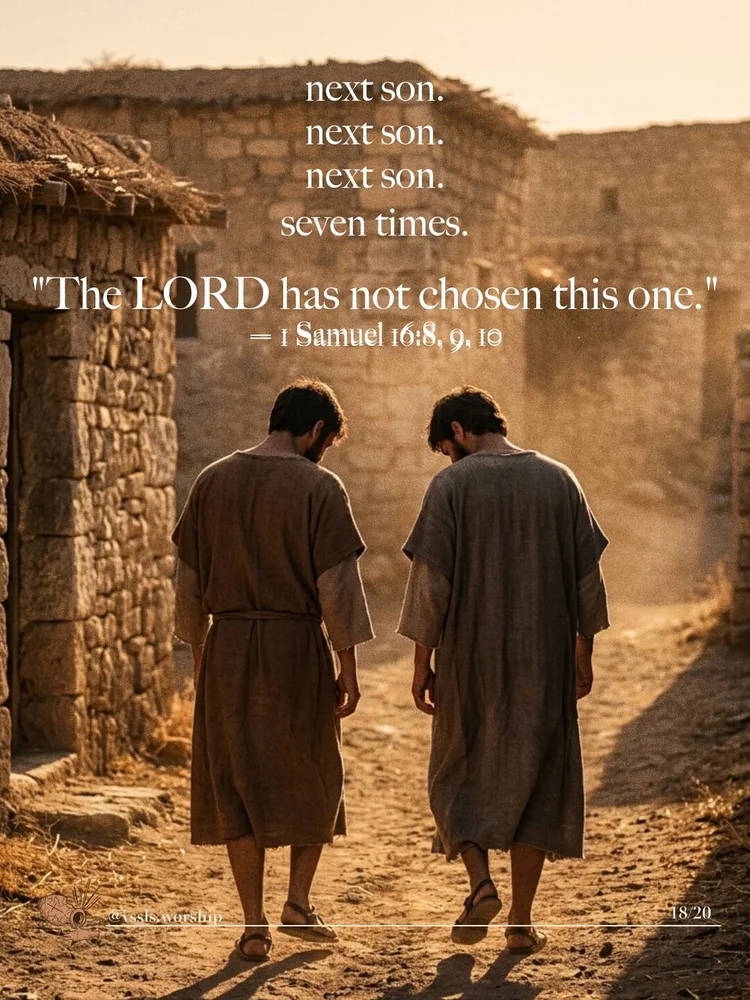
next son.
next son.
next son.
"The LORD has not chosen this one."
— 1 Samuel 16:8, 9, 10
seven times.
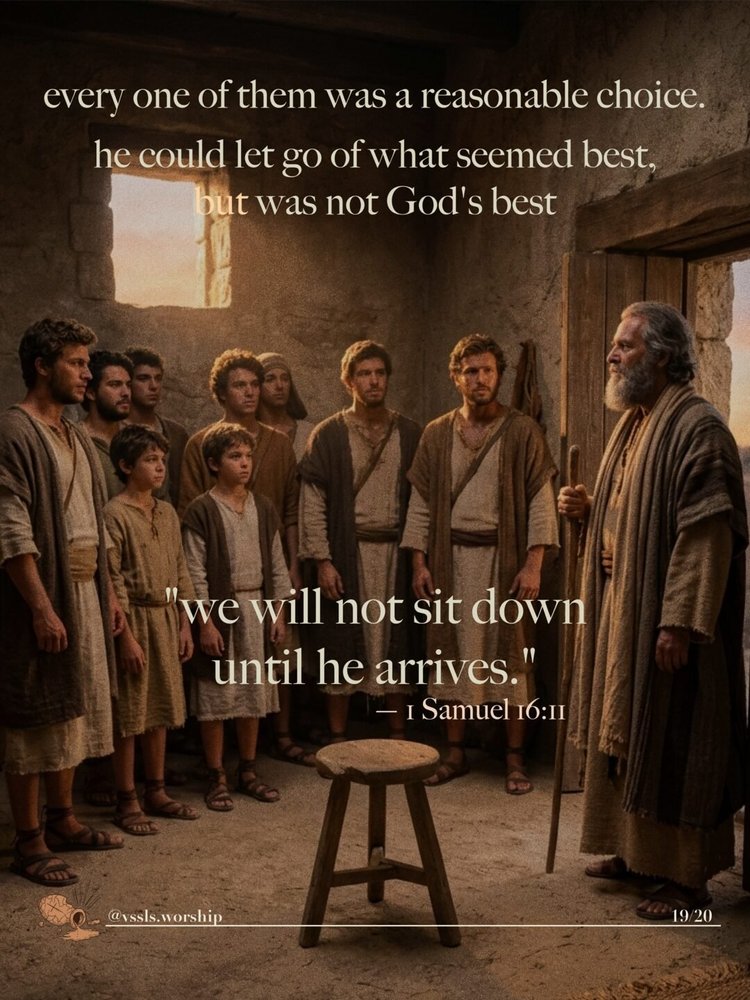
every one of them was a reasonable choice.
"he could let go of what seemed best, but was not God's best"
— Your Word My Compass, Day 4
"we will not sit down until he arrives."
— 1 Samuel 16:11
make it your prayer:
Help me to see
walk the journey from "Help Me To See" to "Eyes Fixed On You"
the journey to the cross
read the slides as text
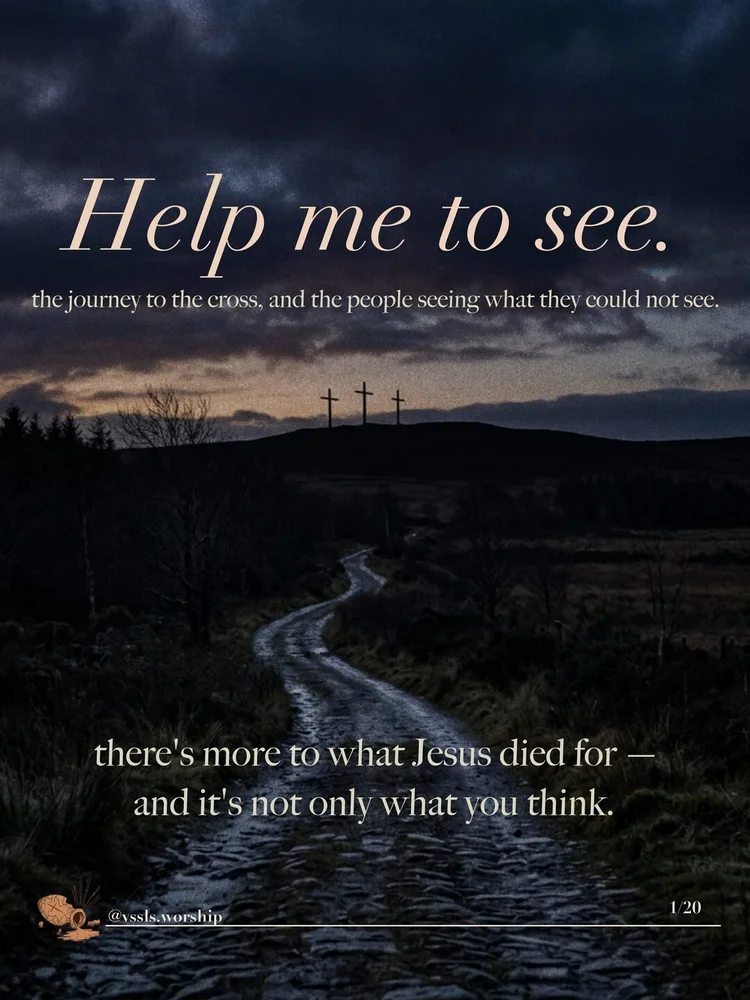
"Help me to see"
the journey to the cross, and the people seeing what they could not see.
there's more to what Jesus died for — it's not only what you think.
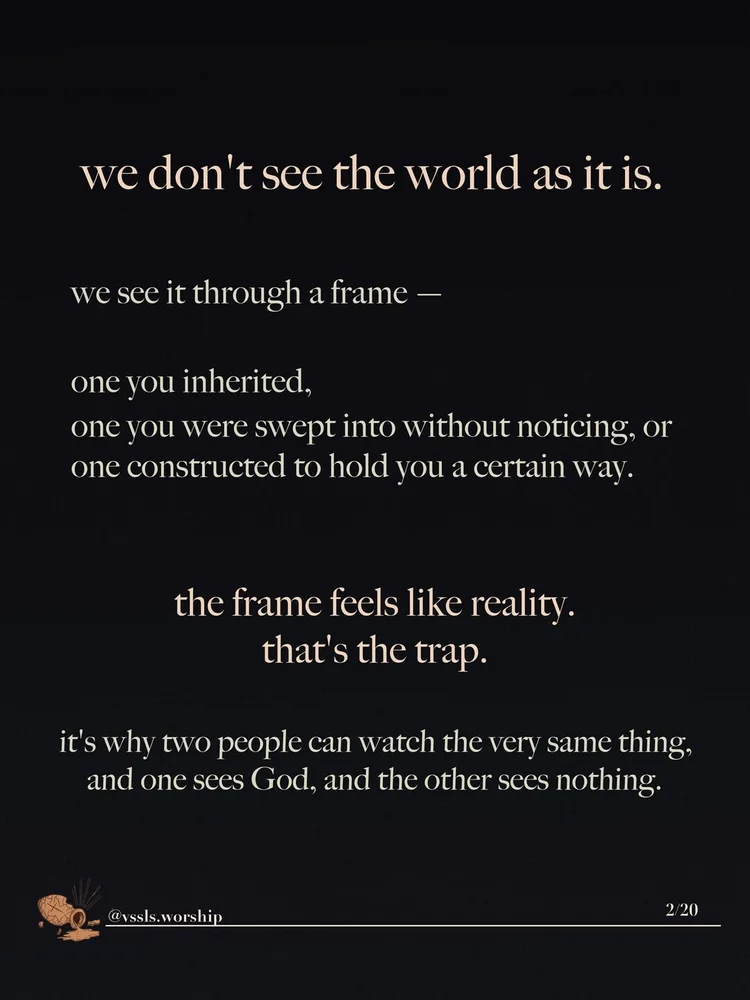
we don't see the world as it is.
we see it through a frame — one you inherited, one you were swept into without noticing, or one constructed to hold you a certain way.
the frame feels like reality. that's the trap.
it's why two people can watch the very same thing, and one sees God, and the other sees nothing.
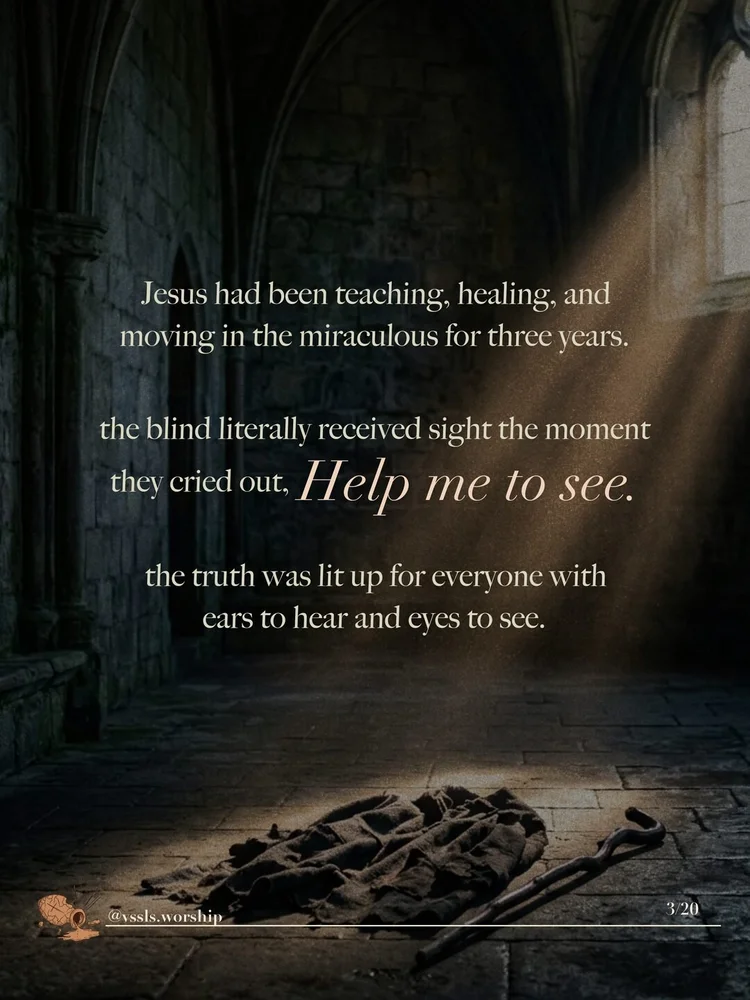
Jesus had been teaching, healing, and moving in the miraculous for three years.
the blind literally received sight the moment they cried out, "Help me to see."
the truth was lit up for everyone with ears to hear and eyes to see.
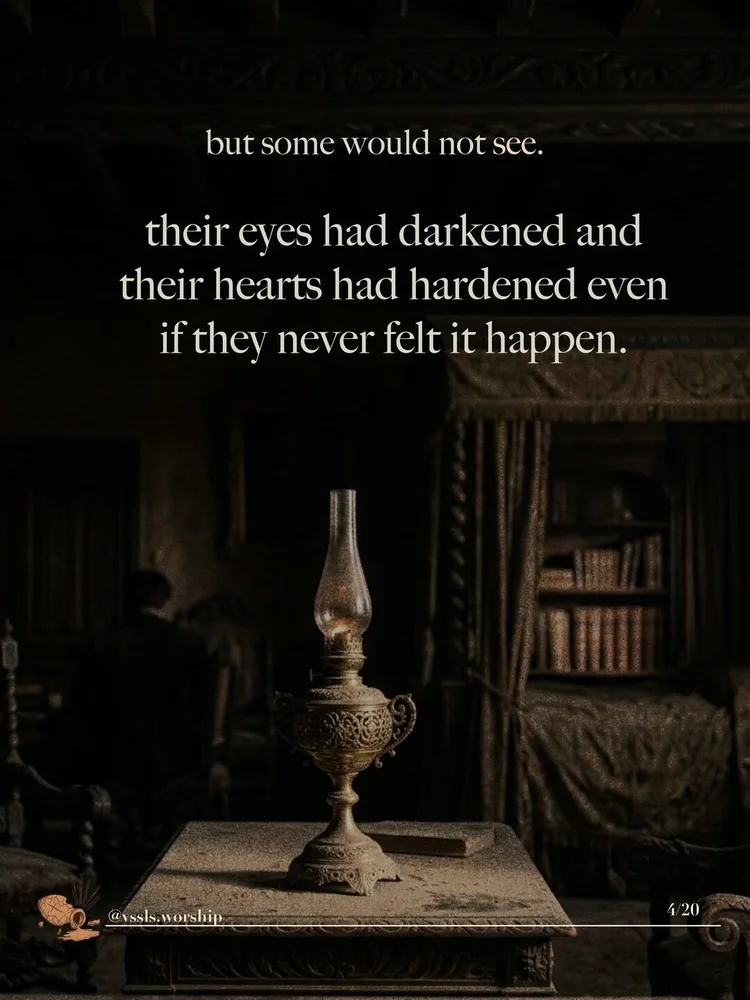
but some would not see.
their eyes had darkened and their hearts had hardened even if they never felt it happen.
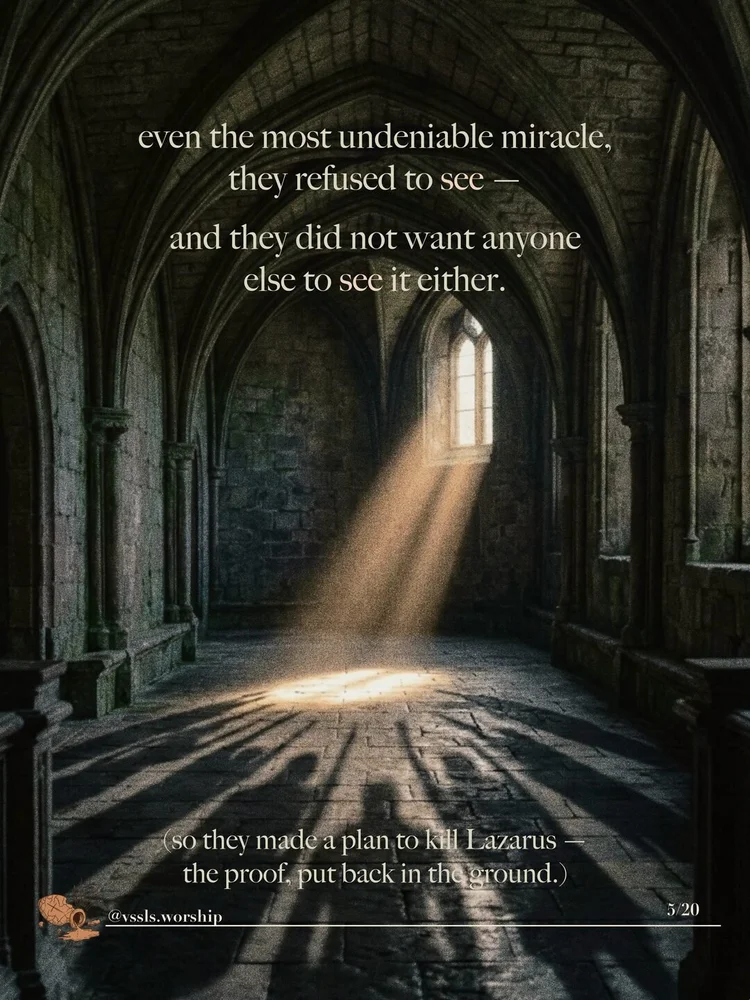
even the most undeniable miracle, they refused to see —
and they did not want anyone else to see it either.
(so they made a plan to kill Lazarus — the proof, put back in the ground.)
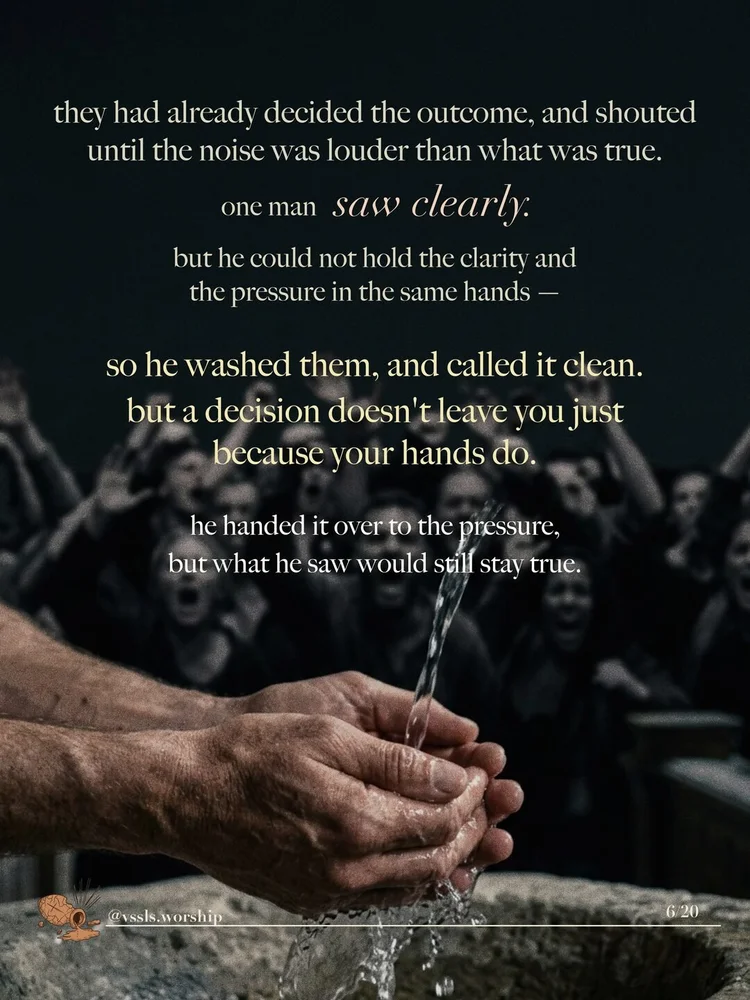
they had already decided the outcome,
and shouted until the noise was louder than what was true.
one man saw it clearly.
he could not hold the clarity and the pressure in the same hands —
so he washed them, and called it clean.
but a decision doesn't leave you just because your hands do.
he handed it over to the pressure, but what he saw would still stay true.
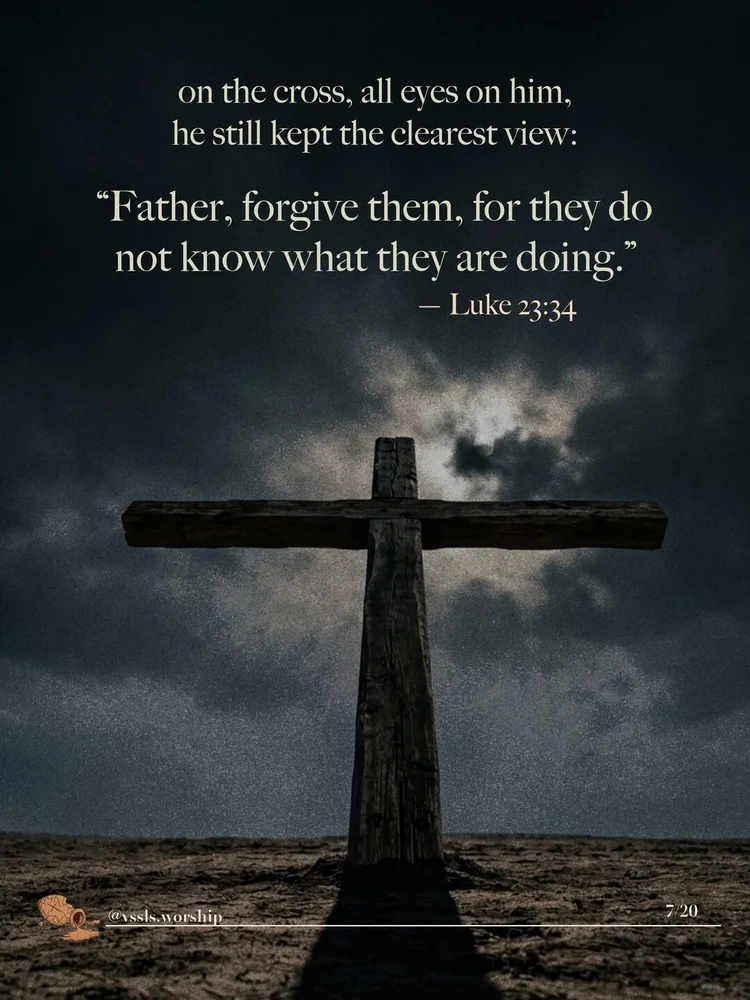
on the cross, all eyes on him, he still kept the clearest view:
"Father, forgive them, for they do not know what they are doing." — Luke 23:34
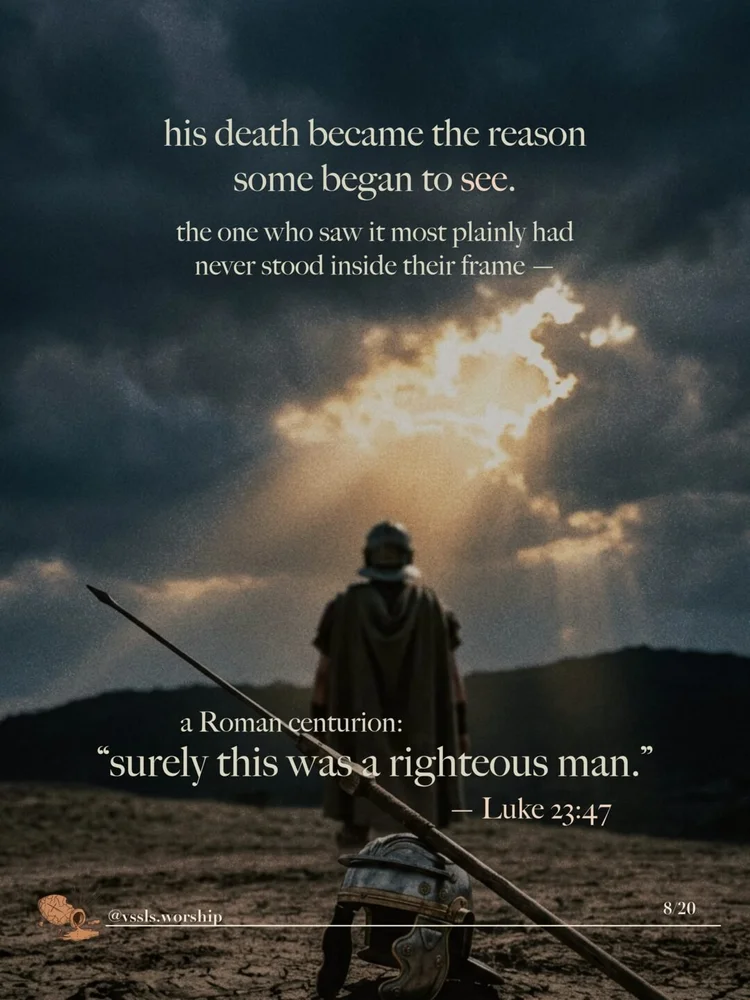
his death became the reason some began to see.
the one who saw it most plainly had never stood inside their frame —
a Roman centurion: "surely this was a righteous man." — Luke 23:47
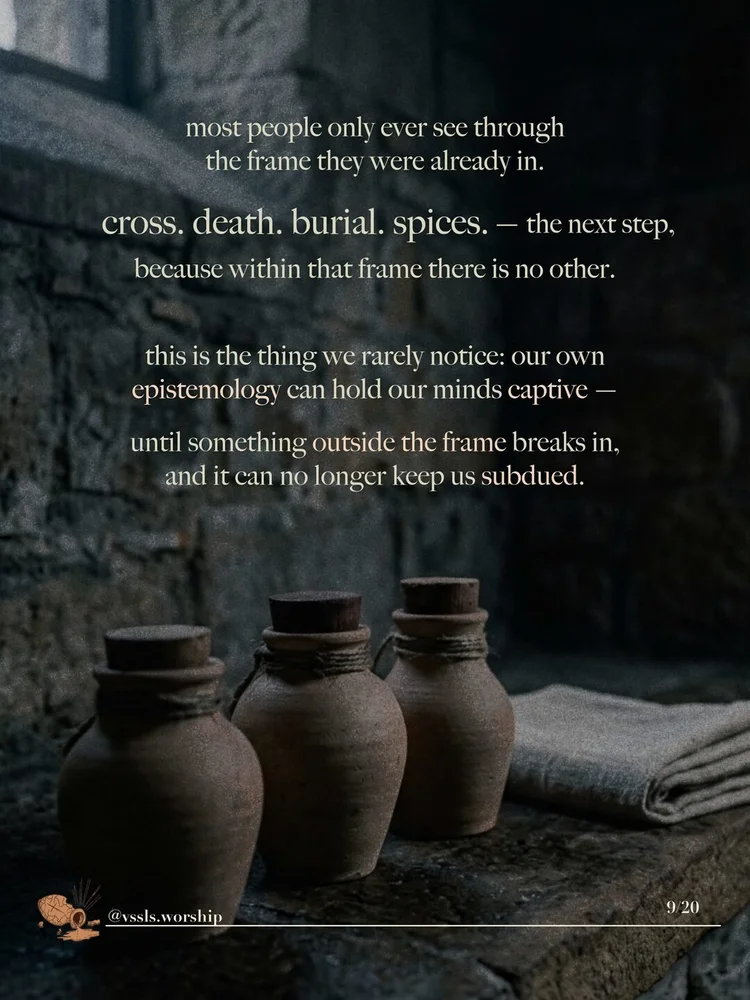
most people only ever see through the frame they were already in.
cross. death. burial. spices. — the next step, because within that frame there is no other.
this is the thing we rarely notice: our own epistemology can hold our minds captive —
until something outside the frame breaks in, and it can no longer keep us subdued.
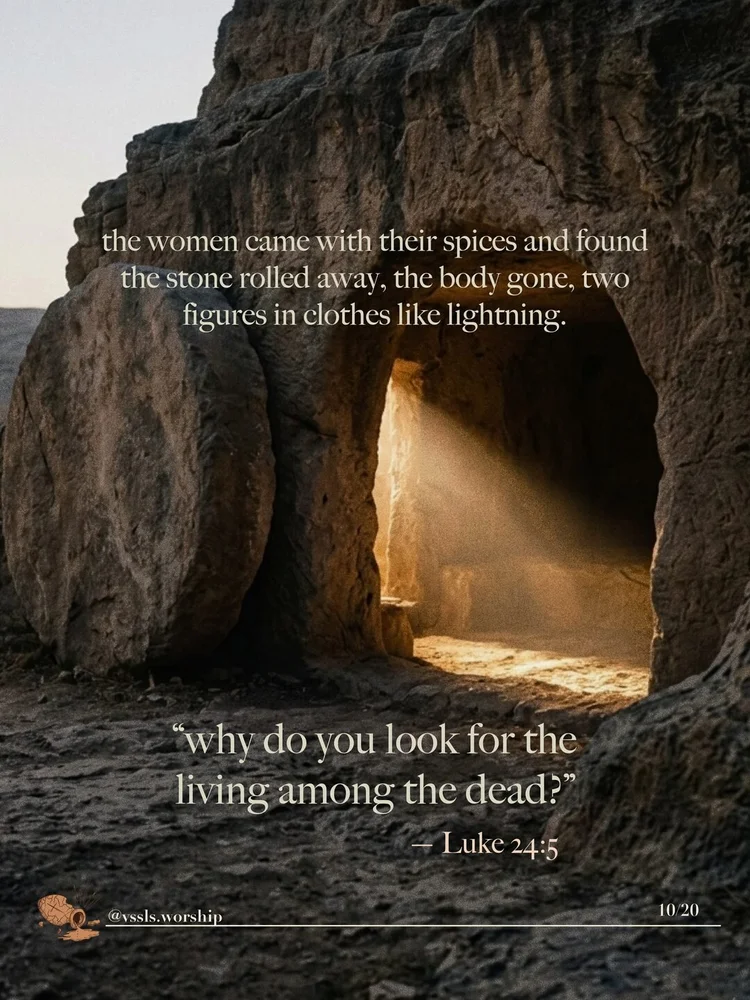
the women came with their spices and found the stone rolled away, the body gone, two figures in clothes like lightning.
"why do you look for the living among the dead?" — Luke 24:5
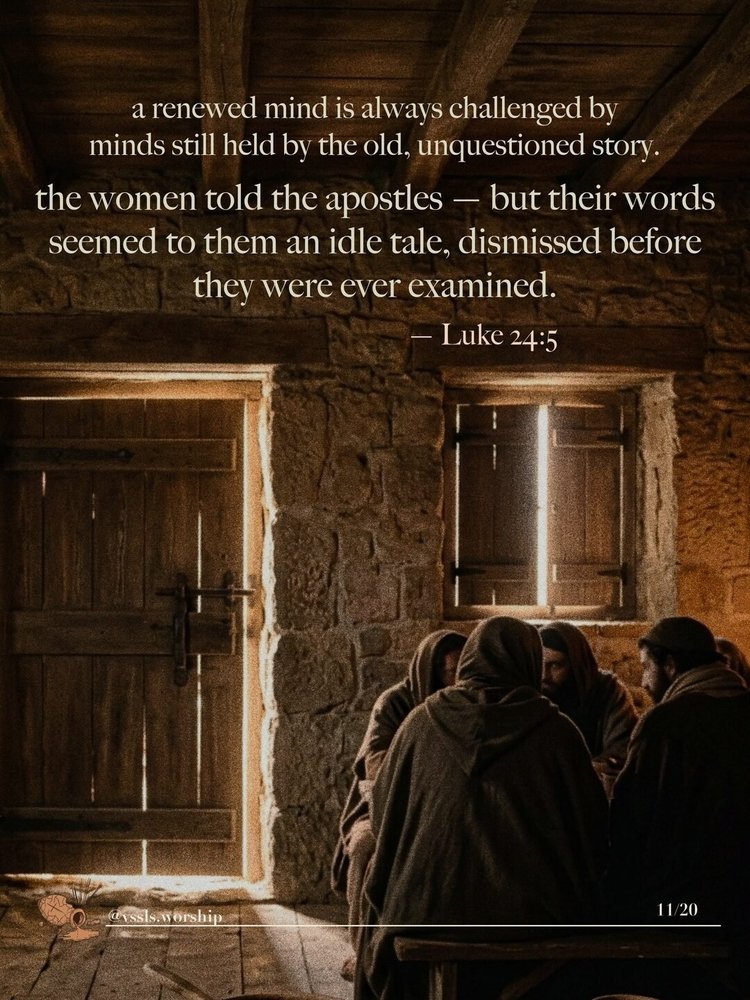
a renewed mind is always challenged by minds still held by the old, unquestioned story.
the women told the apostles — but their words seemed to them an idle tale, dismissed before they were ever examined. — Luke 24:11
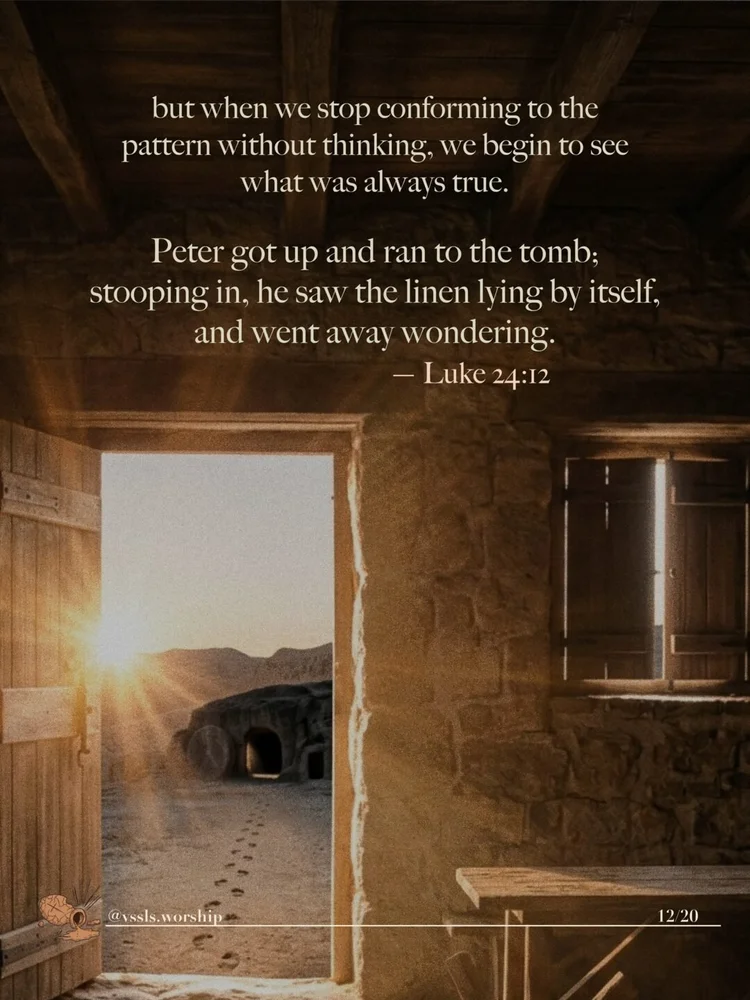
but when we stop conforming to the pattern without thinking, we begin to see what was always true.
Peter got up and ran to the tomb; stooping in, he saw the linen lying by itself, and went away wondering. — Luke 24:12
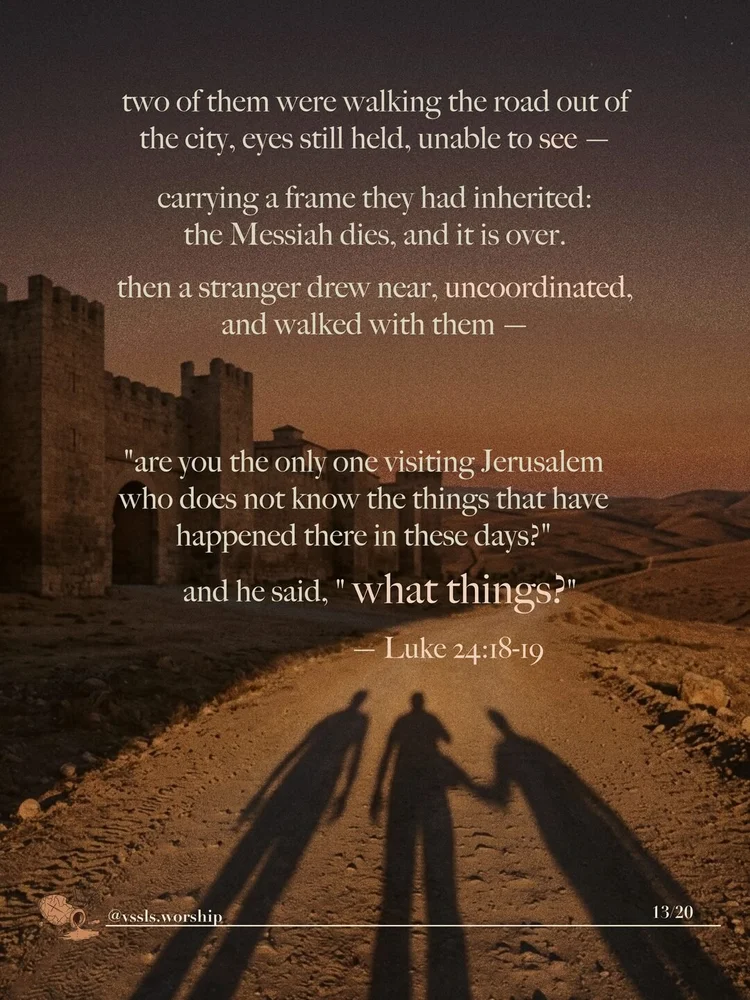
two of them were walking the road out of the city, eyes still held, unable to see —
carrying a frame they had inherited: the Messiah dies, and it is over.
then a stranger drew near, uncoordinated, and walked with them —
"are you the only one visiting Jerusalem who does not know the things that have happened there in these days?"
and he said, "what things?" — Luke 24:18-19
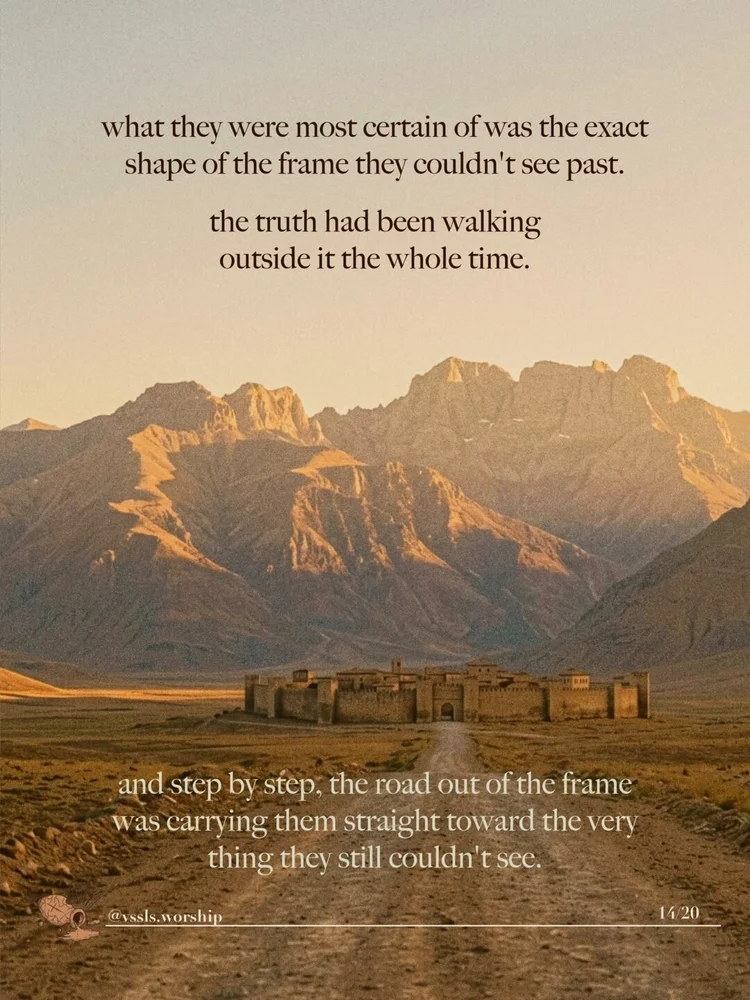
what they were most certain of was the exact shape of the frame they couldn't see past.
the truth had been walking outside it the whole time.
and step by step, the road out of the frame was carrying them straight toward the very thing they still couldn't see.
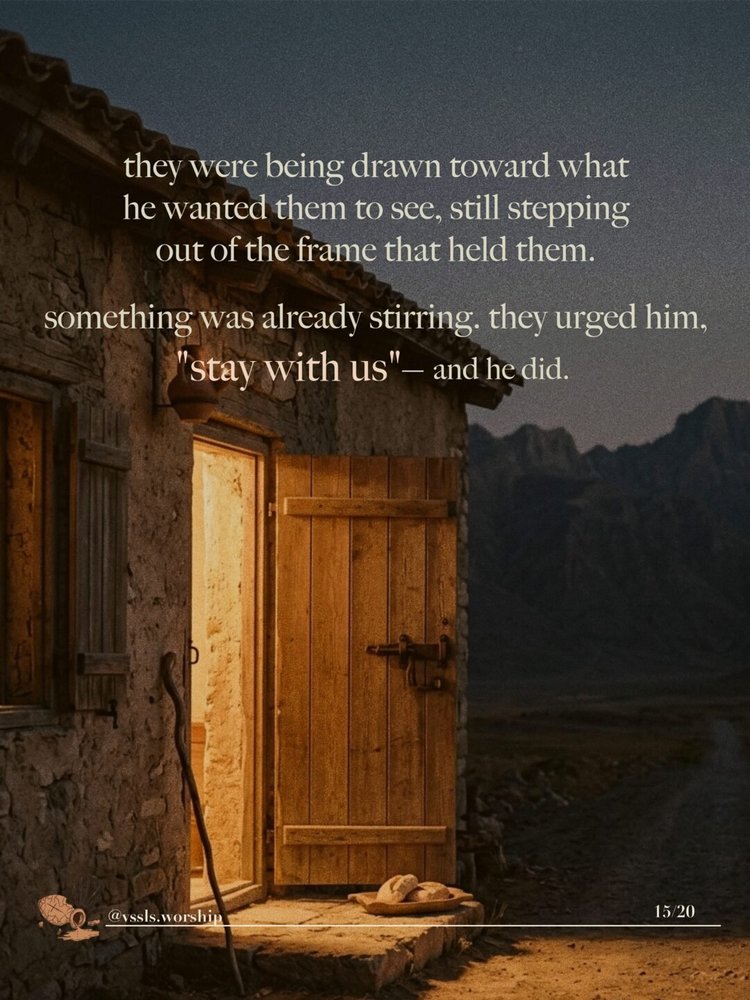
they were being drawn toward what he wanted them to see, still stepping out of the frame that held them.
something was already stirring. they urged him, "stay with us" — and he did.
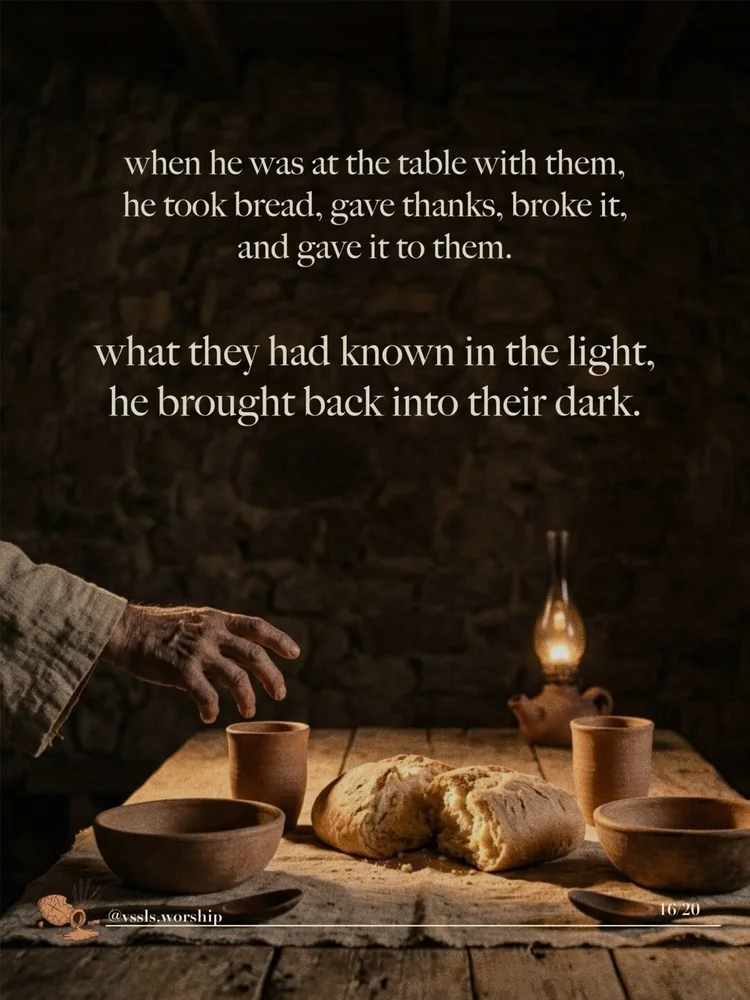
when he was at the table with them, he took bread, gave thanks, broke it, and gave it to them.
what they had known in the light, he brought back into their dark.
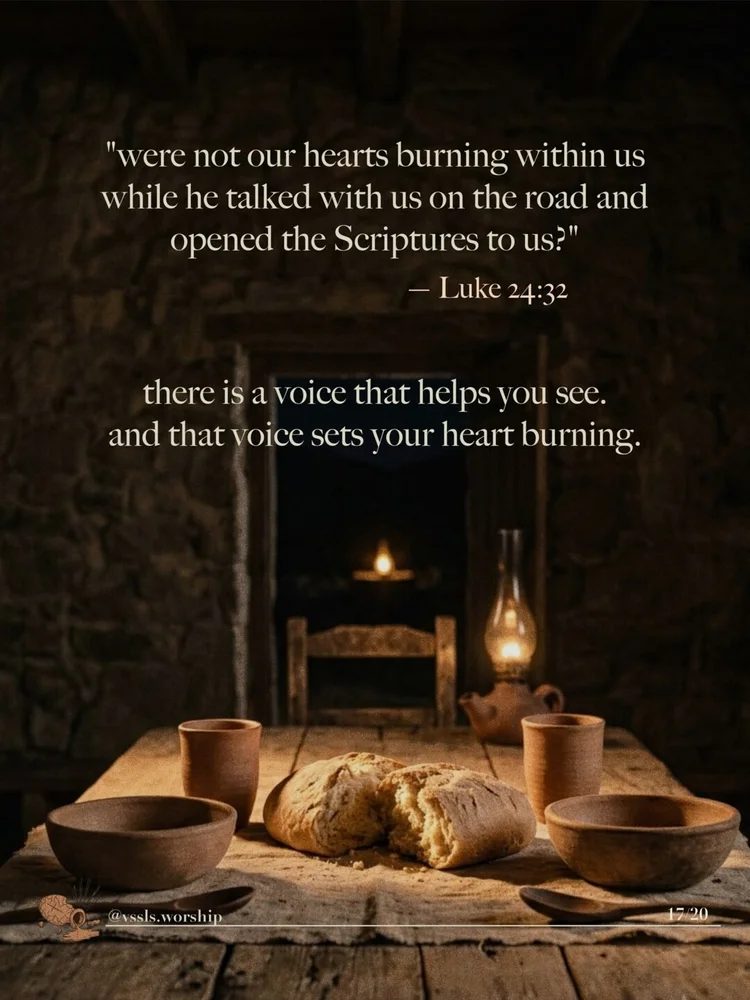
"were not our hearts burning within us while he talked with us on the road and opened the Scriptures to us?" — Luke 24:32
there is a voice that helps you see. and that voice sets your heart burning.
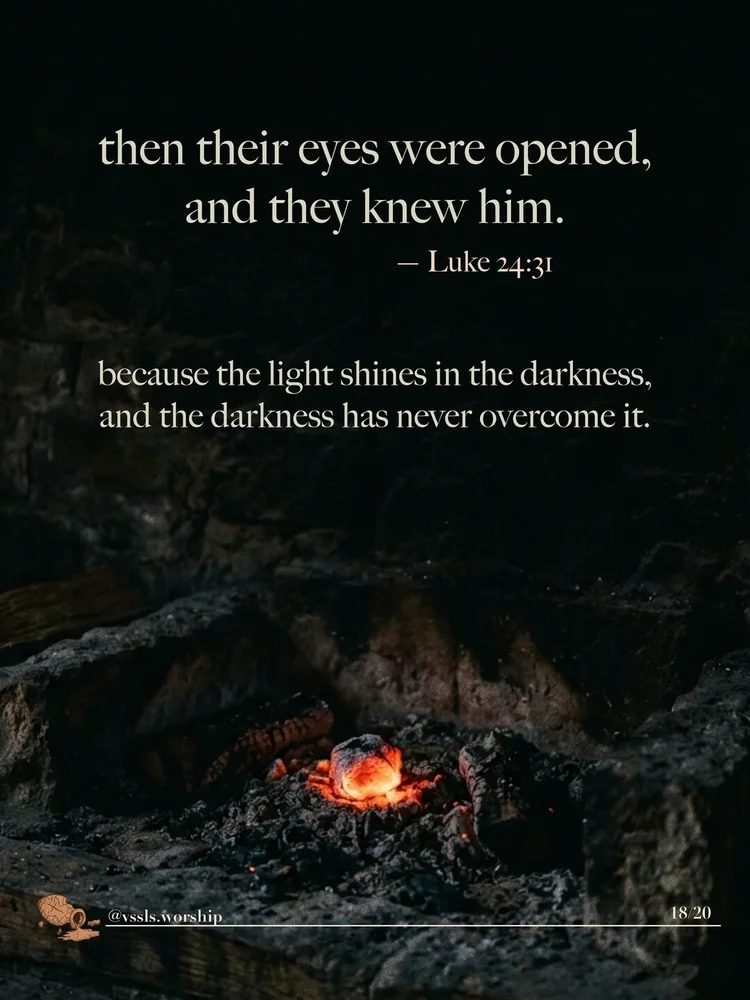
then their eyes were opened, and they knew him. — Luke 24:31
because the light shines in the darkness, and the darkness has never overcome it.
have you had moments when you sat with him, or spoke with others about him, and your heart started to burn?
that is the voice that helps you see.
"help me to see in the simple things
be quick to respond when I hear you speak
each space where I live, I invite you in
like a friend, would you speak to me"
— Friend to me
the exodus, part one
read the slides as text
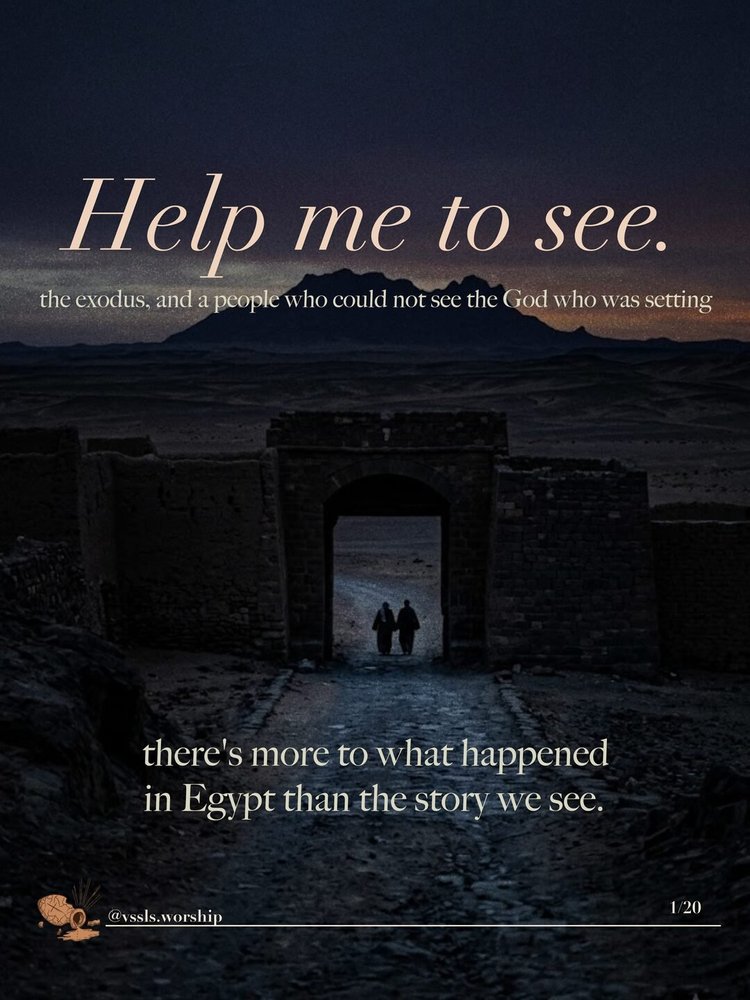
Help me to see.
the exodus, and a people who could not see the God who was setting them free.
there's more to what happened in Egypt than the story we see.
we don't see the world as it is.
we see it through a frame — one you inherited, one you were swept into without noticing, or one constructed to hold you a certain way.
the frame feels like reality. that's the trap.
it's why a whole nation can watch the same signs, and some see God, and the others see something very different.
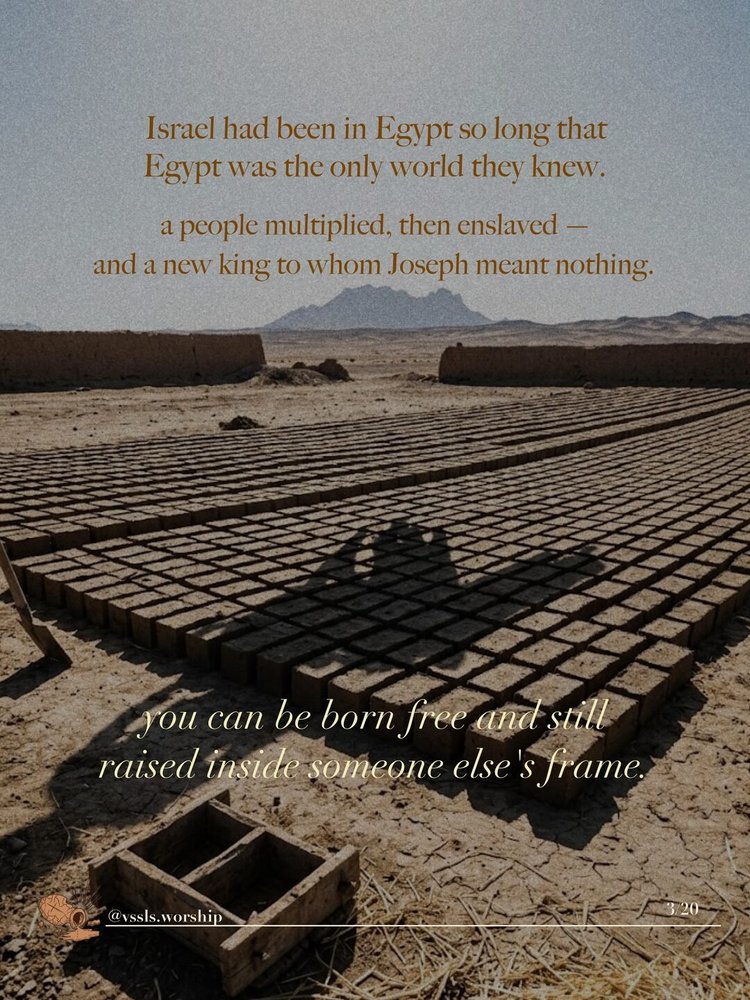
Israel had been in Egypt so long that Egypt was the only world they knew.
a people multiplied, then enslaved — and a new king to whom Joseph meant nothing.
you can be born free and still raised inside someone else's frame.
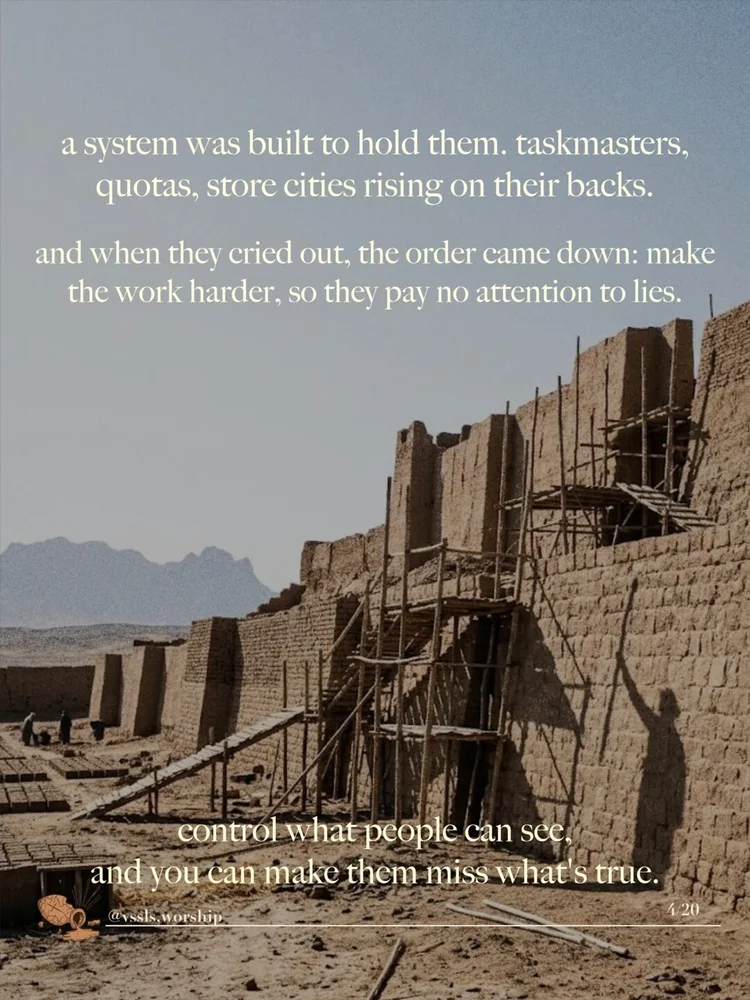
a system was built to hold them. taskmasters, quotas, store cities rising on their backs.
and when they cried out, the order came down: make the work harder, so they pay no attention to lies.
control what people can see, and you can make them miss what's true.
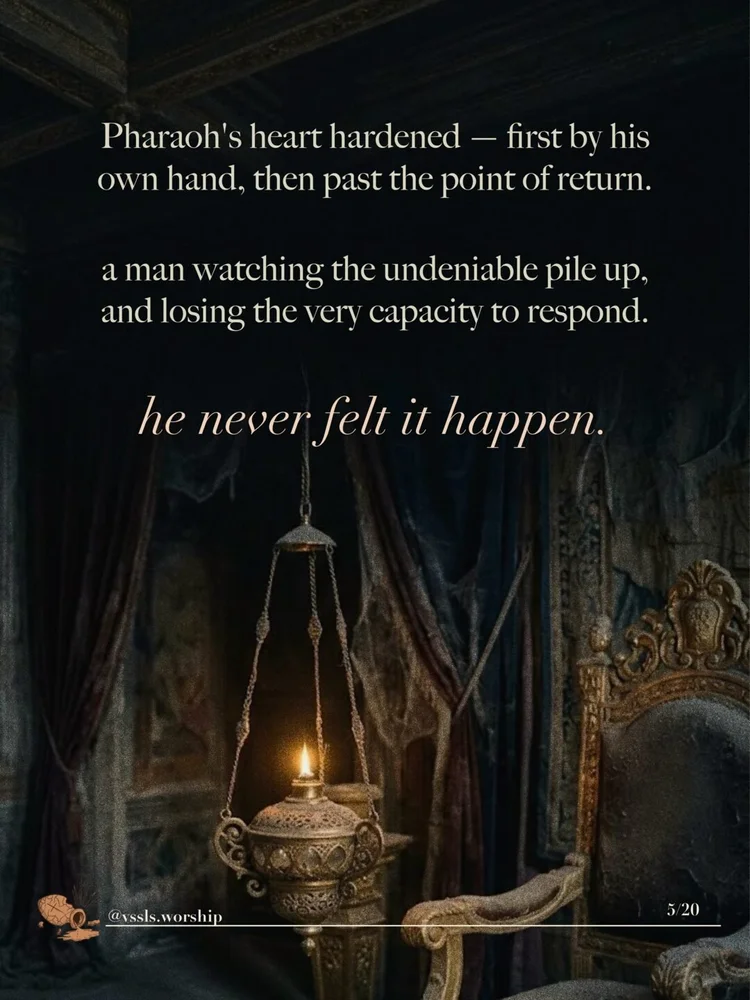
Pharaoh's heart hardened — first by his own hand, then past the point of return.
a man watching the undeniable pile up, and losing the very capacity to respond.
he never felt it happen.
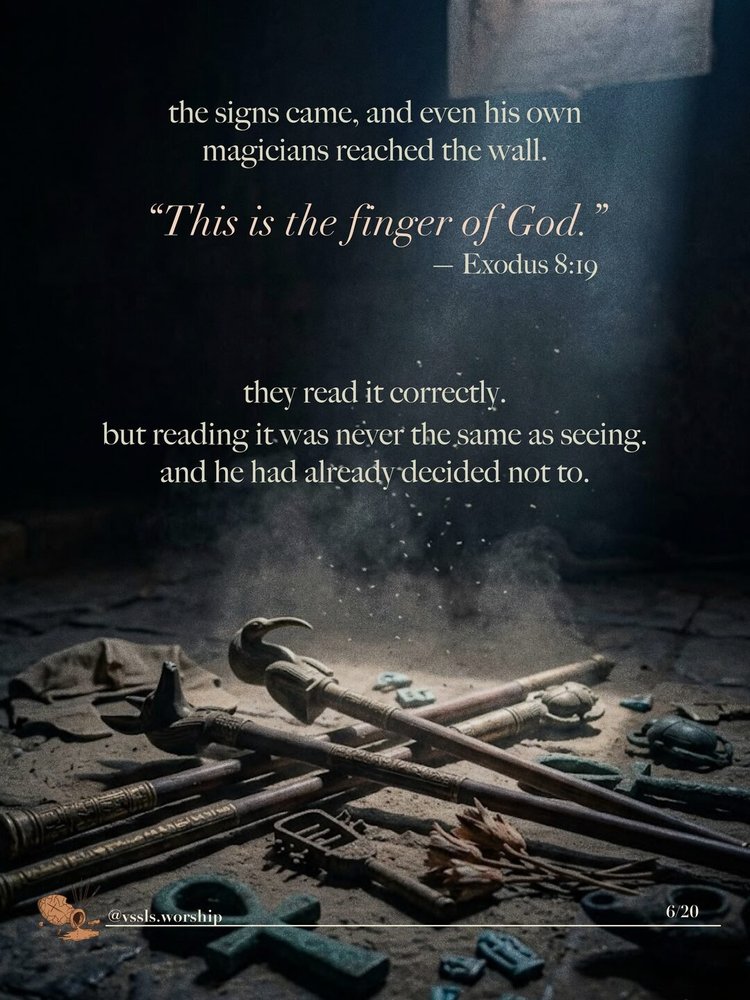
the signs came, and even his own magicians reached the wall.
"This is the finger of God." — Exodus 8:19
they read it correctly. reading it was never the same as seeing.
and he had already decided not to.
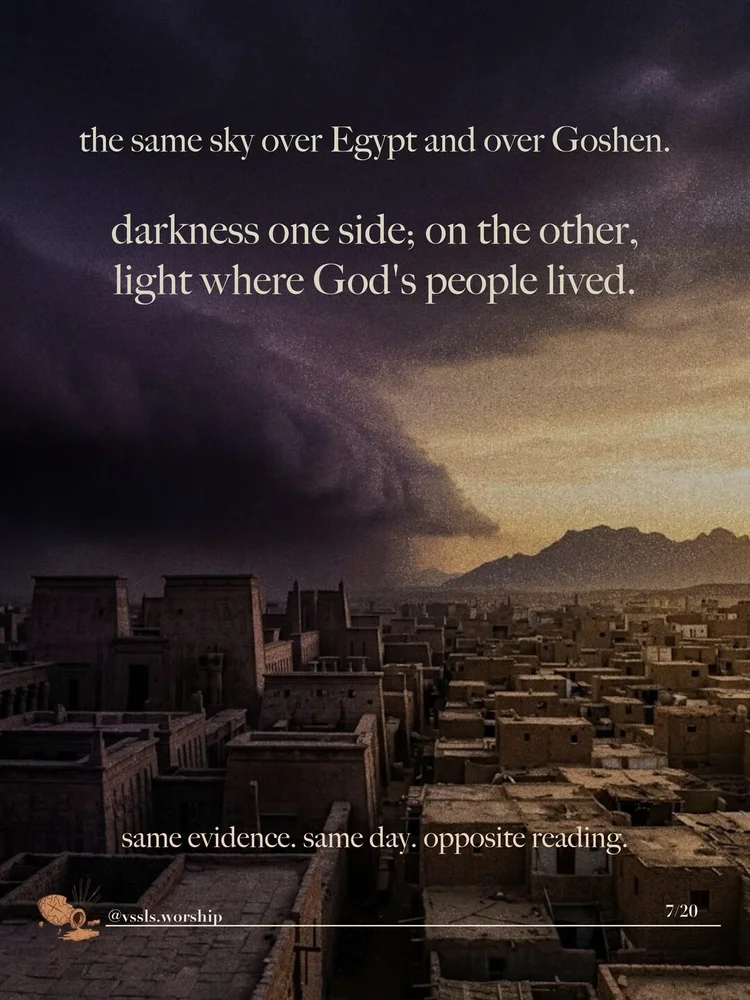
the same sky over Egypt and over Goshen.
darkness one side; on the other, light where God's people lived.
same evidence. same day. opposite reading.
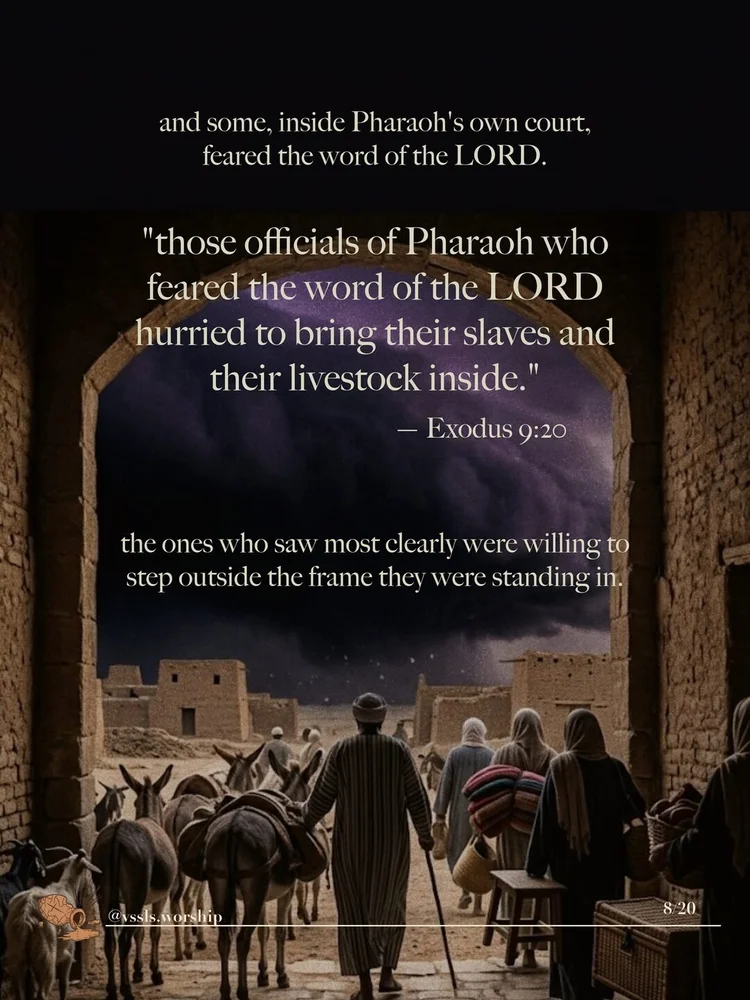
and some, inside Pharaoh's own court, feared the word of the LORD.
"those officials of Pharaoh who feared the word of the LORD hurried to bring their slaves and their livestock inside." — Exodus 9:20
the ones who saw most clearly were willing to step outside the frame they were standing in.
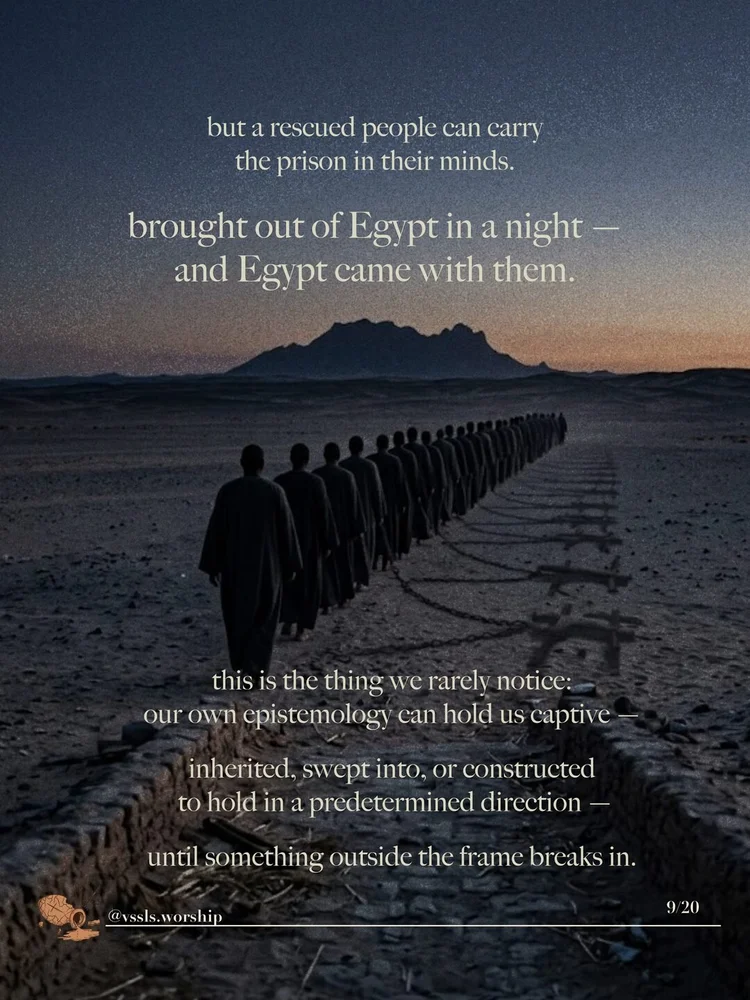
but a rescued people can carry the prison in their minds.
brought out of Egypt in a night — and Egypt came with them.
this is the thing we rarely notice: our own epistemology can hold us captive — inherited, swept into, or constructed to hold in a predetermined direction — until something outside the frame breaks in.
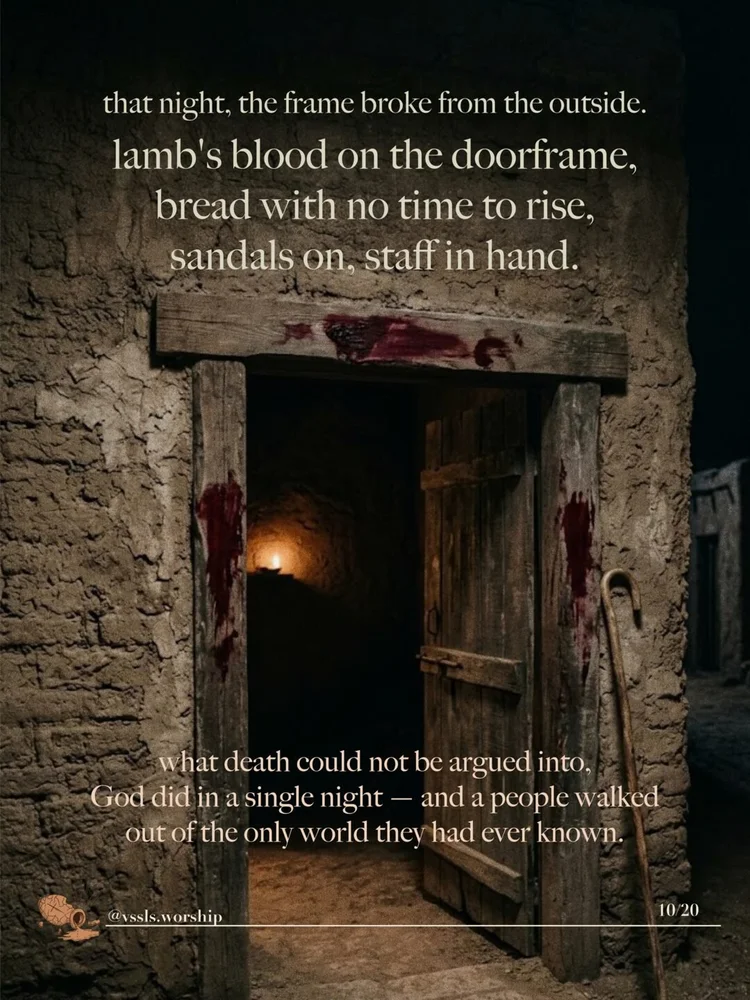
that night, the frame broke from the outside.
lamb's blood on the doorframe, bread with no time to rise, sandals on, staff in hand.
what death could not be argued into, God did in a single night — and a people walked out of the only world they had ever known.
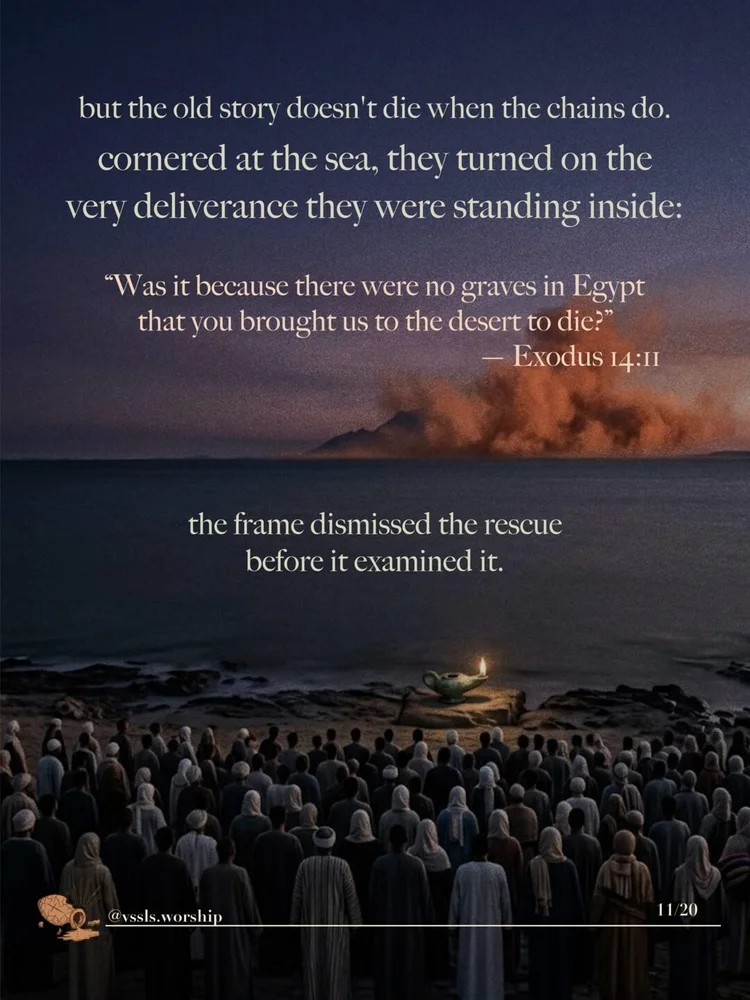
but the old story doesn't die when the chains do.
cornered at the sea, they turned on the very deliverance they were standing inside:
"Was it because there were no graves in Egypt that you brought us to the desert to die?" — Exodus 14:11
the frame dismissed the rescue before it examined it.
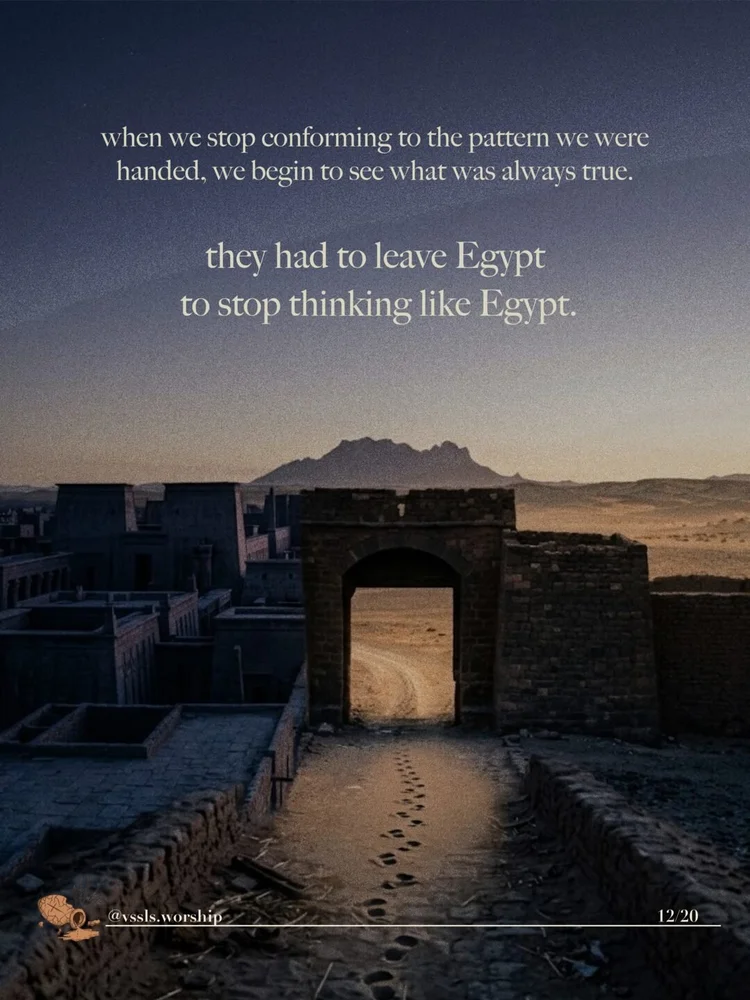
when we stop conforming to the pattern we were handed, we begin to see what was always true.
they had to leave Egypt to stop thinking like Egypt.
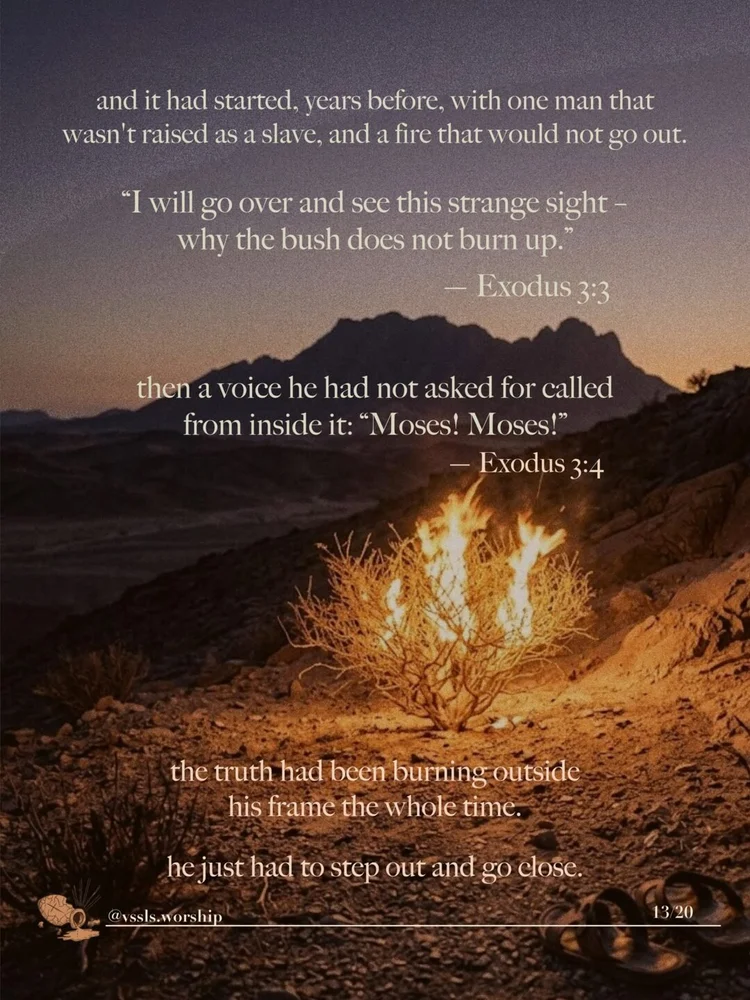
and it had started, years before, with one man that wasn’t raised as a slave, and a fire that would not go out.
"I will go over and see this strange sight – why the bush does not burn up." — Exodus 3:3
then a voice he had not asked for called from inside it: "Moses! Moses!" — Exodus 3:4
the truth had been burning outside his frame the whole time.
he just had to step out and go close.
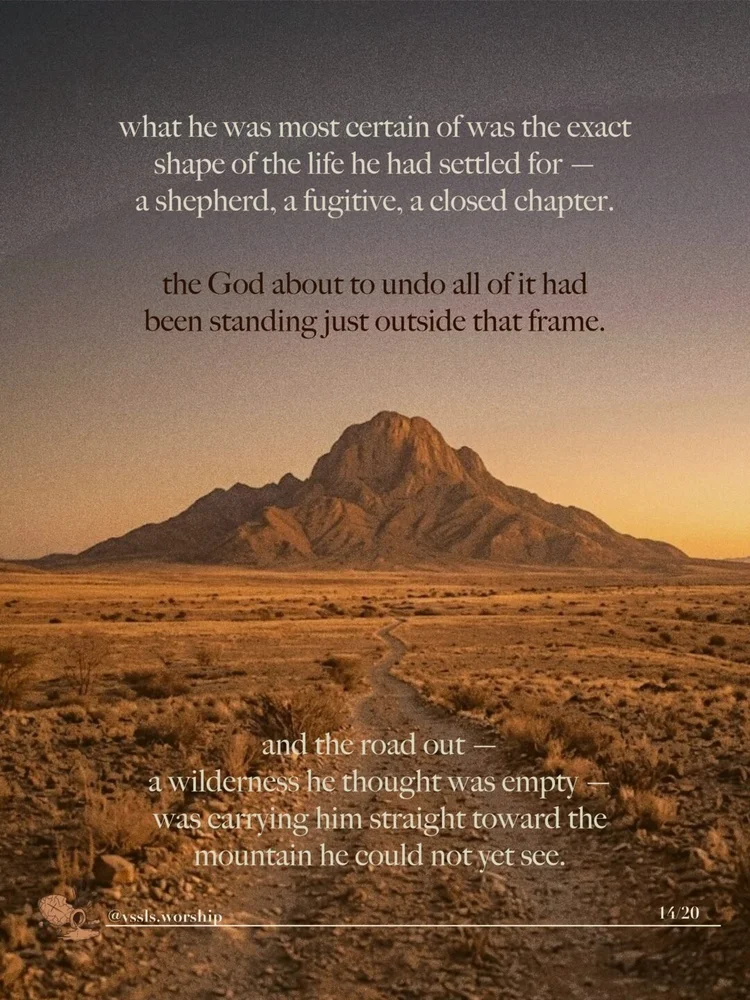
what he was most certain of was the exact shape of the life he had settled for — a shepherd, a fugitive, a closed chapter.
the God about to undo all of it had been standing just outside that frame.
and the road out — a wilderness he thought was empty — was carrying him straight toward the mountain he could not yet see.
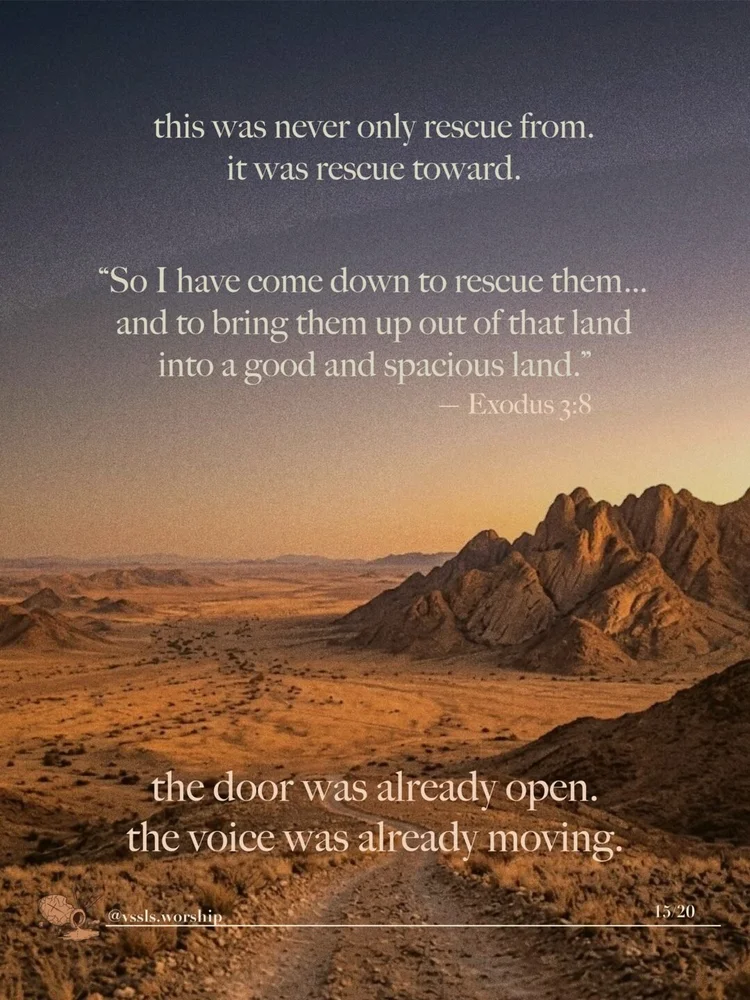
this was never only rescue from. it was rescue toward.
"So I have come down to rescue them… and to bring them up out of that land into a good and spacious land." — Exodus 3:8
the door was already open. the voice was already moving.
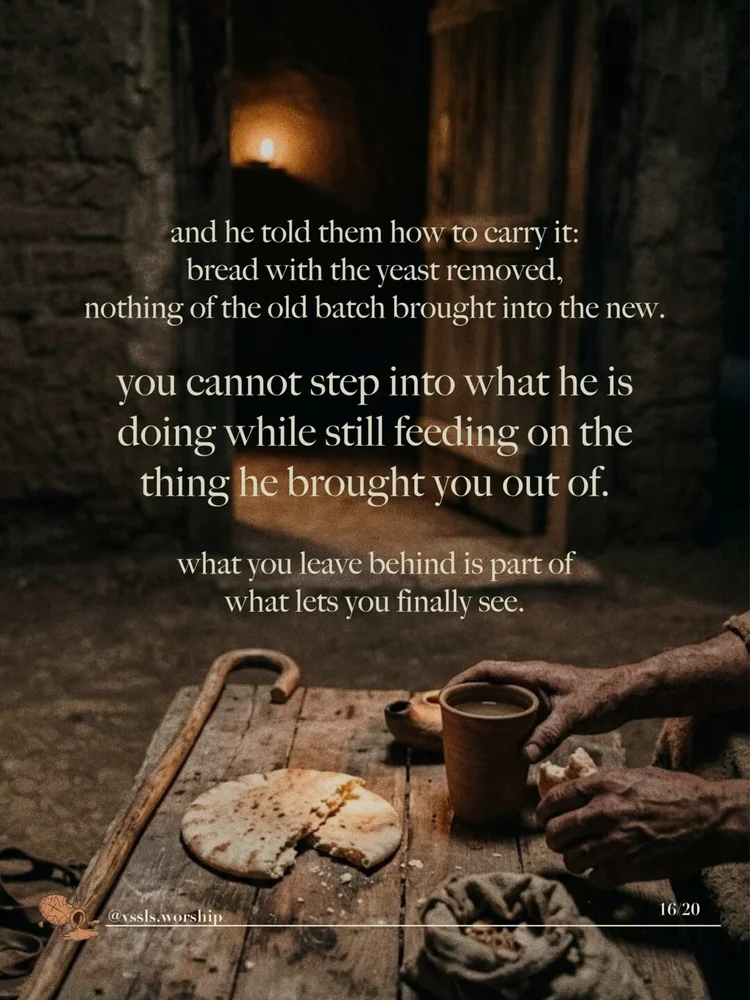
and he told them how to carry it: bread with the yeast removed, nothing of the old batch brought into the new.
you cannot step into what he is doing while still feeding on the thing he brought you out of.
what you leave behind is part of what lets you finally see.
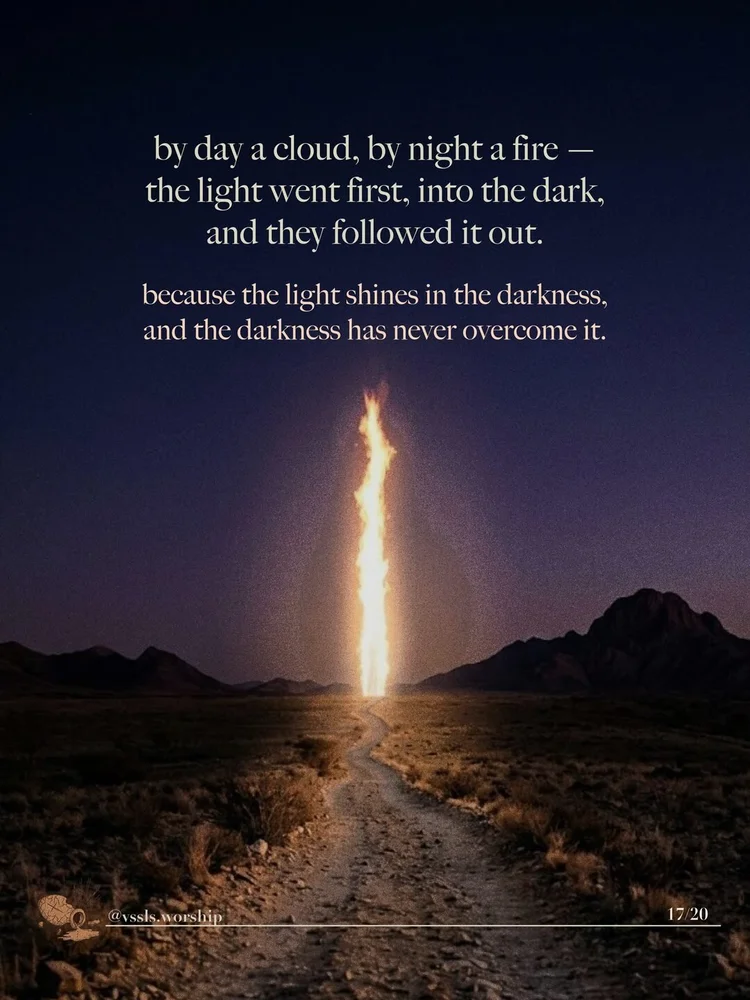
by day a cloud, by night a fire — the light went first, into the dark, and they followed it out.
because the light shines in the darkness, and the darkness has never overcome it.
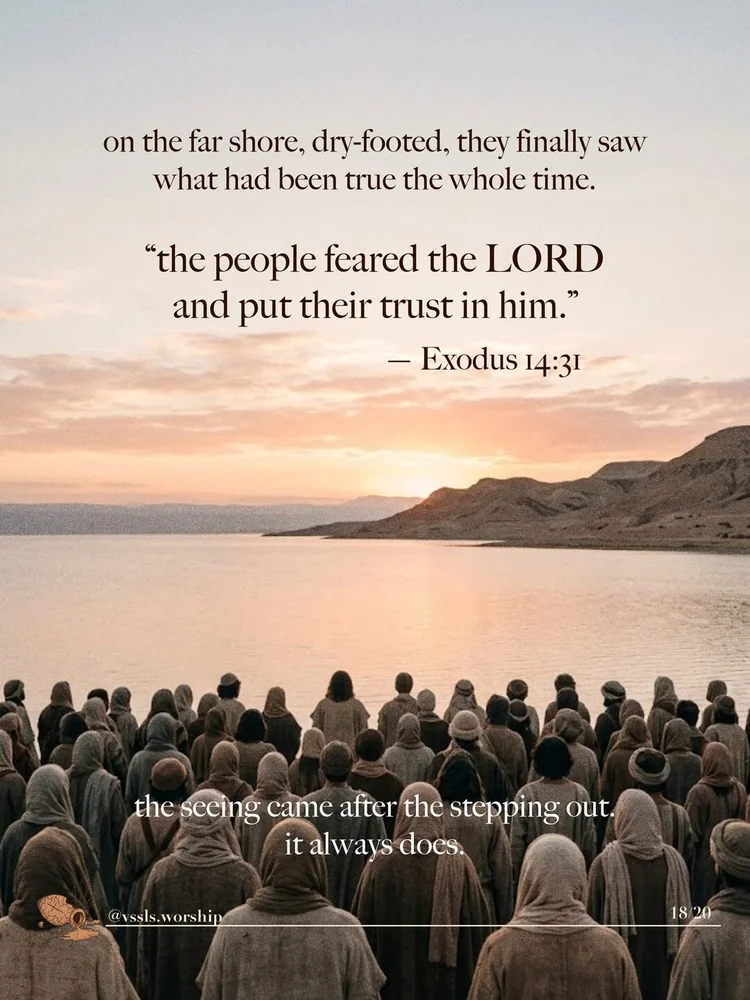
on the far shore, dry-footed, they finally saw what had been true the whole time.
"the people feared the LORD and put their trust in him." — Exodus 14:31
the seeing came after the stepping out. it always does.
have you been staring at a sea, certain there's no way through — reading your whole life by a frame you never chose?
there is a voice that makes a way where there was no way. and it is already calling your name.
"help me to see in the simple things
be quick to respond when I hear you speak
each space where I live, I invite you in
like a friend, would you speak to me"
— Friend to me
which frame is holding you? the exodus, part two
read the slides as text
Help me to see.
long before Egypt was ever broken open, it was the story of five people and the frames that held them.
which frame is holding you?
the origin story.
you were born into one frame. raised inside another.
but there is a truer one — and once it holds you, no lesser frame can shake you loose.
the whole of Egypt turns on which frame has you.
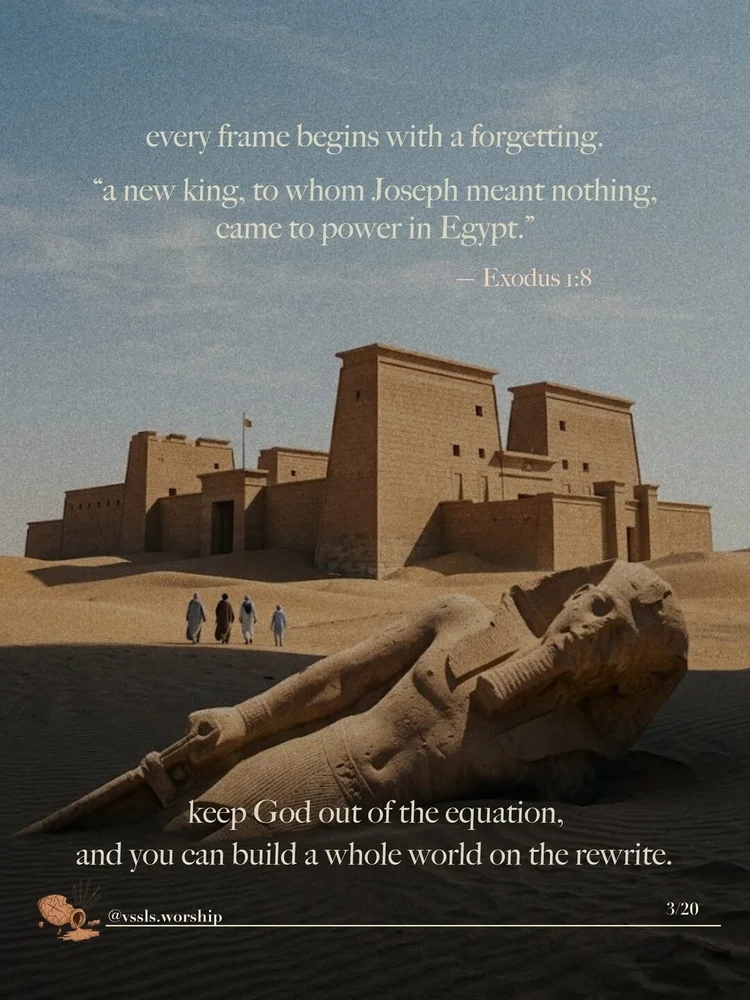
every frame begins with a forgetting.
"a new king, to whom Joseph meant nothing, came to power in Egypt." — Exodus 1:8
keep God out of the equation, and you can build a whole world on the rewrite.
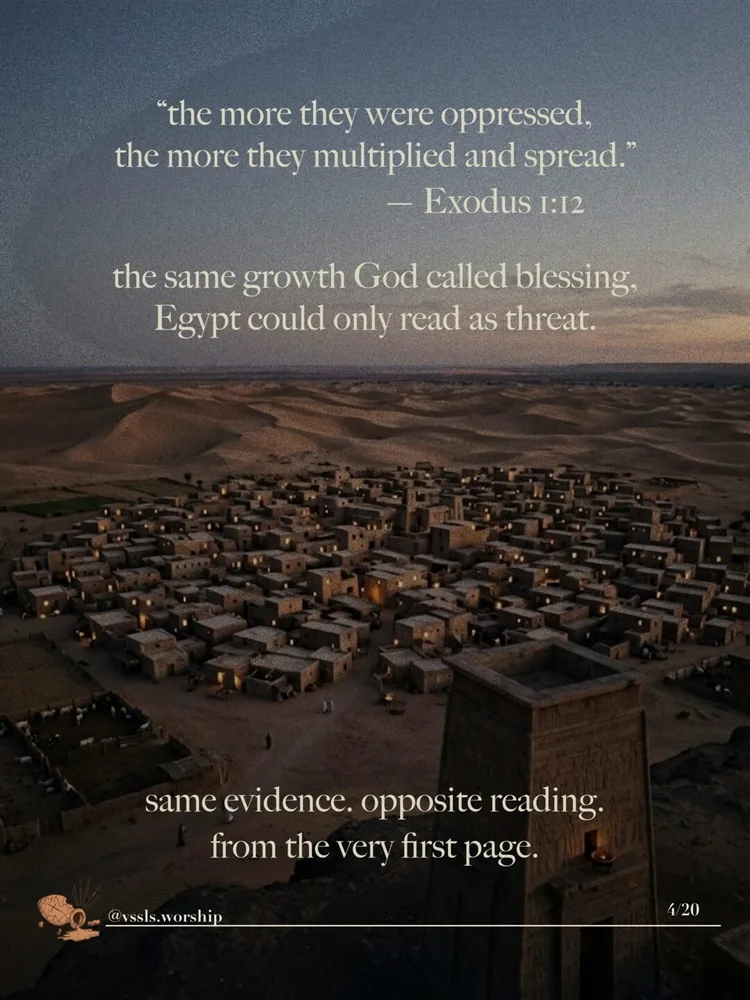
"the more they were oppressed, the more they multiplied and spread." — Exodus 1:12
the same growth God called blessing, Egypt could only read as threat.
same evidence. opposite reading. from the very first page.
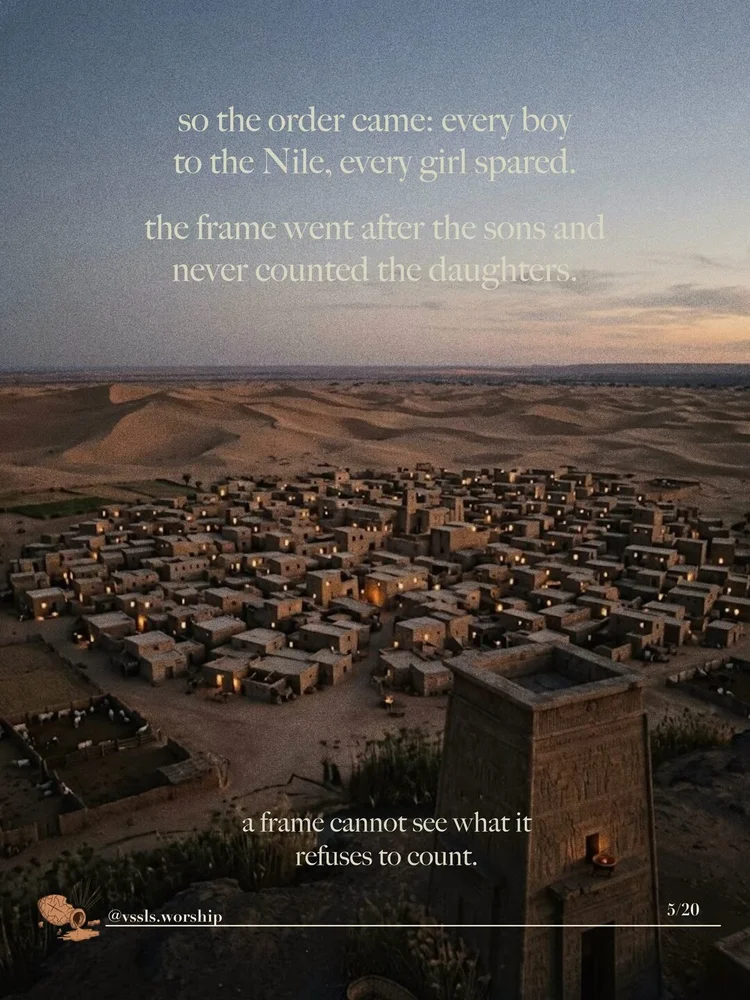
so the order came: every boy to the Nile, every girl spared.
the frame went after the sons and never counted the daughters.
a frame cannot see what it refuses to count.
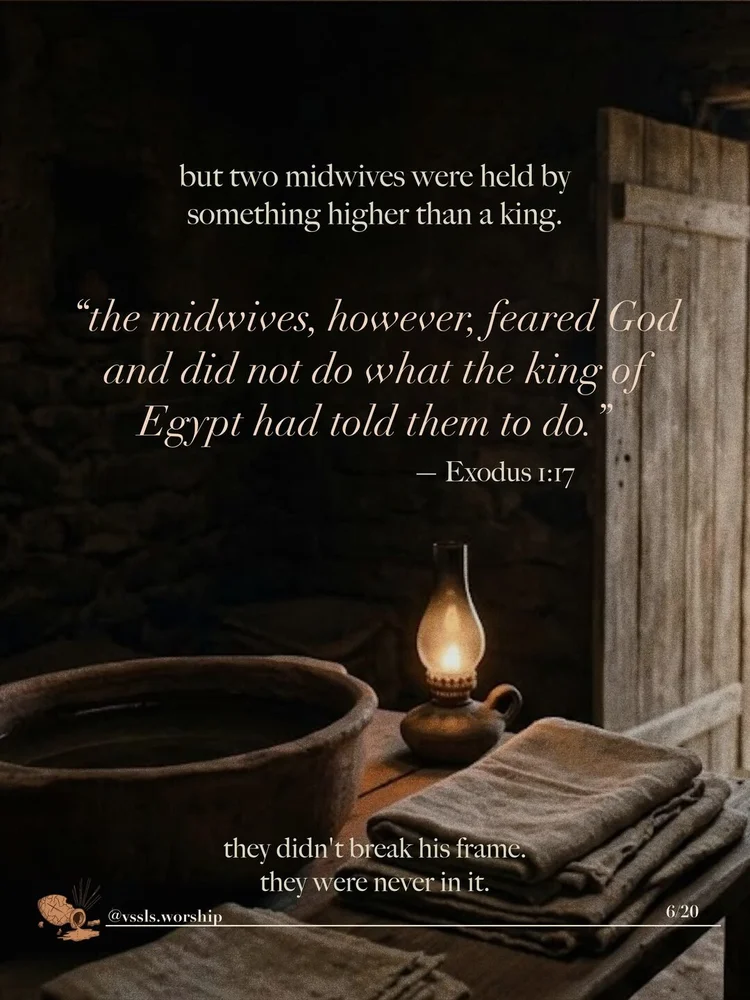
but two midwives were held by something higher than a king.
"the midwives, however, feared God and did not do what the king of Egypt had told them to do." — Exodus 1:17
they didn't break his frame. they were never in it.
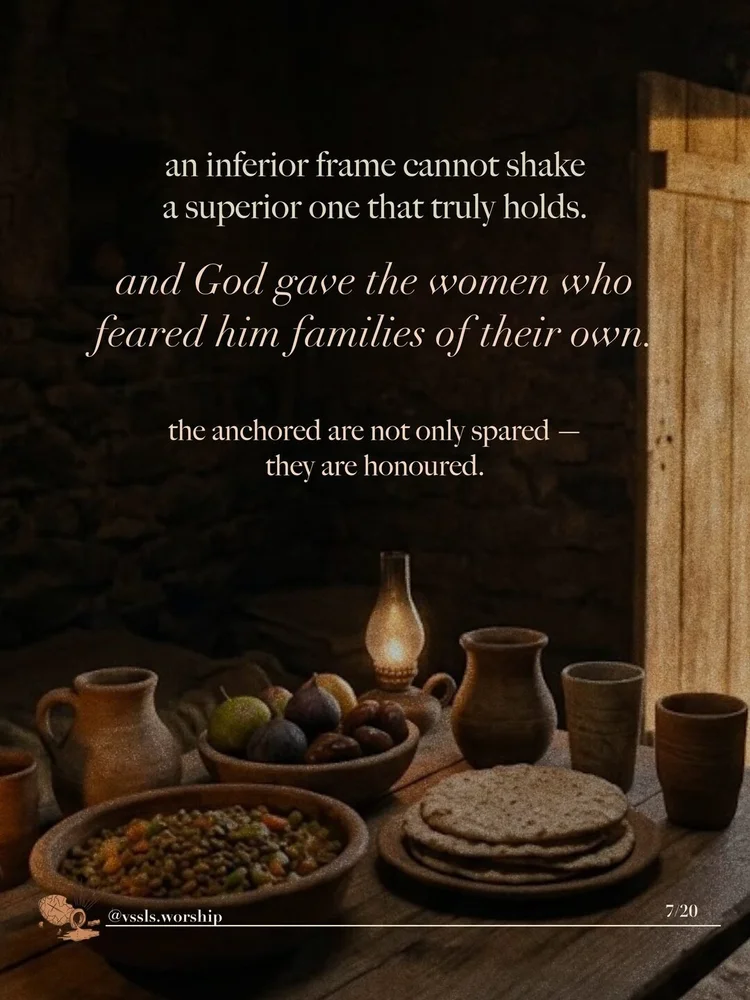
an inferior frame cannot shake a superior one that truly holds.
and God gave the women who feared him families of their own.
the anchored are not only spared — they are honoured.
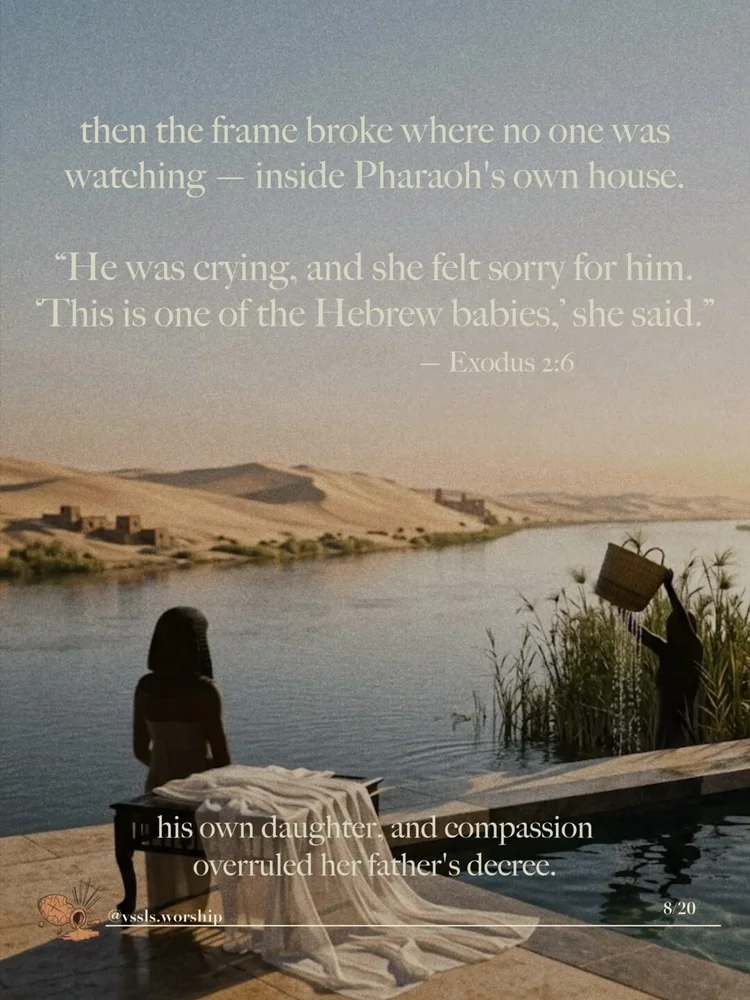
then the frame broke where no one was watching — inside Pharaoh's own house.
"He was crying, and she felt sorry for him. 'This is one of the Hebrew babies,' she said." — Exodus 2:6
his own daughter, and compassion overruled her father's decree.
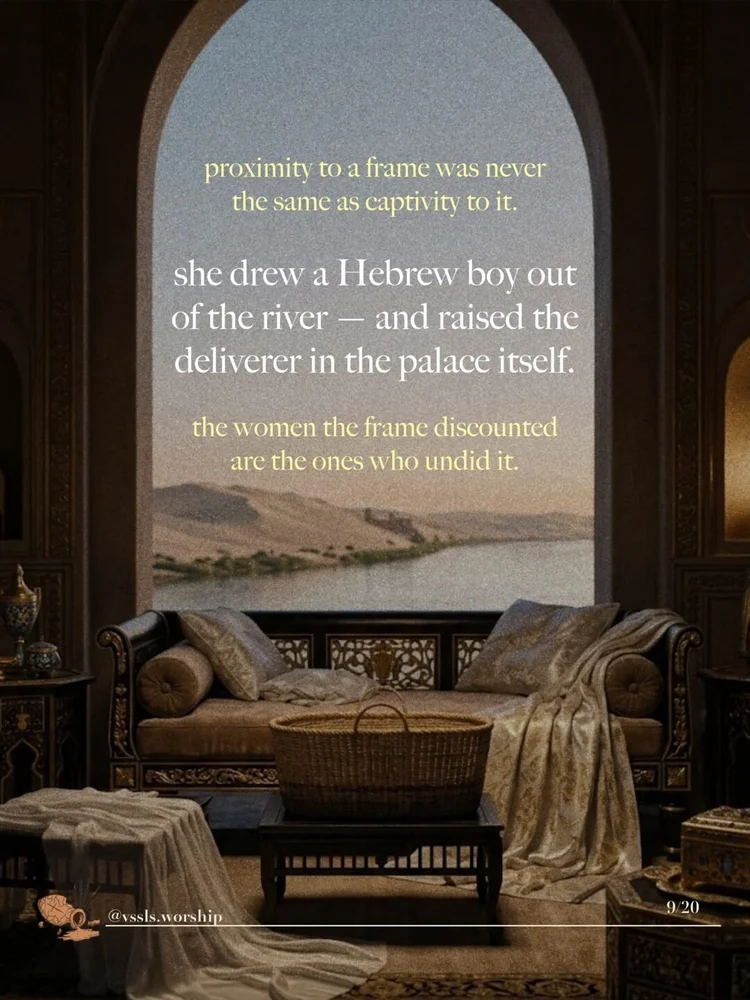
proximity to a frame was never the same as captivity to it.
she drew a Hebrew boy out of the river — and raised the deliverer in the palace itself.
the women the frame discounted are the ones who undid it.
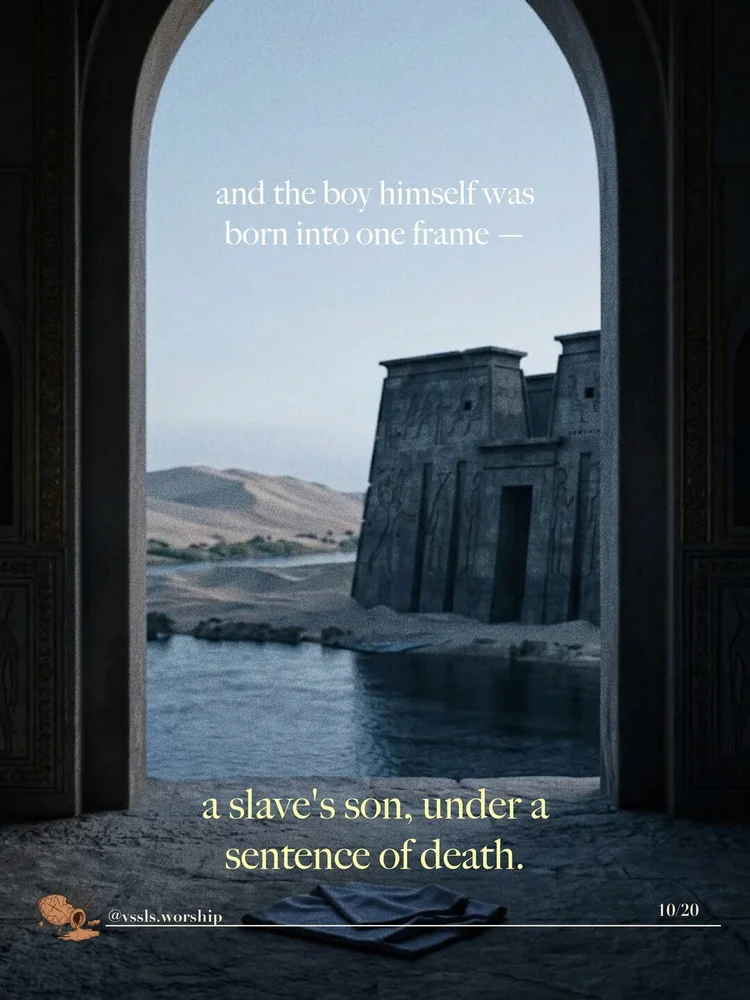
and the boy himself was born into one frame —
a slave's son, under a sentence of death.
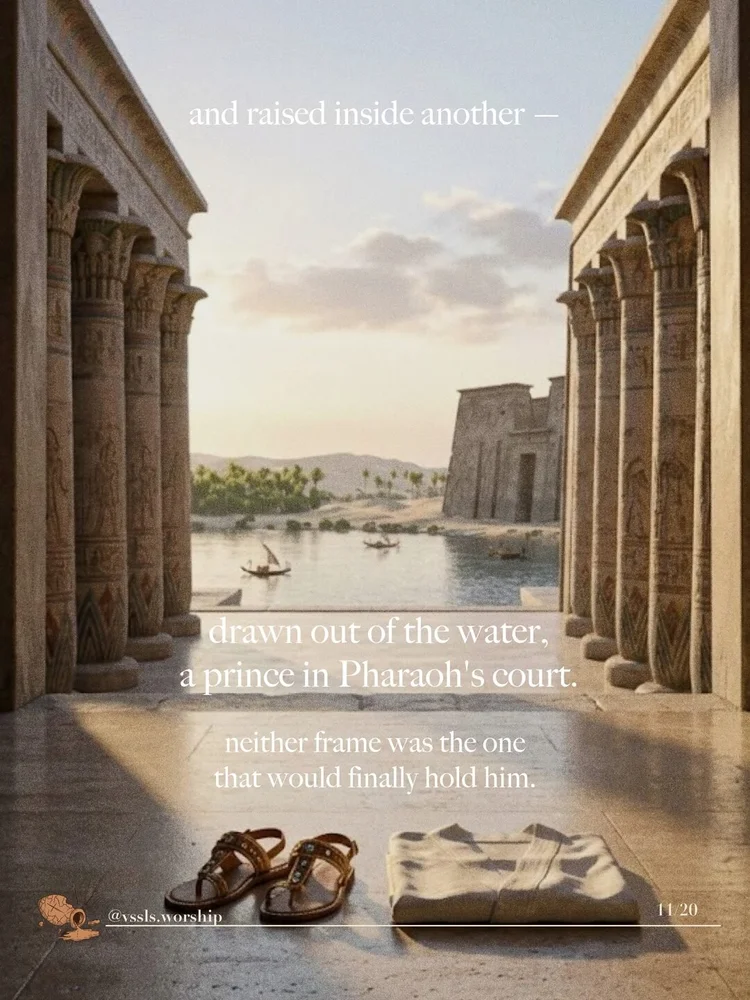
and raised inside another —
drawn out of the water, a prince in Pharaoh's court.
neither frame was the one that would finally hold him.
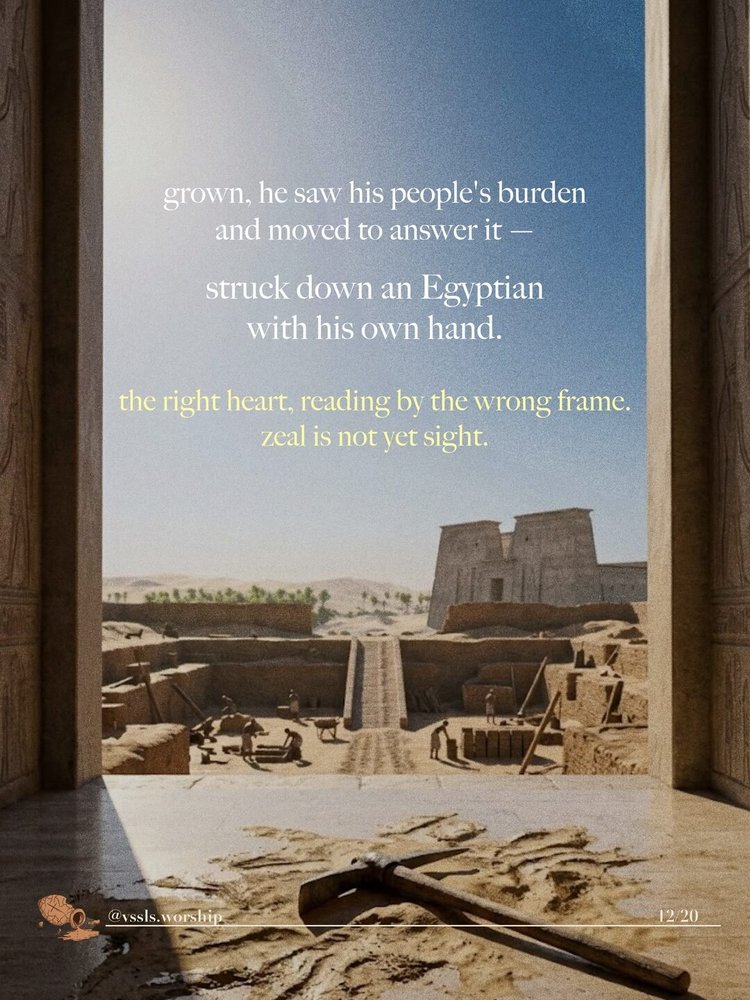
grown, he saw his people's burden and moved to answer it —
struck down an Egyptian with his own hand.
the right heart, reading by the wrong frame. zeal is not yet sight.
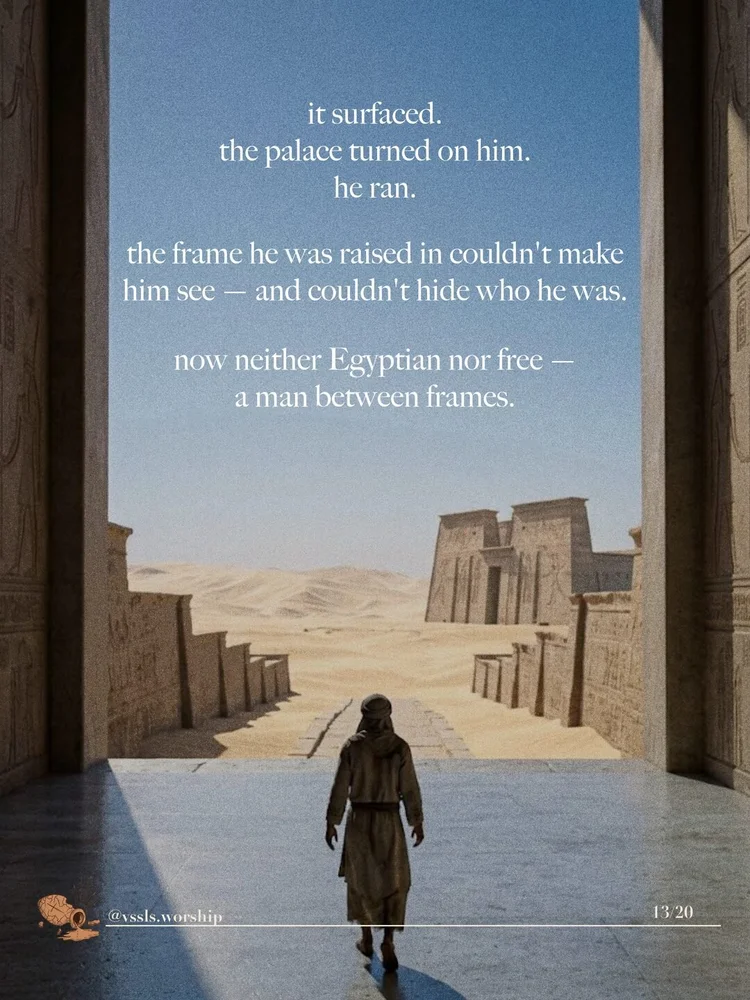
it surfaced. the palace turned on him. he ran.
the frame he was raised in couldn't make him see — and couldn't hide who he was.
now neither Egyptian nor free — a man between frames.
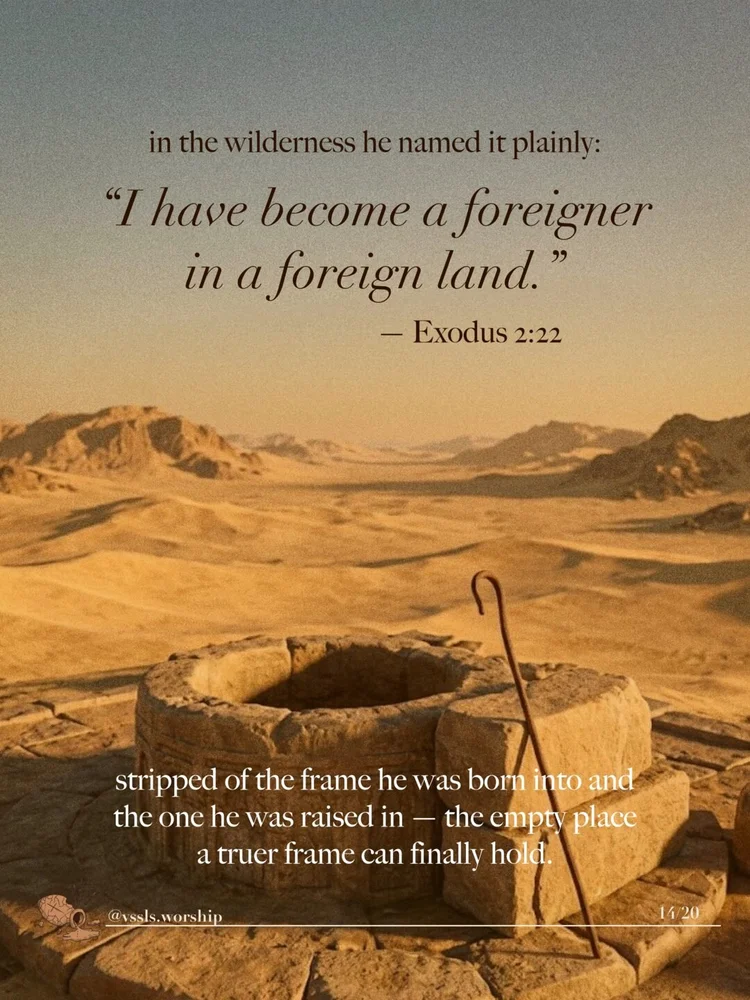
in the wilderness he named it plainly:
"I have become a foreigner in a foreign land." — Exodus 2:22
stripped of the frame he was born into and the one he was raised in — the empty place a truer frame can finally hold.
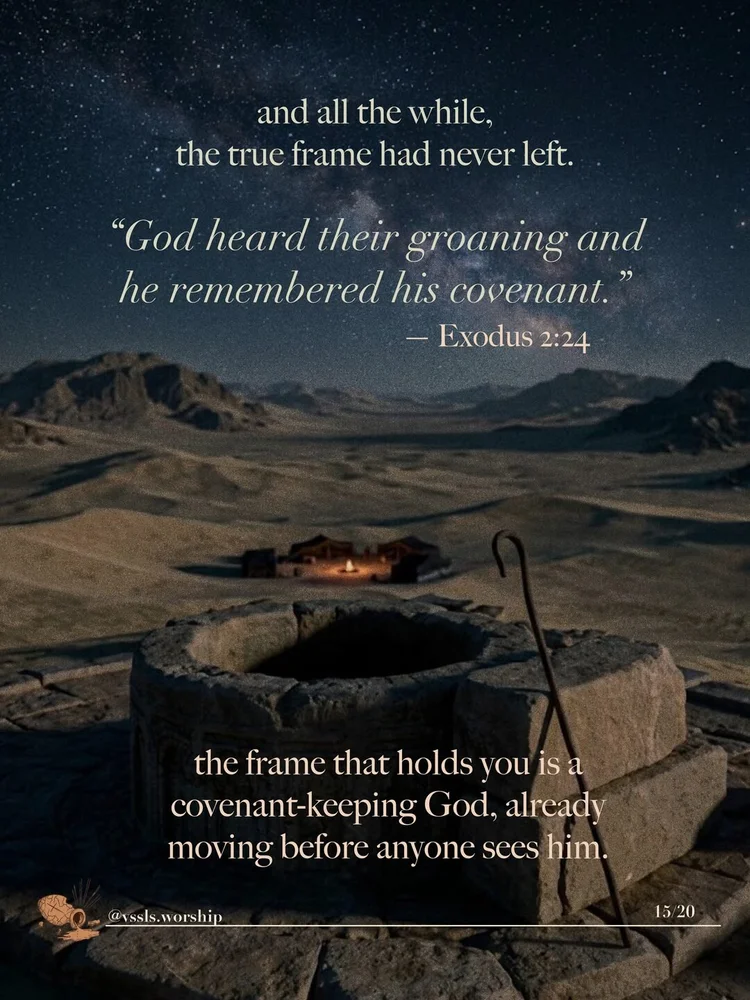
and all the while, the true frame had never left.
"God heard their groaning and he remembered his covenant." — Exodus 2:24
the frame that holds you is a covenant-keeping God, already moving before anyone sees him.
so it was never the frame you were born into.
nor the one you were raised in.
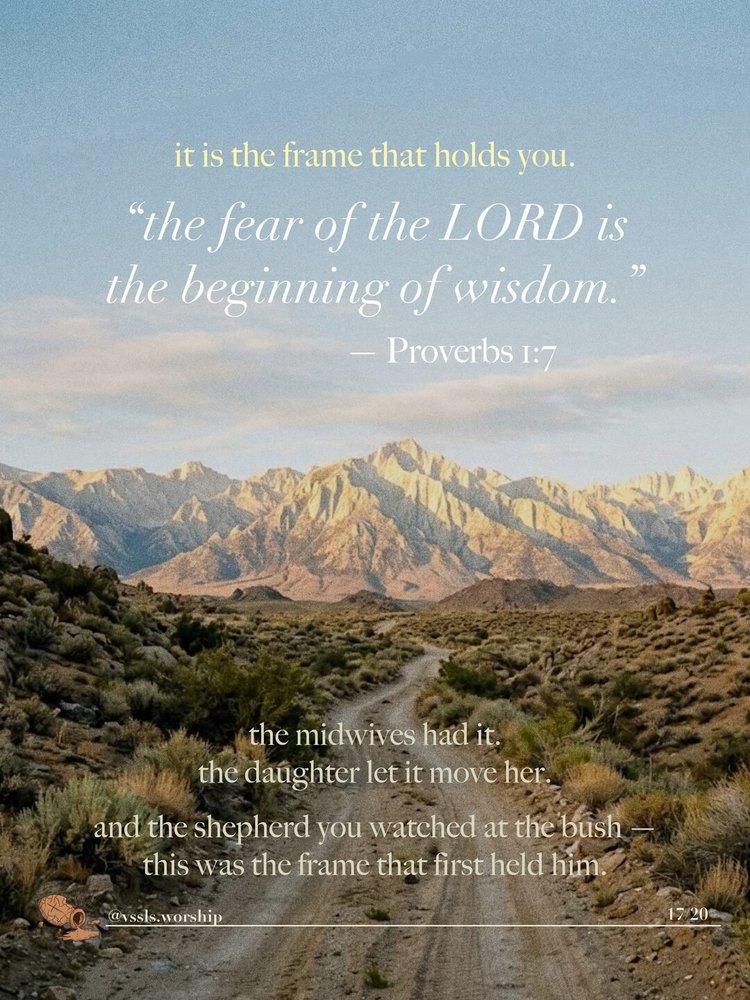
it is the frame that holds you.
"the fear of the LORD is the beginning of knowledge." — Proverbs 1:7
the midwives had it. the daughter let it move her. and the shepherd you watched at the bush — this was the frame that first held him.
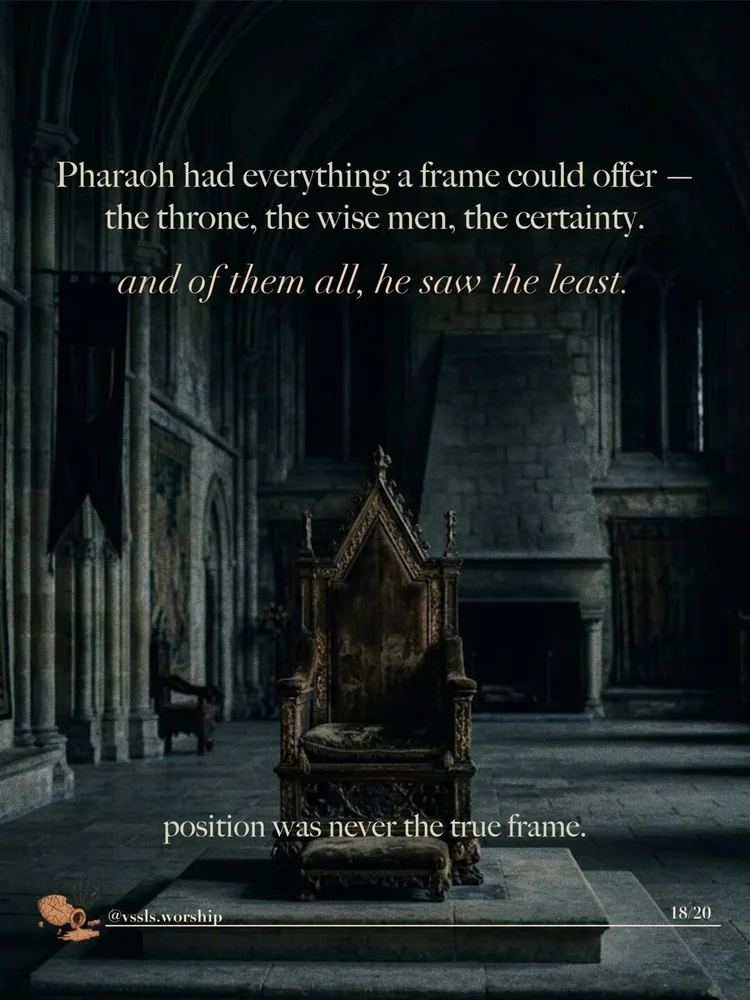
Pharaoh had everything a frame could offer — the throne, the wise men, the certainty.
and of them all, he saw the least.
position was never the true frame.
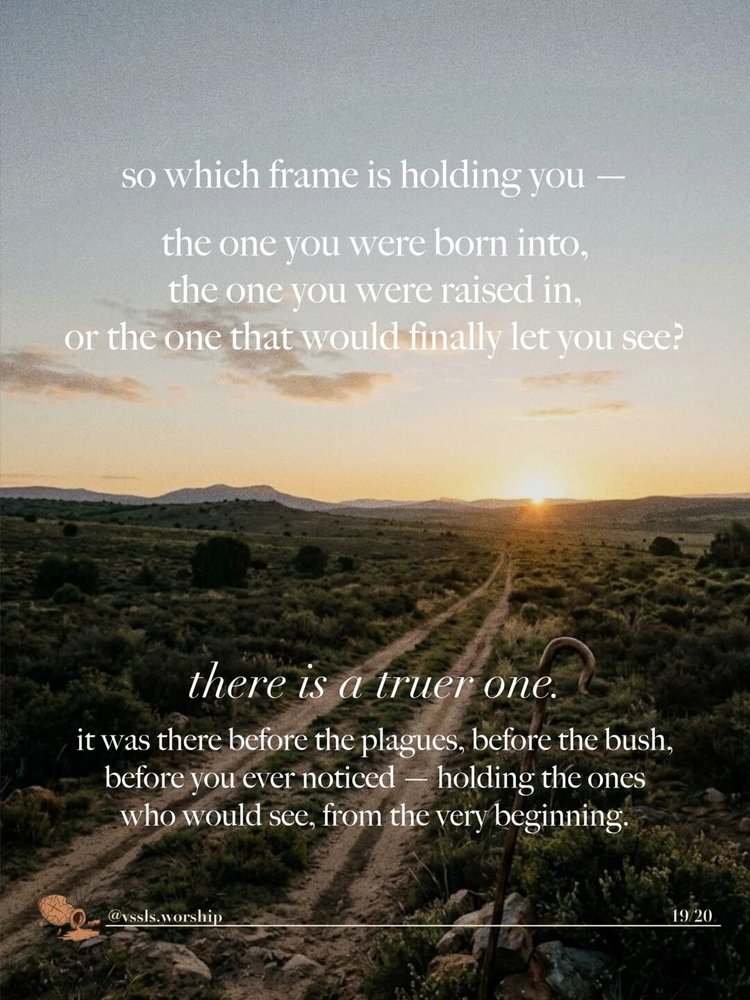
so which frame is holding you — the one you were born into, the one you were raised in, or the one that would finally let you see?
there is a truer one. it was there before the plagues, before the bush, before you ever noticed — holding the ones who could see, from the very beginning.
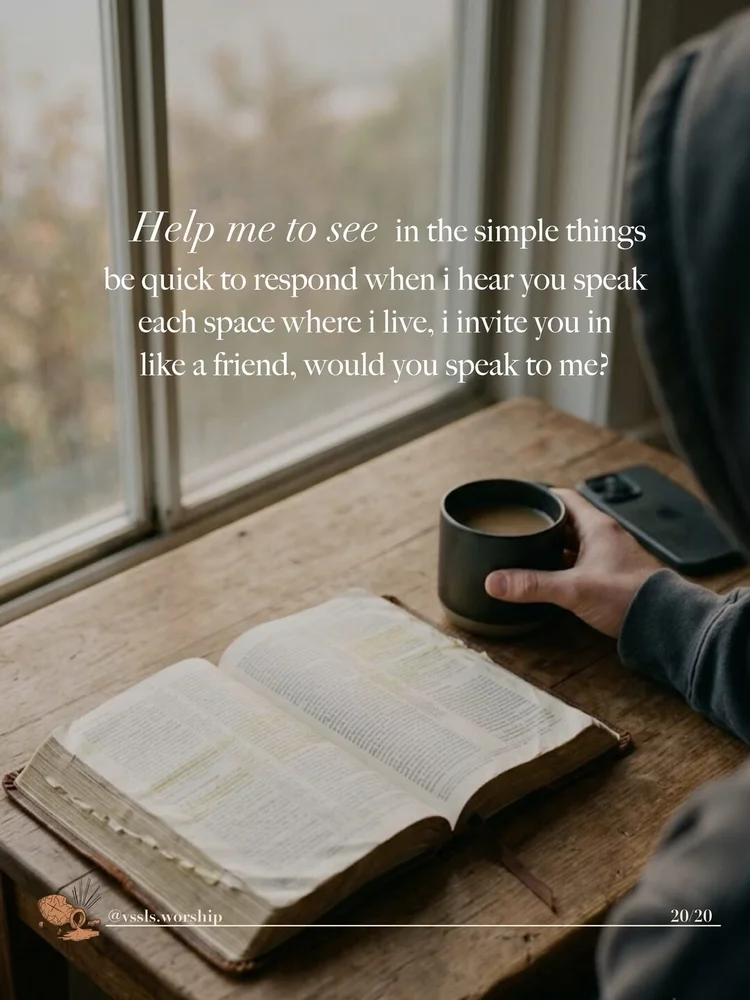
"help me to see in the simple things
be quick to respond when I hear you speak
each space where I live, I invite you in
like a friend, would you speak to me"
— Friend to me
help me to see in the simple things: Esther
read the slides as text
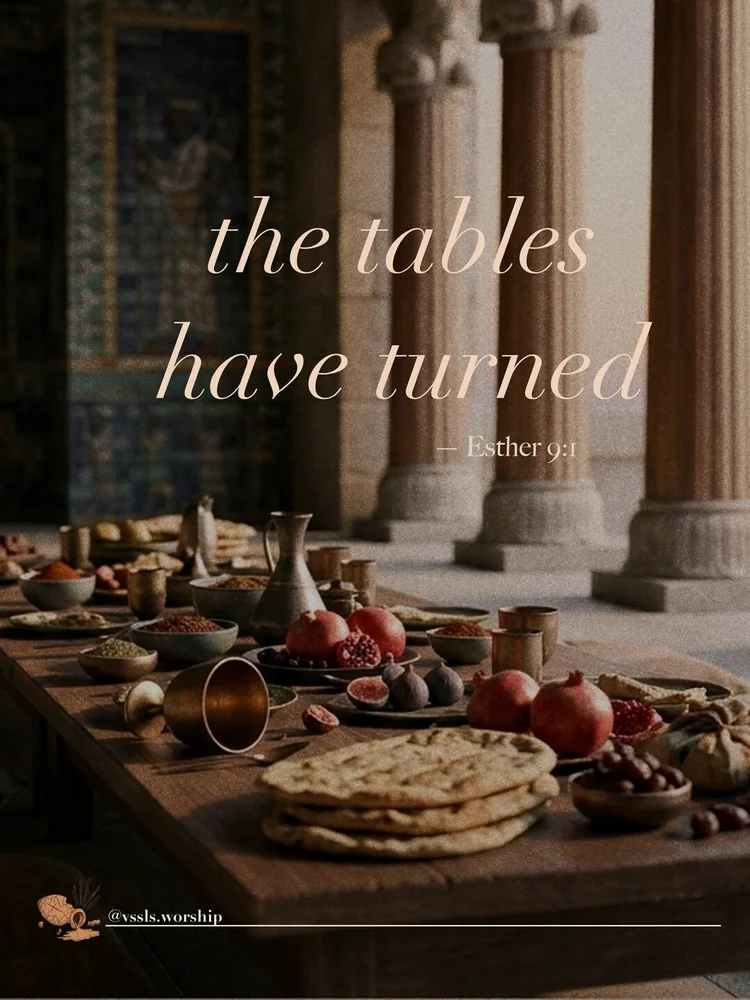
the tables have turned
— Esther 9:1
Help me to see
in the simple things
a devotional from our EP, from friendship to filling by the writers of Friend to me
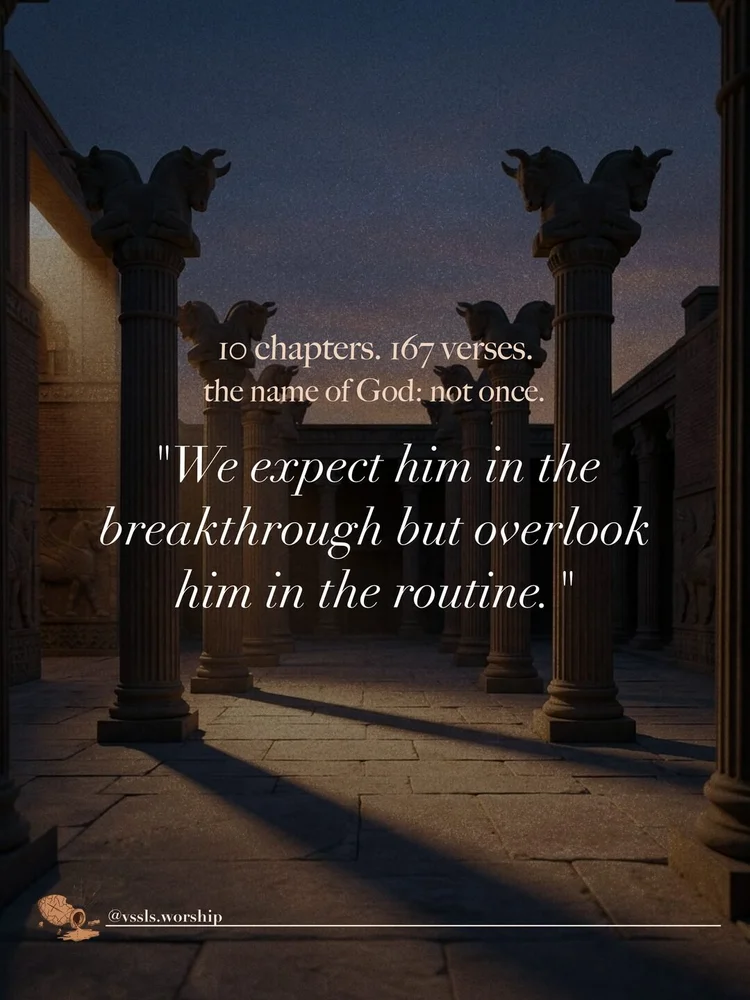
10 chapters. 167 verses.
the name of God: not once.
"We expect him in the breakthrough but overlook him in the routine."
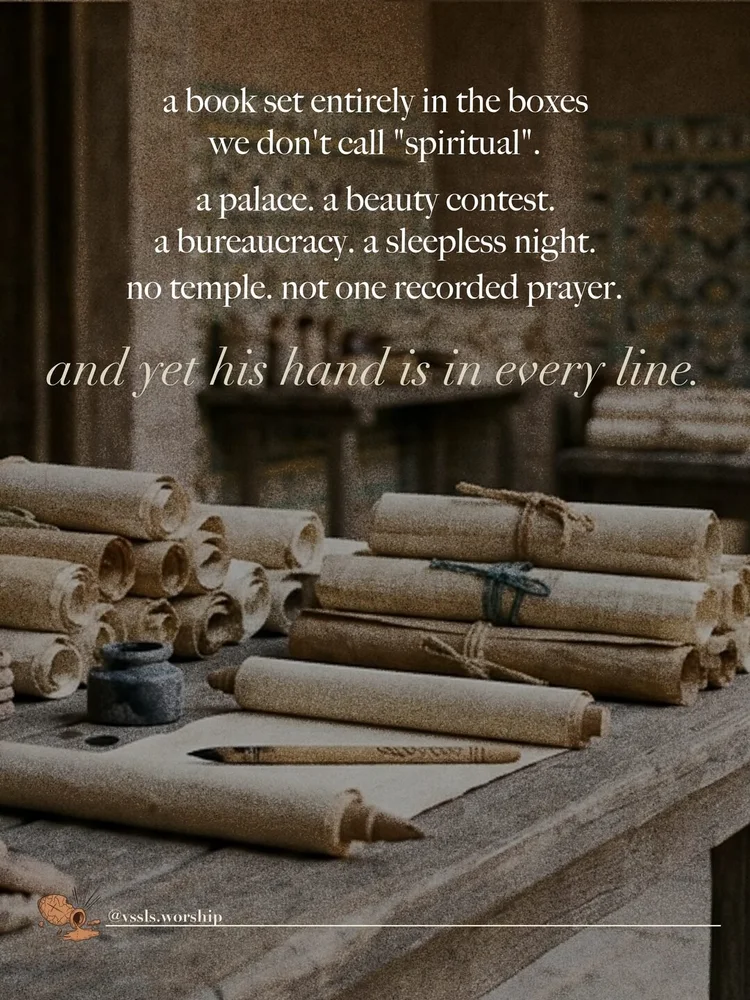
a book set entirely in the boxes we don't call "spiritual".
a palace. a beauty contest. a bureaucracy. a sleepless night.
no temple. not one recorded prayer.
and yet his hand is in every line.
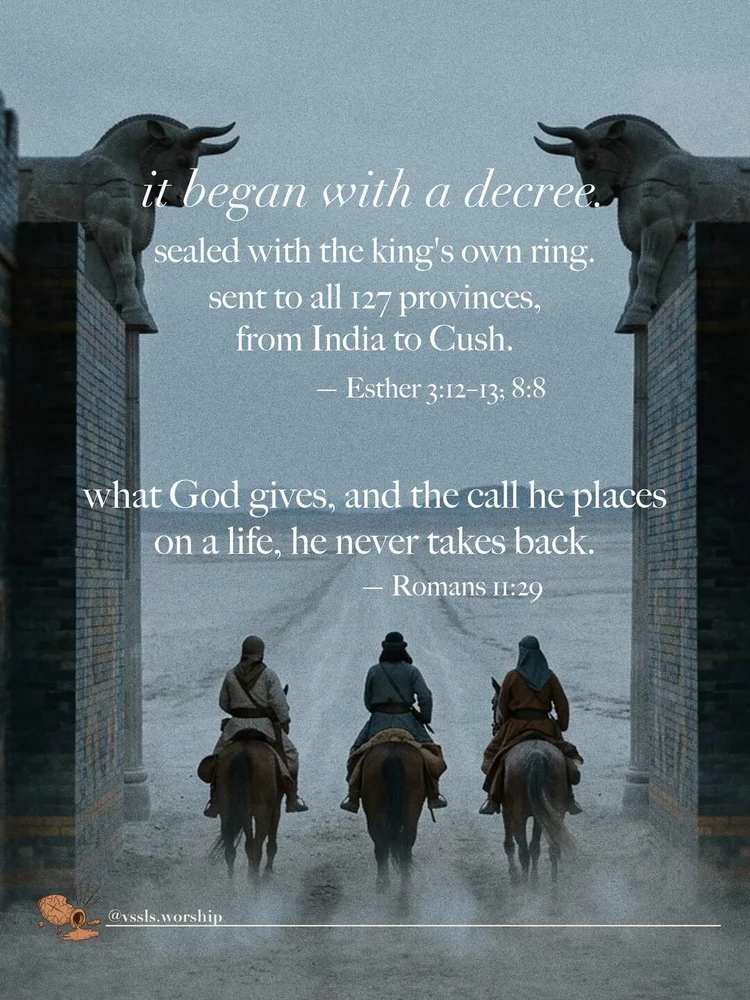
it began with a decree.
sealed with the king's own ring.
sent to all 127 provinces, from India to Cush.
— Esther 3:12–13; 8:8
what God gives, and the call he places on a life, he never takes back.
— Romans 11:29
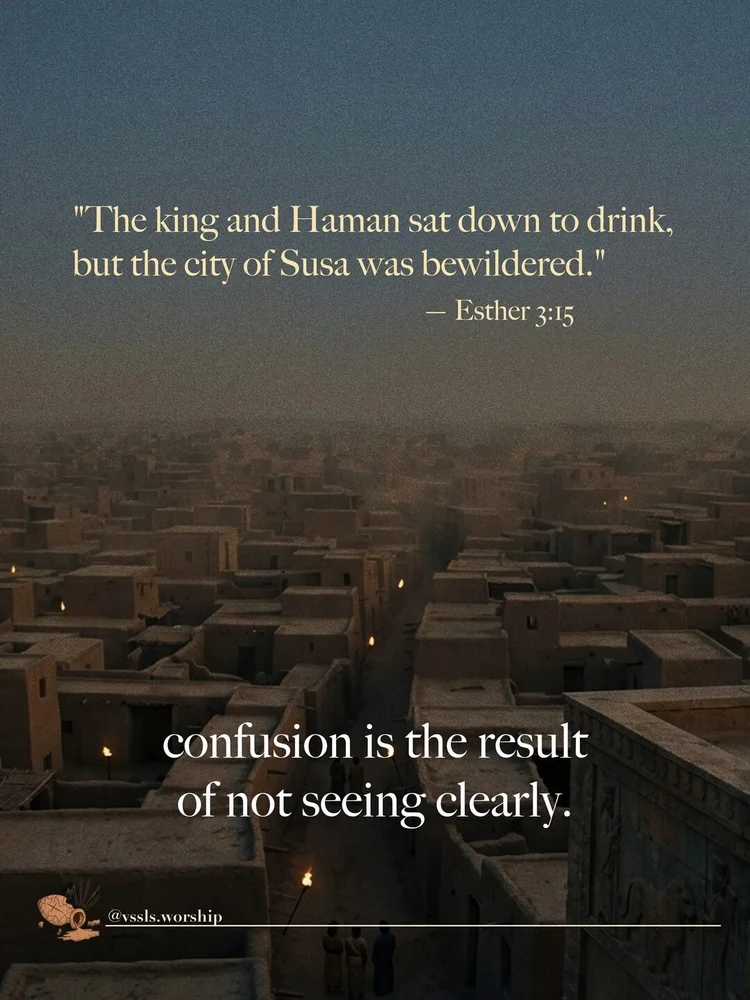
"The king and Haman sat down to drink, but the city of Susa was bewildered."
— Esther 3:15
confusion is the result of not seeing clearly.
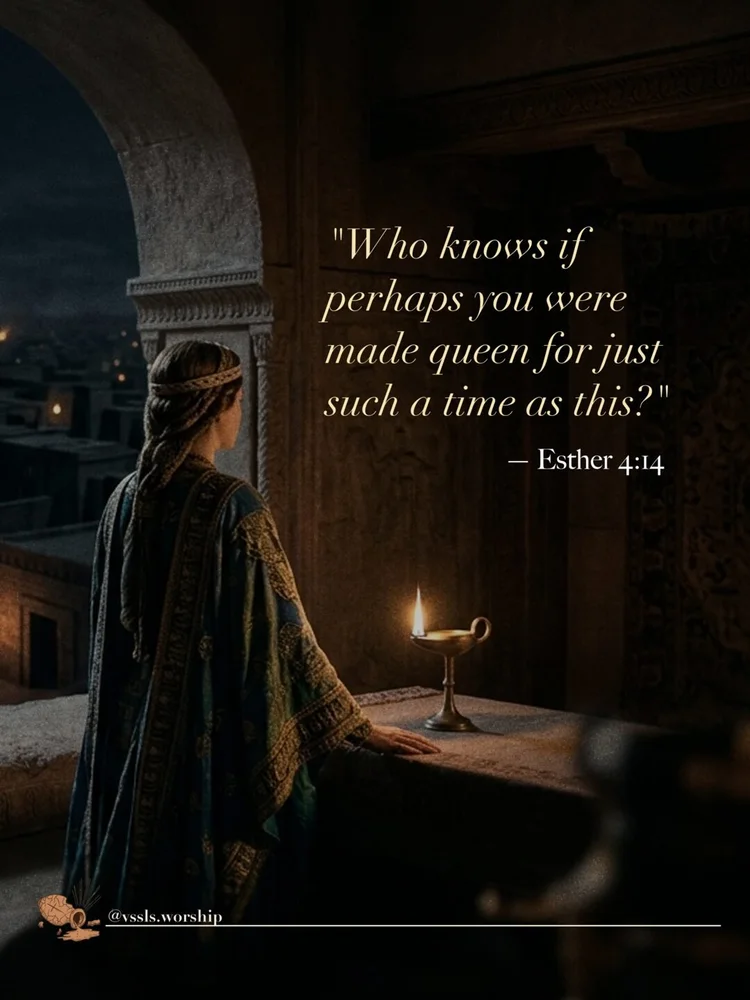
"Who knows if perhaps you were made queen for just such a time as this?"
— Esther 4:14
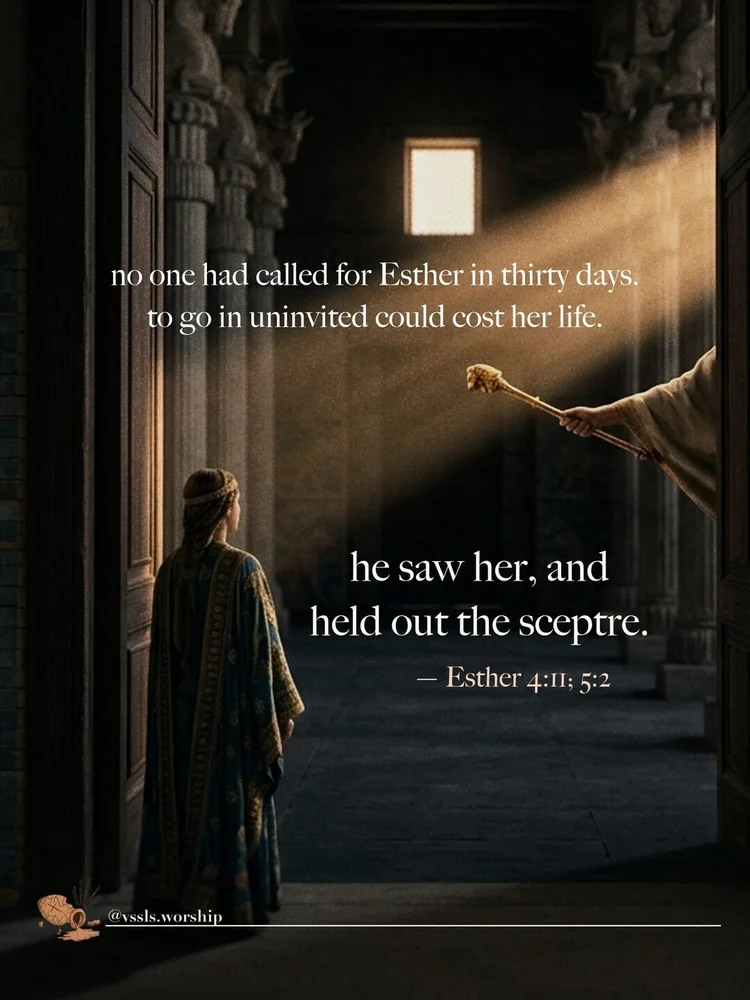
no one had called for Esther in thirty days.
to go in uninvited could cost her life.
he saw her, and
held out the sceptre.
— Esther 4:11; 5:2
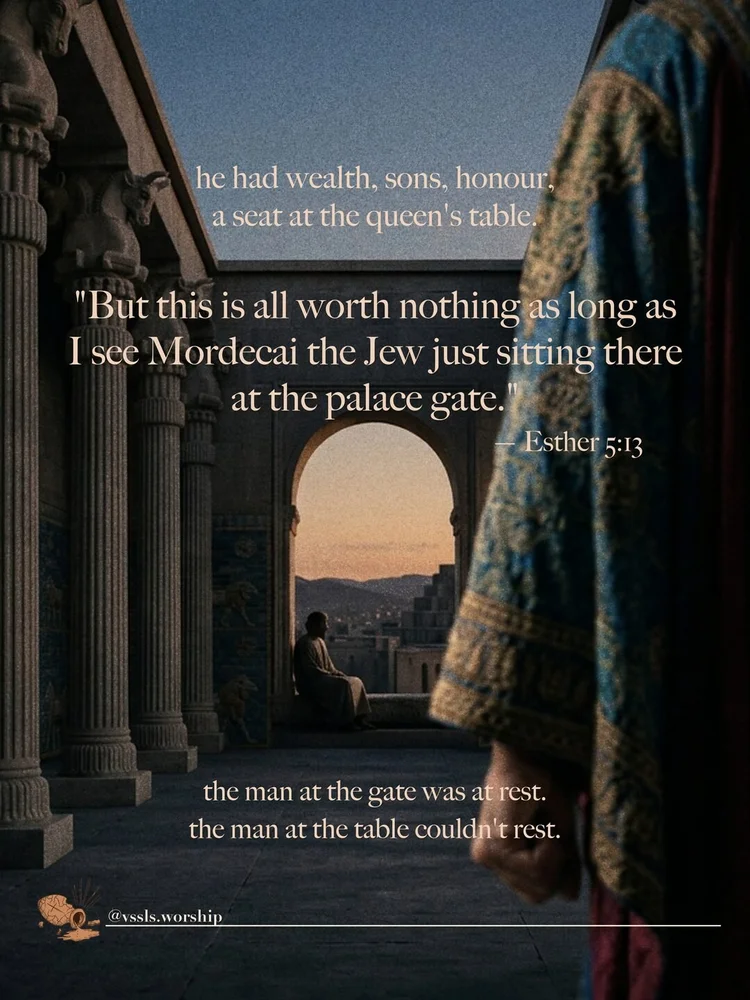
he had wealth, sons, honour, a seat at the queen's table.
"But this is all worth nothing as long as I see Mordecai the Jew just sitting there at the palace gate."
— Esther 5:13
the man at the gate was at rest.
the man at the table couldn't rest.
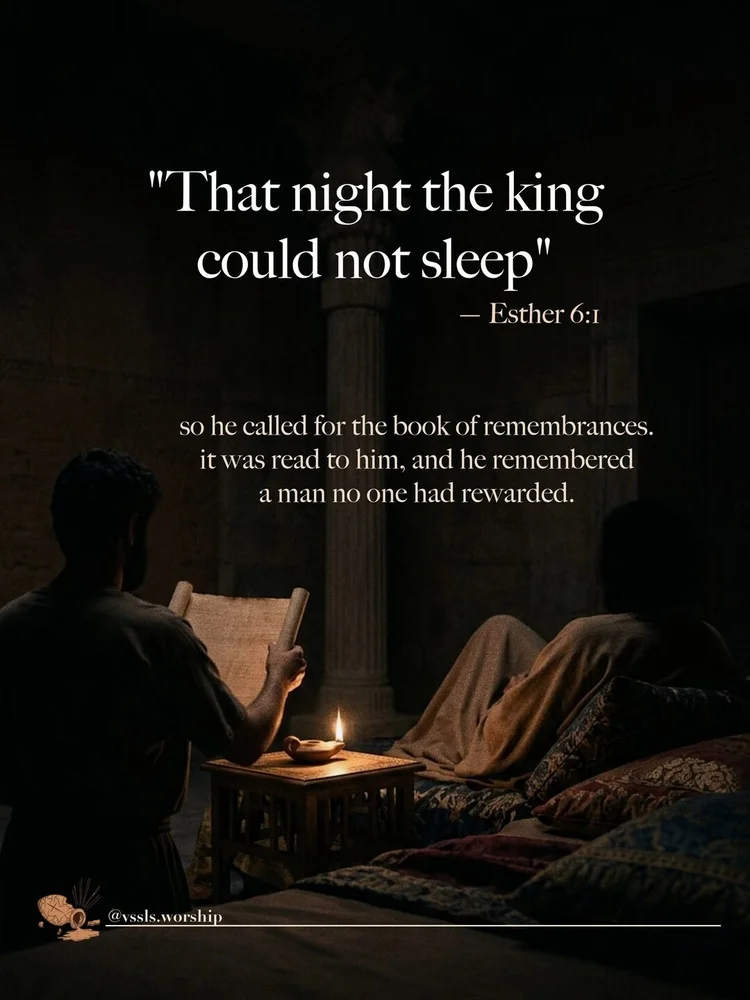
"That night the king
could not sleep"
— Esther 6:1
so he called for the book of remembrances. it was read to him, and he remembered a man no one had rewarded.
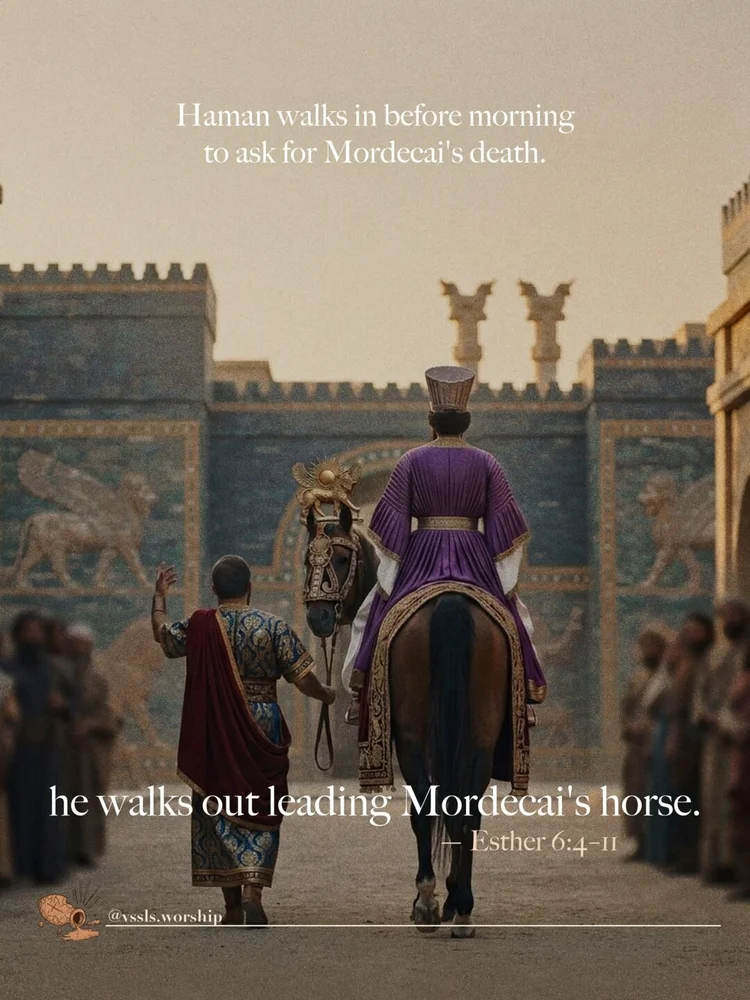
Haman walks in before morning to ask for Mordecai's death.
he walks out leading Mordecai's horse.
— Esther 6:4–11
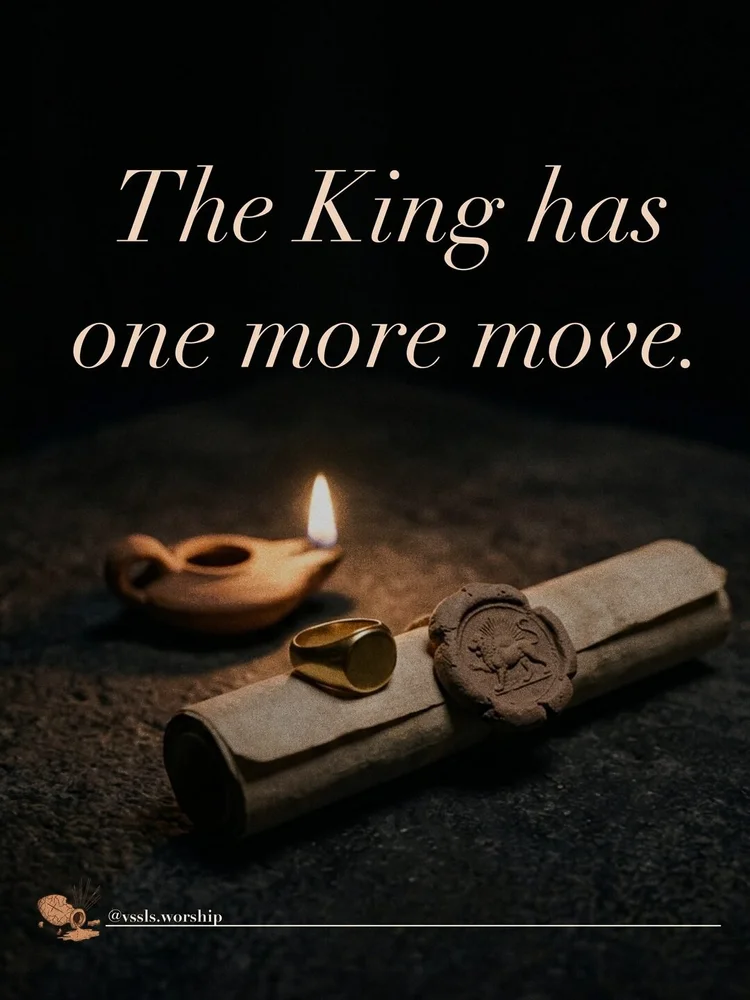
The King has one more move.
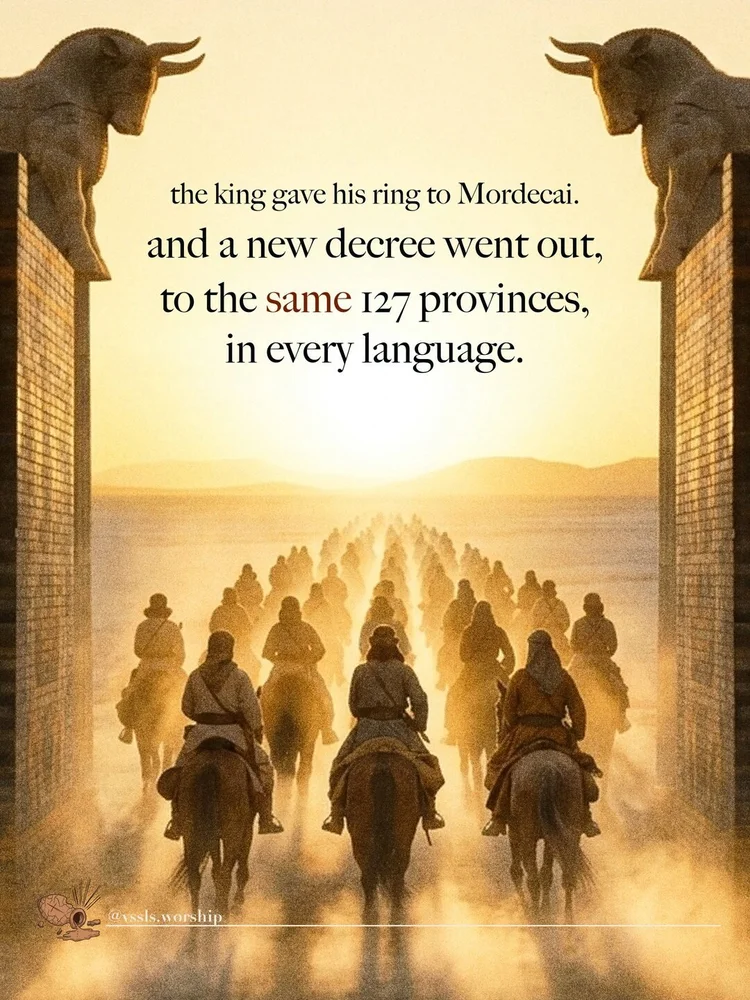
the king gave his ring to Mordecai.
and a new decree went out,
to the same 127 provinces, in every language.
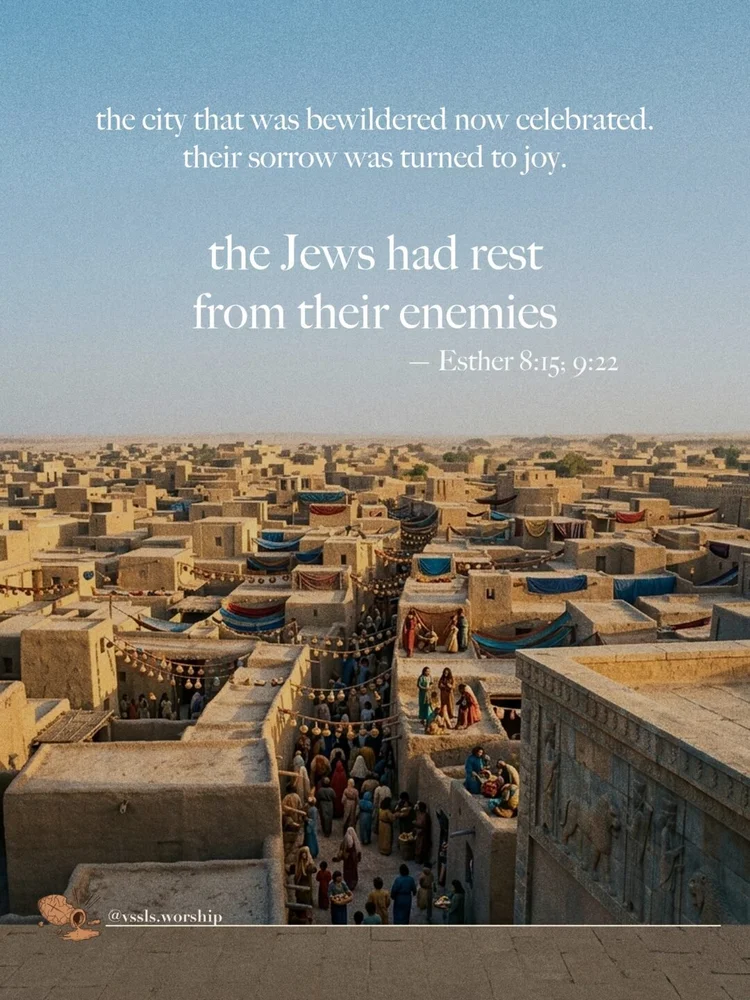
the city that was bewildered now celebrated. their sorrow was turned to joy.
the Jews had rest from their enemies
— Esther 8:15; 9:22
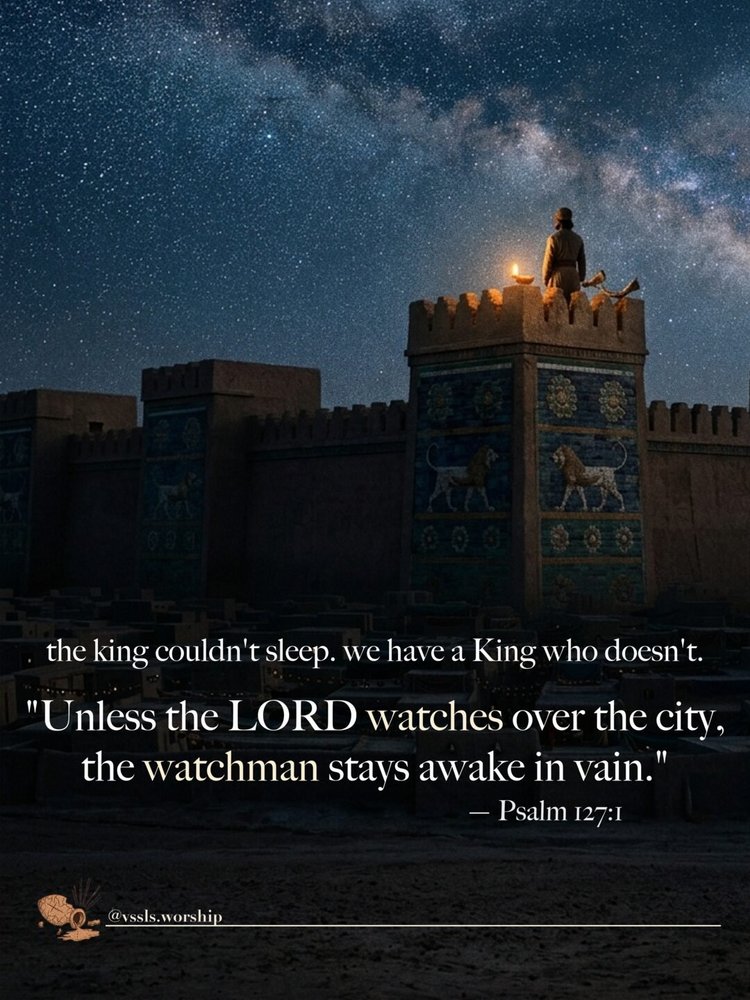
the king couldn't sleep.
we have a King who doesn't.
"Unless the LORD watches over the city, the watchman stays awake in vain."
— Psalm 127:1
He sees what you don't see.
— Genesis 16:13
He hears what you don't hear.
— Malachi 3:16
He watches over
his own word
to perform it.
— Jeremiah 1:12
He sees to it that what's birthed of him prevails.
— Isa 66:9, Matt 16:18
make it your prayer:
Help me to see
in the simple things
"Today, don't search for something new. Ask for God to open your eyes…" — Day 1
"The quiet obedience deepens friendship." — Day 3
walk the journey from "Help Me To See" to "Eyes Fixed On You"