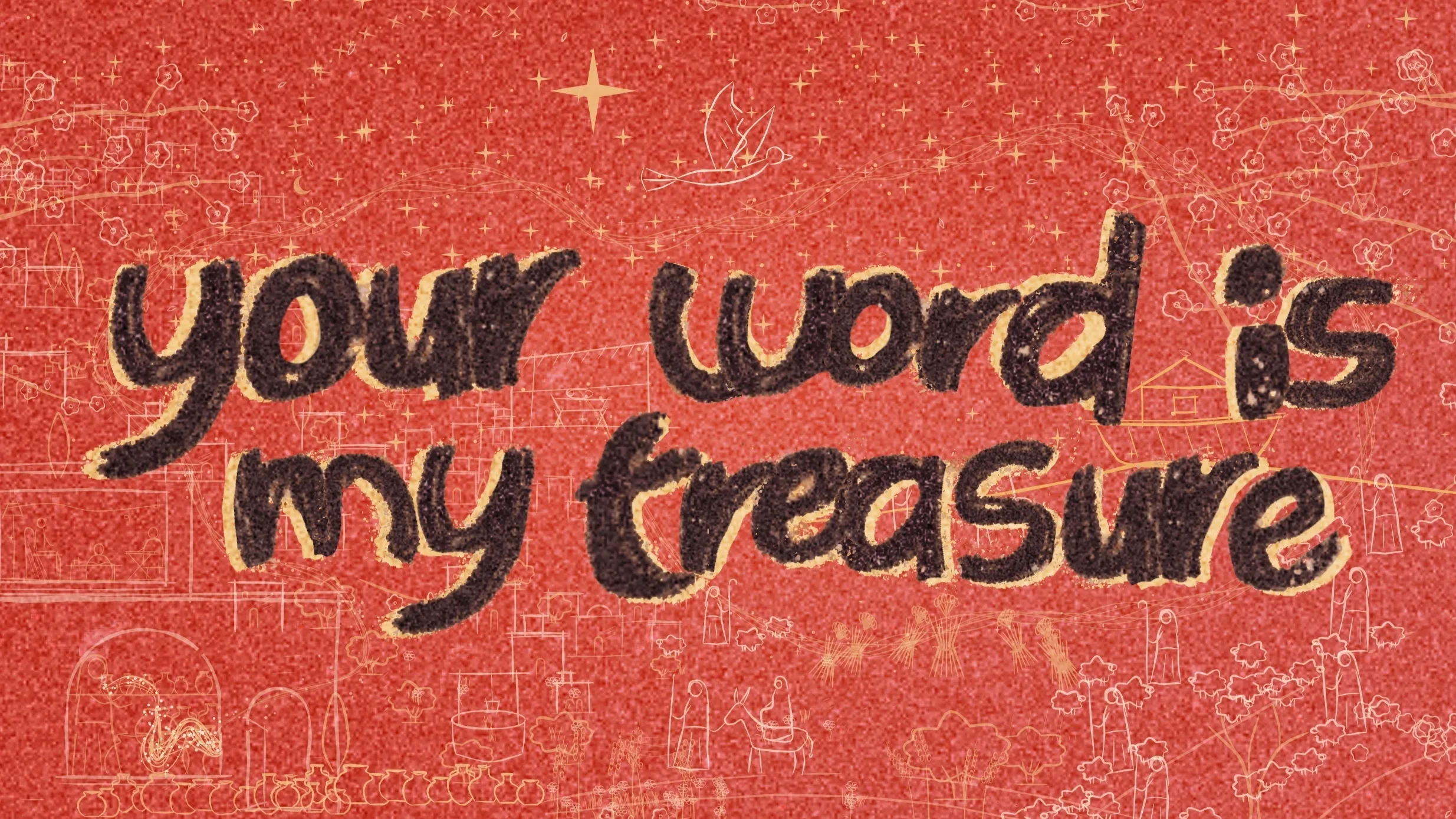
This is the story of Advent (from the Latin adventus, “coming”): not simply the remembrance of a baby born in Bethlehem, but the faithfulness of a God who keeps His Word — remembering that Jesus, the promised Word, came; and the promise of the day He will come again. Until then, we can rest on His faithfulness to His Word, as we wait for the day He returns. It is also the story of the Word: spoken at creation, to Noah, to Abraham, to Moses, to the days of Samuel and others when it was rare; written for us, and made flesh in Jesus.
We’ll get to the full version, but to fully appreciate what Advent is, we need to take a very quick walk.
There is a very interesting phrase, almost tucked away, opening 1 Samuel 3.
The Word spoken: Genesis to Noah to Joshua
Genesis opens with the creation of the world: the Spirit of God hovering over the waters, darkness filling the earth. Then God’s word, in God’s voice, decreed, “Let there be light.” And it happened as the word said. (Genesis 1)
Humanity was created in his image, to walk with him in the cool of the day, in a perfect environment, in his perfect promise. But it didn’t take long for his creation to fall short of his glory. This fallen nature would continue until it was totally and consistently evil in all it thought and imagined.
Except for one: Noah.
He was righteous despite the wickedness of the world around him. He walked in intimate friendship with God, and he found favour with him, as God’s eyes run to and fro searching for those whose hearts are fully committed to him. (Genesis 6-9)
The word of the Lord came to Noah, in his voice, and when he heard God speak, he was quick to respond.
He built a vessel, faithfully building each space within it where he and his family would live, along with the animals that would come to him in obedience to the word of God. Then came a moment of divine reset: a boundary between an end and a new beginning. He was saved. But before the ark came to rest on the mountains of Ararat, before the dove found a place to land, and before the word of the Lord came to him again and he stepped out onto dry ground, the word of the Lord probably would have tested him. When he stepped into the new thing God had promised, it probably didn’t look quite the way he had imagined.
Generations on, the Lord was faithful to his word: to Abraham, Isaac and Jacob, to Joseph, to Moses, to Joshua and Caleb.
Standing in the promise, Joshua declared to the people, “Choose this day whom you will serve. As for me and my household, we will serve the Lord.” (Joshua 24:15)
But it did not take long for the people to forget that word, and to forget their God.
When the word of the Lord was rare
By 1 Samuel 3, the people had cycled through many judges, people upon whom the Spirit of God would come from time to time, while the people kept wandering in cycles of their own. 1 Samuel itself spends two chapters recording the signs and symptoms of the drift within God’s chosen people. It’s here that we find this phrase: “In those days the word of the Lord was rare.”
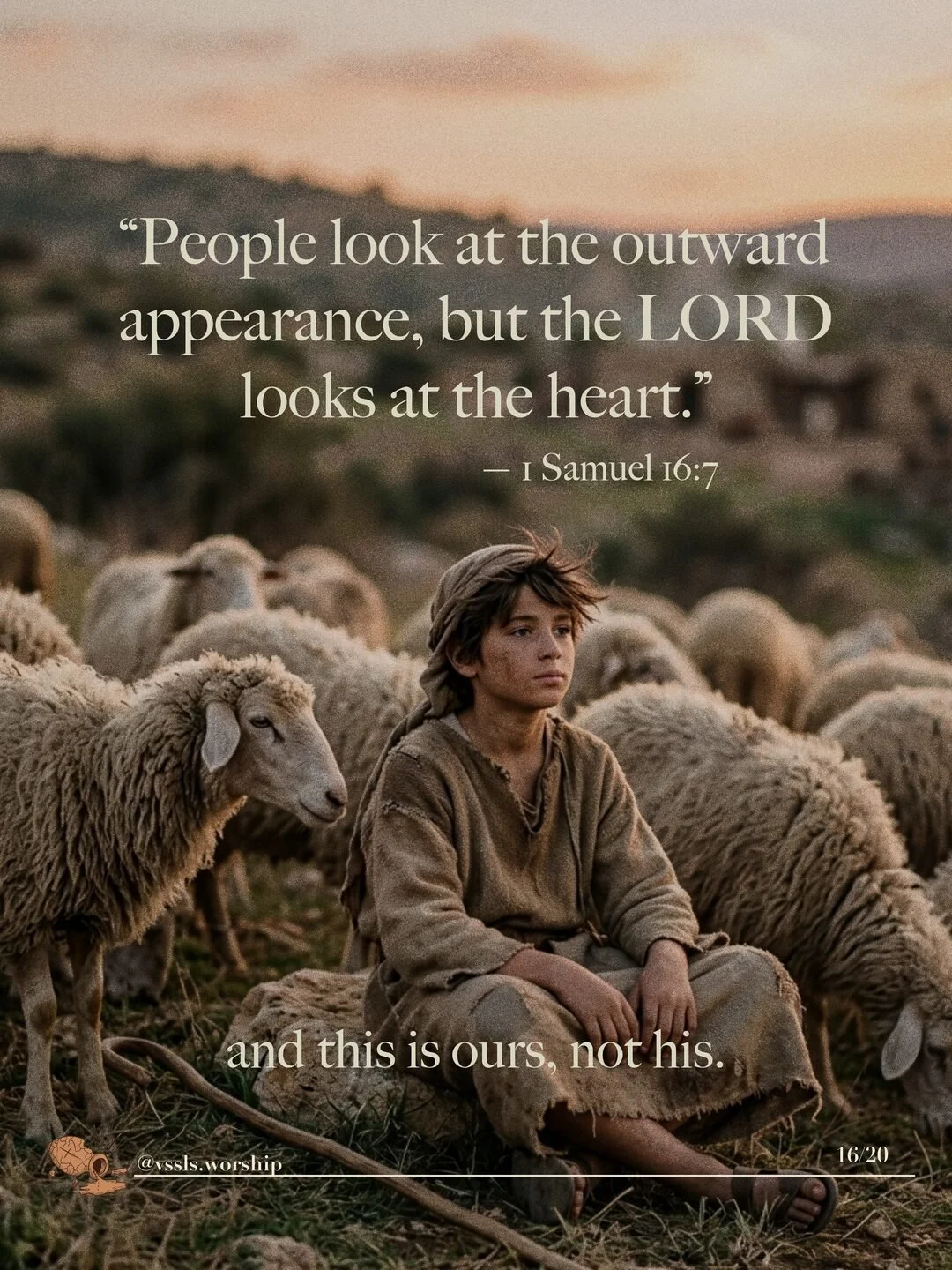
Yet right there, God had sent ahead of his people a vessel: young Samuel.
In an ordinary moment, in an ordinary space. The word of the Lord came to him, in his voice, calling him by name.
This word never fell to the ground, and it’s this same word that led the prophet to risk his own life and, at the word of the Lord, anoint a shepherd-king.
After Malachi: the silence breaks
We flip through the books that follow and arrive at Malachi.
Just as the Lord sent forth his word to Eli, speaking of the wickedness of his days, so later, through Malachi, a man of few words but whose four short chapters carried a lot of weight, he spoke his word again.
What followed is often described as around 400 years of prophetic silence, when the word of the Lord was rare. No new prophetic books were added to the biblical story, as the people waited for the promised Messiah.
The people of God had seen his favour, his promises, his abundance; yet again and again, forgetting his word and all he’d done, they continued to wander through cycles of forgetting, remembering him only when things looked extraordinarily dim.
By the time we pick up this story, to answer the question “What is Advent?”, God’s chosen people had been oppressed in Egypt and taken into exile. Some had eventually returned. Zerubbabel and Joshua had laid the foundations of the temple. Nehemiah had finished building the walls and setting the gates. But the promised “everlasting throne of glory” was not quite the splendour it was meant to be.
Then the word of the Lord came to a priest named Zechariah. In those days the presence of God was a privilege. Priests were chosen by lot to serve in the temple, and on this particular day the lot fell on Zechariah. "The lot is cast into the lap, but its every decision is from the Lord." (Proverbs 16:33) An angel of the Lord delivered it, answering a prayer Zechariah had prayed for years, and picking up on the word God had put in the mouths of Isaiah and Malachi.
From that word came John the Baptist, who prepared the way for the promised Messiah.
Then came another word, to a willing vessel, a highly favoured woman, Mary. Not understanding how it would all turn out, she declared, “I am the Lord’s servant. Let your word be unto me.” “May all you say about me be fulfilled.” (Luke 1:26-38)
The written Word and the Word made flesh
We live in a day when we are blessed to hold the written Word in our hands.
Paul says all Scripture is God-breathed, useful for teaching us what is true, for showing us what is wrong in our lives, for correcting us and training us in righteousness, so that as servants of God we may be thoroughly equipped for every good work. (2 Timothy 3:16–17)
Peter tells us to pay close attention to the Word, which was not written by human understanding. He also tells us that the word stimulates wholesome thinking, refreshes memories, and brings about a move to realignment. (2 Peter 1:19-21; 3:1)
Hear and obey. Listen and respond.
Again and again we see the word of God spoken to his people, and some of it written down to make it plain.
Ultimately, it all points to Jesus the Word.
From the fall of humanity, in the chaos that followed the serpent’s crafty words, God declared his word: “he will crush your head, and you will strike his heel.” (Genesis 3:15)
Even through the days when the word of the Lord was rare, all creation waits eagerly to see his glory.
Jesus the Word, who in the beginning was God, and with God, who alone has seen the Father: glory in flesh, full of his grace and truth. (John 1:1-18)
There’s an eager expectation, something stirring in the depths of every vessel, longing for the day he comes.
What Advent means: looking back, looking forward
At Advent we remember that he came, not in the way we imagine, nor as some presume. Not a king who clung to divine privileges, but the Son who set them aside, humbling himself to take the form of a servant, obedient to the point of death. (Philippians 2:5-11) Took on our cross to make a way for our seats in his courts. In that humility he revealed his glory.
Today we can choose to be vessels shaped by that humility: willing, obedient, rid of dishonourable things, bringing our Amen to his resounding Yes: “May your word to me be fulfilled.”
John 15:7-8 If you remain in me and my words remain in you... This is to my Father’s glory, that you bear much fruit, showing yourselves to be my disciples.
Even when it looks as though God is slow, he is being patient, not willing that any should perish. (2 Peter 3:9)
At Advent we look back and see that he was faithful to his promises, and in Advent we look forward to all his promises, awaiting their appointed time.
One day our Shepherd-King will return. Every knee will bow, and every tongue confess. He will restore the house of David, and all nations will come to his light and his glory. (Ezekiel 34:23–24, Philippians 2:9–11, Amos 9:11-12, Acts 15:16-17, Isaiah 60:1-3, Revelation 7:9-10)
The God who keeps getting forgotten always remembers.
From his written Word, to his spoken Word, to Jesus the Word. Don't let the story end here.
The same Word that spoke creation into being, sustained generations and became flesh in Jesus is the Word we have the privilege of opening today.
What would it look like to carry His Word into your everyday life — to let it shape what you see, how you think and how you respond?
Your Word Is My Treasure is our Christmas devotional, put together to help you go deeper in the written word, the spoken Word, and Jesus the Word. This Advent, will you treasure the Word with us?
Your Word Is My Treasure: free, one day at a time, delivered to your inbox. I want to treasure His Word.
or get the free printable: a verse a day, for you to treasure his word at your own pace: send me the map to my treasure.